
 Jubilee Radio
Jubilee Radio
Jubilee Radio
31 January 2026, 8:23 pm
By Clare Nayebare
Agricultural experts in Fort Portal have warned that deforestation, bush burning and poor farming practices are exacerbating global warming and disrupting seasonal patterns, urging farmers, the government and NGOs to adopt nature-friendly methods that protect the environment while ensuring sustainable and nutritious food production.
Farmers in Fort Portal City and the wider Rwenzori region have been encouraged to adopt agroecology as a practical response to the growing impacts of climate change, including unpredictable rainfall patterns, prolonged dry spells, and declining soil fertility.
The call was made by Paul Kusiima, an agroecologist at the Food-Feed-Forest (Triple F) Agroecology Demonstration Centre in Kigarama, Kabarole. Kusiima noted that agroecology promotes farming systems that work with nature, reduce environmental degradation, and simultaneously ensure food security in the face of global warming.
According to Kusiima, Fort Portal’s once-reliable farming seasons have been significantly disrupted, a situation he attributed partly to climate change driven by human activities such as deforestation, bush burning and unsustainable land-clearing methods.
“Climate change is no longer a distant threat; farmers are already feeling its effects through poor harvests and changing seasons,” Kusiima said. “Agroecology offers climate-smart solutions by restoring soils, conserving biodiversity, and reducing practices that worsen global warming.”
He called on government agencies and non-governmental organisations involved in environmental conservation to intensify public awareness of climate-friendly farming practices that protect ecosystems while ensuring the production of nutritious food. Kusiima particularly encouraged the cultivation of indigenous crops, noting that they are more resilient to climate stress and require fewer external inputs.
“Indigenous crops adapt better to our local climate. They help farmers withstand climate shocks while preserving the environment,” he added.
Echoing similar concerns, Wilson Ajuna, a Fort Portal-based agricultural consultant, urged farmers to rethink their land-use practices as climate pressures intensify. He emphasised that food production and environmental conservation can go hand in hand through agroecology.
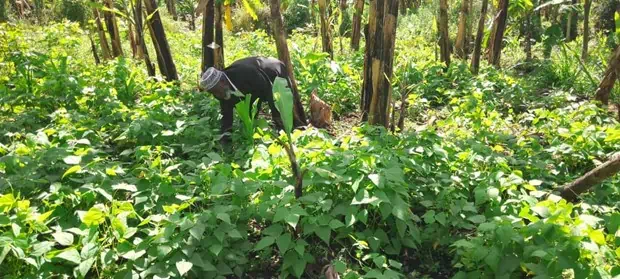
“Many farmers believe they must cut down trees or burn bushes to farm, yet these practices accelerate climate change,” Ajuna explained. “Agroecology teaches farmers how to integrate crops with existing vegetation. For example, some climbing crops can grow on trees, maintaining tree cover while supporting food production.”
Ajuna also noted that climate change challenges are being compounded by the poor quality of seeds sold in some agro-input shops, which has led to reduced yields and increased farmer frustration.
As climate change continues to threaten livelihoods in the Rwenzori region, experts warn that embracing sustainable farming systems like agroecology is no longer optional but essential for long-term food security, environmental protection, and resilience against global warming.