

 Jubilee Radio
Jubilee Radio
Jubilee Radio
24 March 2026, 5:02 PM
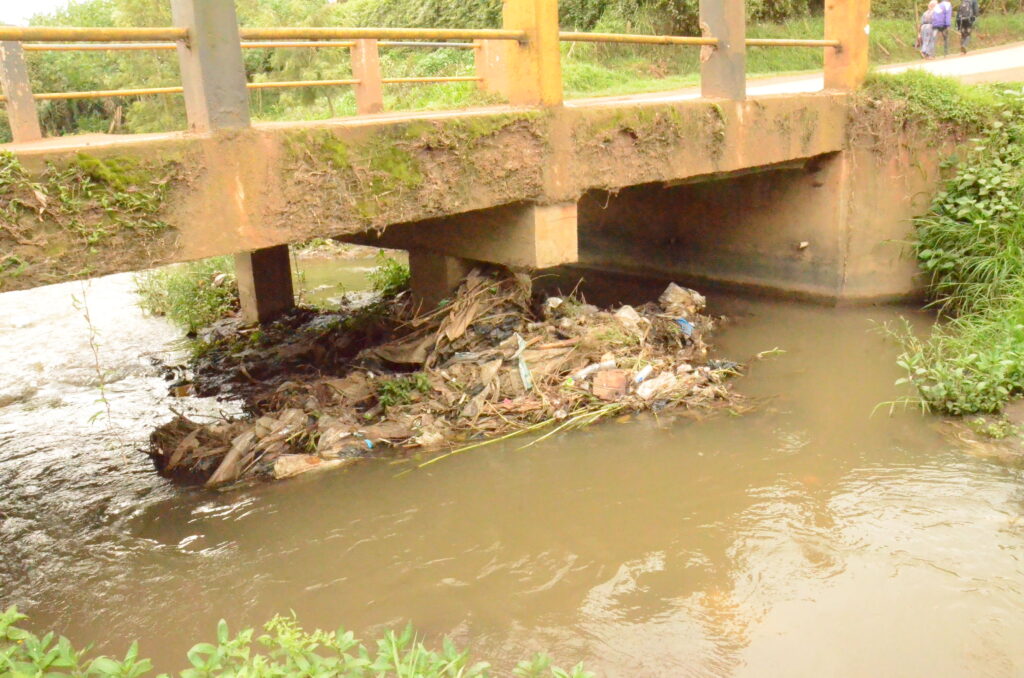
Some of the Plastics dumped in the Mpanga River in Fort Portal City
Stakeholders in Fort Portal are raising alarm over the degradation of River Mpanga, citing encroachment, pollution, and deforestation as key threats. During the “Save River Mpanga” marathon organized by the Ministry of Water and Environment Uganda, leaders and youth called for urgent collective action to protect the river and address worsening climate effects in the Rwenzori Mountains region.
By Clare N
Concern is rising among stakeholders in Fort Portal over the continued encroachment and degradation of River Mpanga,a vital water source that supports millions of livelihoods.
These concerns took center stage yesterday during the annual “Save River Mpanga” marathon, held to mark the close of Water and Environment Week. The event, organized by the Ministry of Water and Environment Uganda in partnership with other stakeholders, drew participants from across the region.
Speaking at the event, Herbert Fred, the District Environment Officer from Kabarole, expressed frustration over the persistent challenges in protecting the river adding that despite ongoing sensitization efforts, communities continue to encroach on wetlands and riverbanks.
Population exerting pressure on non increasing land
He pointed to population pressure as a key driver, forcing residents to settle in gazetted environmental protection areas. While government policies and constitutional laws exist to safeguard the environment, Fred noted that such long-term challenges require sustained and practical solutions.
He praised the marathon as an important awareness platform, emphasizing that environmental protection is a shared responsibility. “Everyone deserves access to clean water and fresh air,” he said, urging the public to safeguard the river and its surrounding wetlands, which are essential to the ecosystem.
Fred also linked the region’s increasingly harsh climate conditions, particularly in the Rwenzori Mountains region, to continued environmental degradation.
Youth rallied to actively save nature for next generation
Adding a youth perspective, Ritas Nabaasa from the Ministry of Water and Environment highlighted the changing climate patterns in Fort Portal.
Once known for its stable, “seasonless” weather that supported year-round agriculture, the area now experiences prolonged droughts and destructive floods.
She attributed these changes to unsustainable human activities, including poor farming practices, deforestation in catchment areas, and the dumping of plastics and polythene into River Mpanga.
Nabaasa called on young people to take the lead in restoring the river, warning that failure to act could leave future generations facing severe environmental consequences. The river currently supports approximately 1.2 million people.
Beyond arrests
The Chief Guest, Rwenzori West Regional Police Commander Joan Wabwiire, emphasized that while the police are mandated to enforce environmental laws, awareness and community engagement are equally important.
He noted a shift from purely punitive measures to more collaborative approaches.
“We are moving beyond arrests to working with communities to restore nature,” he said, describing River Mpanga as a precious resource that must be preserved for future generations.
Wabwiire commended the Ministry for its continued efforts and called for increased public awareness to strengthen the fight against environmental degradation.
Environment week
DR. Guma Brian, Team Leader Albert Water Management Zone said that as the Ministry of Water and Environment, have organized the marathon alongside other activities like tree planting to commemorate World Forest Day, World Meteorological Day, and World Water Day, aiming to mobilize communities to protect River Mpanga.
Guma added that many people are degrading areas near River Mpanga, which has caused serious challenges, and call upon everyone to be vigilant and take responsibility in protecting the vital resource.