
 Radio Wa
Radio Wa
Radio Wa
5 February 2026, 6:03 pm
By Baker Okello
The Chief Executive Officer of the Catherine Phil Sickle Cell Initiative, Mr Odur Daniel Roy, has urged couples to undergo premarital blood testing to safeguard long-term family health and prevent the transmission of inherited blood disorders.
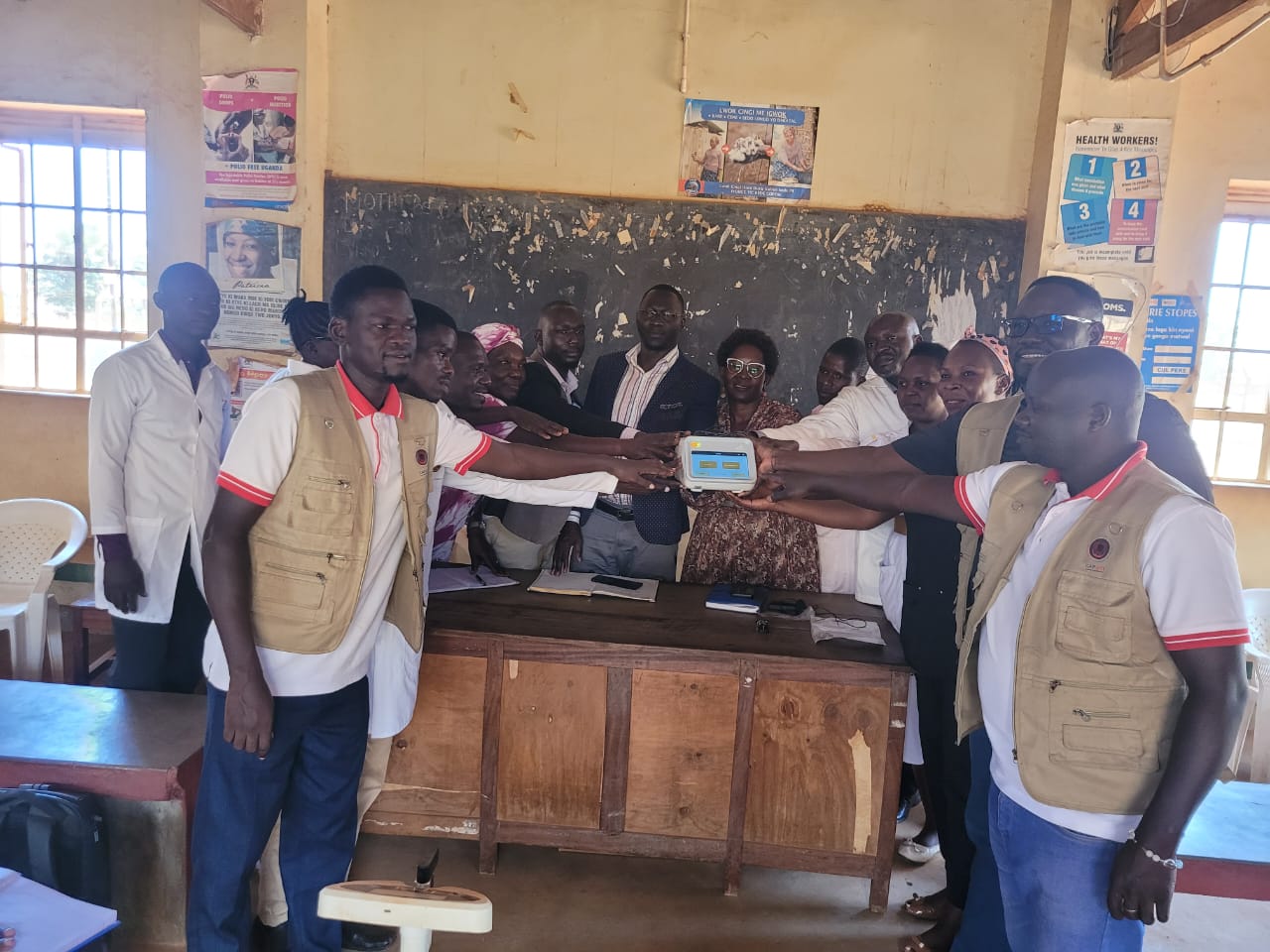
Odur made the appeal while handing over an HP electrophoresis machine to Amolatar Hospital during an event held at the Amolatar District headquarters.
His call comes amid alarming revelations by the District Health Officer (DHO), Dr Jimmy Odongo, who disclosed that the district is currently struggling to manage 983 patients living with sickle cell disease.
Odur emphasised that premarital screening plays a critical role in preventing genetic disorders such as sickle cell anaemia and thalassaemia, noting that early testing helps couples make informed decisions and reduces the risk of passing these conditions on to their children. He further appealed to cultural and religious leaders to promote, and where possible enforce, mandatory premarital testing to detect genetic, infectious and reproductive health conditions.
Dr Odongo revealed that between July and December, the district managed 530 sickle cell cases, while 662 patients have required blood transfusions since last year due to complications. He noted that the newly donated machine will significantly improve service delivery by providing results within one to two days, enabling early diagnosis, timely treatment, and reduced morbidity.
The Chief Administrative Officer (CAO) of Amolatar District, Ms Aroma Rhoda, commended the Catherine Phil Sickle Cell Initiative for the donation, describing it as a major boost in the fight against the disease. She disclosed that the district has so far registered 974 sickle cell cases across health facilities and stressed the need for continued community sensitisation. She also pledged to integrate routine sickle cell testing into district health programmes, with support from local leaders.
A similar machine was donated to Apac General Hospital to support both routine diagnostics and research, aimed at providing faster and more accurate test results.
The donation was officially handed over on 3 February 2026 during a ceremony held at the Apac District headquarters.
Speaking at the event, the Chief Executive Officer of the Catherine Phil Sickle Cell Initiative, Mr Odur Roy, said the machine was procured using funds raised during a charity run dubbed the “Uhuru Sickles Run,” which was held on 5 December 2025.
Mr Odur explained that Apac District was selected due to its high prevalence of sickle cell disease, according to available health statistics. He further noted that, with support from Stanbic Bank Uganda, the initiative had managed to purchase three electrophoresis machines, each costing 15 million shillings.
Representing Stanbic Bank, the Apac Branch Manager, Mr James Odur, said the bank’s role goes beyond financial transactions, aiming to transform lives through corporate social responsibility. He highlighted that the bank focuses its support on key sectors such as health, education, agriculture and environmental protection, adding that earlier this year, Stanbic Bank donated assorted maternal health equipment to Apoi Health Centre III.
Meanwhile, the Medical Superintendent of Apac General Hospital, Dr Okullo James, revealed that the district carries a heavy sickle cell burden, with 364 children currently under chronic care as of April 2025. He noted that the ongoing management of sickle cell patients has already yielded positive outcomes.
The Apac District Health Officer, Dr James Daniel Odongo, commended the Catherine Phil Sickle Cell Initiative for its timely support, saying the district has long struggled with limited resources to manage sickle cell patients. He pledged that the hospital will put the machine to proper use and provide monthly performance updates to the donor.
Electrophoresis machines are vital laboratory tools used to separate macromolecules such as DNA based on size and electrical charge using an electric field.
Health officials in Apac say the donation represents a major step towards improving the diagnosis and management of sickle cell disease, expressing hope that partnerships with private institutions and non-governmental initiatives will continue to strengthen healthcare services in the district.
The initiative underscores the importance of proactive, informed and responsible premarital health decisions as a key measure in preventing lifelong suffering among families and future generations.