
 Kasese Guide Radio
Kasese Guide Radio
Kasese Guide Radio
5 January 2026, 7:04 pm
By Yoweri Kaguta
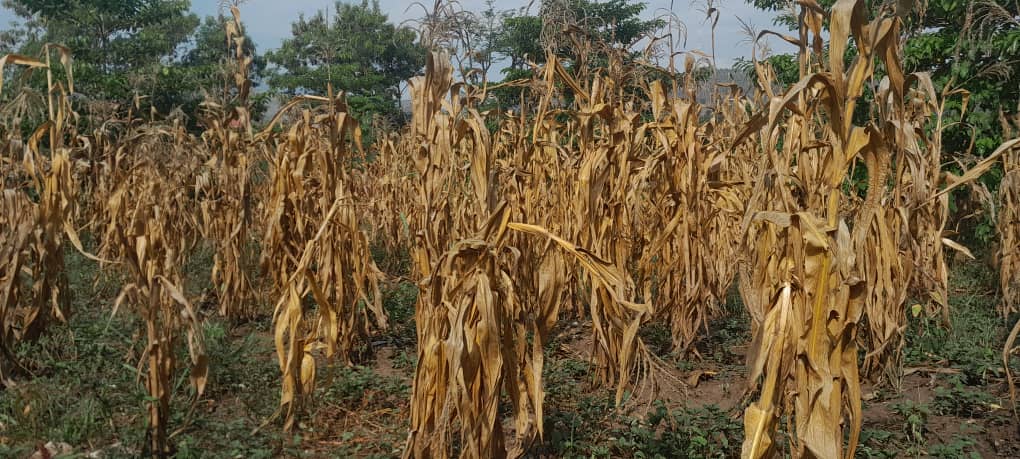
A prolonged dry spell in Kasese District has raised fears of an impending famine, with many farmers struggling as crops wither and livestock suffer.
Both commercial and rural farmers had anticipated taking advantage of early rains in October to plant their crops, but several areas in Kasese received little or no rainfall. The Meteorological Department had projected that the Rwenzori region, where Kasese is located, would experience above-average rainfall in its 2025 rainfall outlook.
However, areas such as Lyemibuza, Butsumba-Muro, and Kirembe in the lowlands experienced dry conditions.
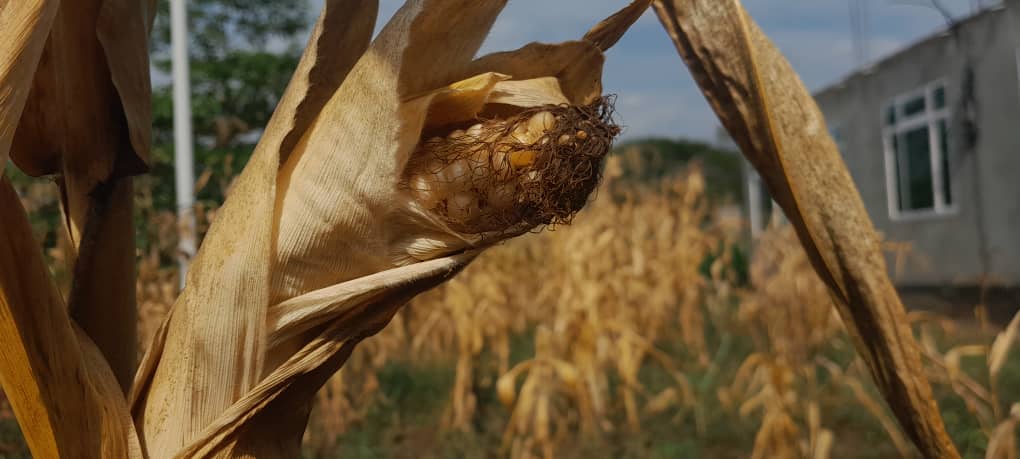
In Kirembe, Mr Richard Bwambale, a maize farmer, has raised the alarm after an extended dry spell destroyed his two-acre maize field, sparking fears of food insecurity and reduced household income.
“I had anticipated good rains at the start of the season, but they never came, forcing my maize to dry up before reaching maturity,” he said.
A 2025 alert by the Food and Agriculture Organization (FAO) warned that East Africa is entering its third consecutive failed rainy season, a situation that undermines household resilience, dries pastures for livestock, reduces crop yields, and has already led to the loss of thousands of animals.
This means that areas such as Kitswamba, Munkunyu, Muhokya, and parts of Nyakiyumbu, where maize and beans are grown extensively, are likely to experience reduced harvests.
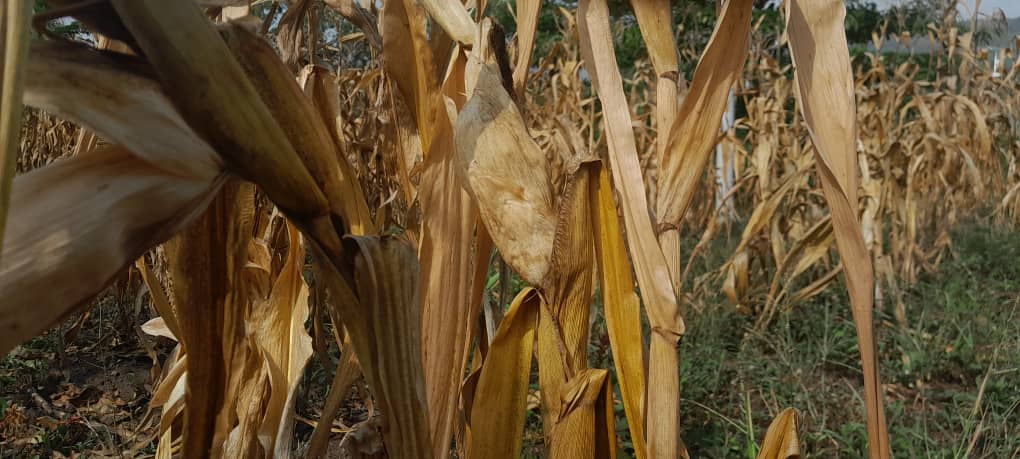
Edreda Kyakimwa, aged 47, explained that although rain came at the start of the season, it stopped midway, causing all the crops she had planted—including beans, African eggplants, and maize—to dry up.
“The maize produced small cobs, the beans did not grow at all, and I am now wondering what my family will eat in the coming months,” she said.
Sadress Kabugho, another farmer from Kahokya Cell in Central Division of Kasese Municipality, planted half an acre on the periphery of Kyakaroli seasonal swamp, but the maize dried up.
Mr Julius Rukara, Kasese District Principal Agricultural Officer, said that farmers who followed advice to plant early were faring better than those who planted later.
He added that his office has been sensitising farmers on agronomic practices, such as mulching, so that even in dry conditions they can plant successfully and achieve good harvests.
Recently, Good Forests Foundation Uganda signed a Memorandum of Understanding with Kasese District Local Government to plant more than 5,000 trees in selected sub-counties.
Mr James Thembo, the organisation’s Country Director, explained that local people have been recruited to work closely with the district to ensure that the trees grow and meet the objective of greening the district.
Kasese District has for many years experienced recurring disasters, including floods, prolonged dry spells, and droughts, which have severely affected people’s lives and livelihoods.
The Ministry of Agriculture, Animal Industry and Fisheries has already introduced the Uganda Fiscal Transfers Reform (UGifT) programme’s Micro-scale Irrigation Project.
The programme supports farmers in purchasing and using various micro-irrigation technologies, with the government covering a significant portion of the cost (between 25% and 75%, up to a value cap of UGX 7.2 million per acre per farmer, depending on the power source).
Mr Samson Mutswanga of Mughete Village in Kyarumba Sub-county and Mr Yonah Maate Tumusiime from Kinyamaseke Town Council are among the beneficiaries.
Mr Tumusiime explained that in less than ten months, he has earned more than UGX 7.5 million from growing watermelons, cabbages, carrots, and tomatoes, and can harvest even during the dry spell.
“I doubted the project at first, but I have witnessed its effectiveness. It not only supports farmers but has enabled me to adopt Climate Smart Agriculture, a practice I was previously unfamiliar with,” Tumusiime said. He called on the government to extend the project to all farmers and urged farmers to embrace it.
Grace Byasasa, a Senior Engineer at the Ministry of Agriculture, Animal Industry and Fisheries, noted that the Ministry is pleased with Kasese District for effectively implementing the programme just a few months after its introduction.
Mr Robert Bwambale, a local leader in Muhokya Town Council, advocated for massive tree planting on the remaining bare hills in Kasese.
Through ‘Uganda Yethu’, a 20-year project implemented by the Conservation and Development Agency (CODEA), a non-governmental organisation headquartered in Kasese, 690,000 trees have been planted in Kasese and Ntoroko districts within one year.
Mr Zaloti Kipupa, the Project Officer, expressed concern that without rigorous measures to address the rapid retreat of snow on Mount Rwenzori, livelihoods in the lowlands will suffer heavily.
The Rwenzururu Kingdom, which derives its name from the Nzururu (snow), has also launched a greening campaign, aiming to plant five million trees from Kasese to Bundibugyo.
Mr Kipupa noted that many farmers in Kasese still lack sufficient resources to invest in high-quality seeds, fertilisers, and modern farming methods. He added that in addition to tree planting, farmers are being encouraged to adopt mulching and terrace farming to control soil erosion and conserve water.