
 Kasese Guide Radio
Kasese Guide Radio
Kasese Guide Radio
24 March 2026, 9:45 am
By Yoweri Kaguta
In Uganda’s Kasese District, in the foothills of the Rwenzori Mountains, the Green School Project is changing pupils’ attitudes toward environmental conservation both in and outside their schools.
Through environmental clubs, pupils are learning hands-on skills such as growing food crops, planting trees and building friendships along the way.
The project was launched in Kasese District in 2024, and a number of schools including Ndugutu and Masule Primary Schools in Bugoye Subcounty and Bulembia Division in Kasese Municipality, respectively have already embraced it.
Pupils in these beneficiary schools are among the 12,000 boys and girls in 25 schools across the country who are planting trees, establishing orchards and growing vegetable gardens around their schools. Environmental clubs have been formed, and learners are acquiring practical skills in food production and environmental conservation.
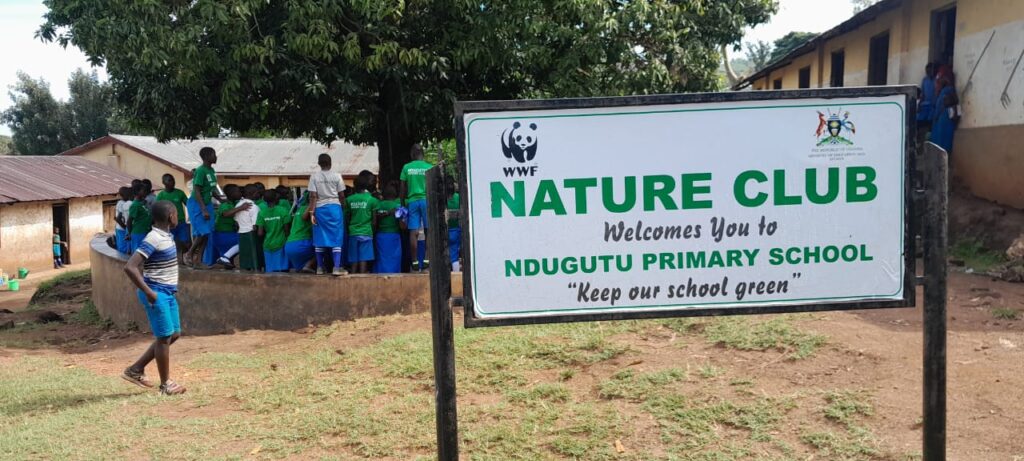
At Ndugutu Primary School, Yoweri Kaguta, an environmental reporter attached to Kasese Guide Radio in Kasese Town, was welcomed by several signposts displaying environmental messages.
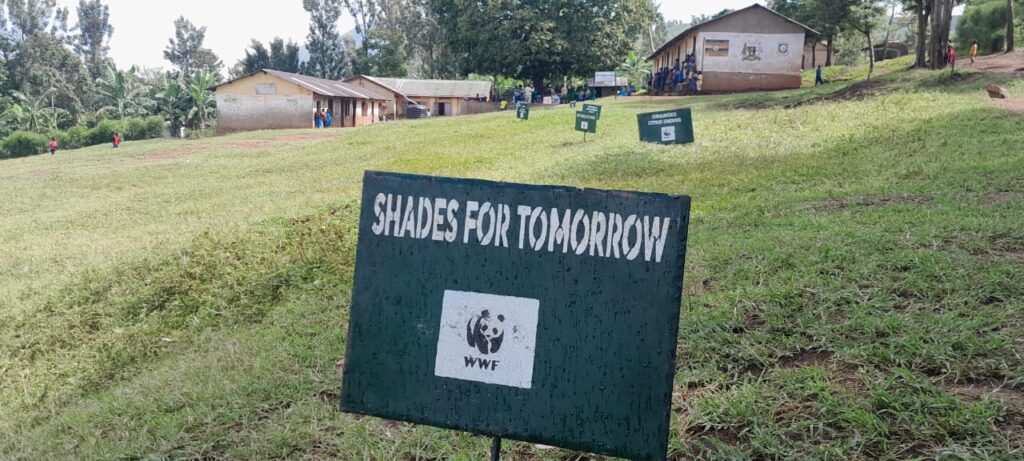
The school’s head teacher, Grace Masika, explained that the Green Schools for Better Learning Project uses the school environment as a learning space to teach sustainable environmental behavior to children.
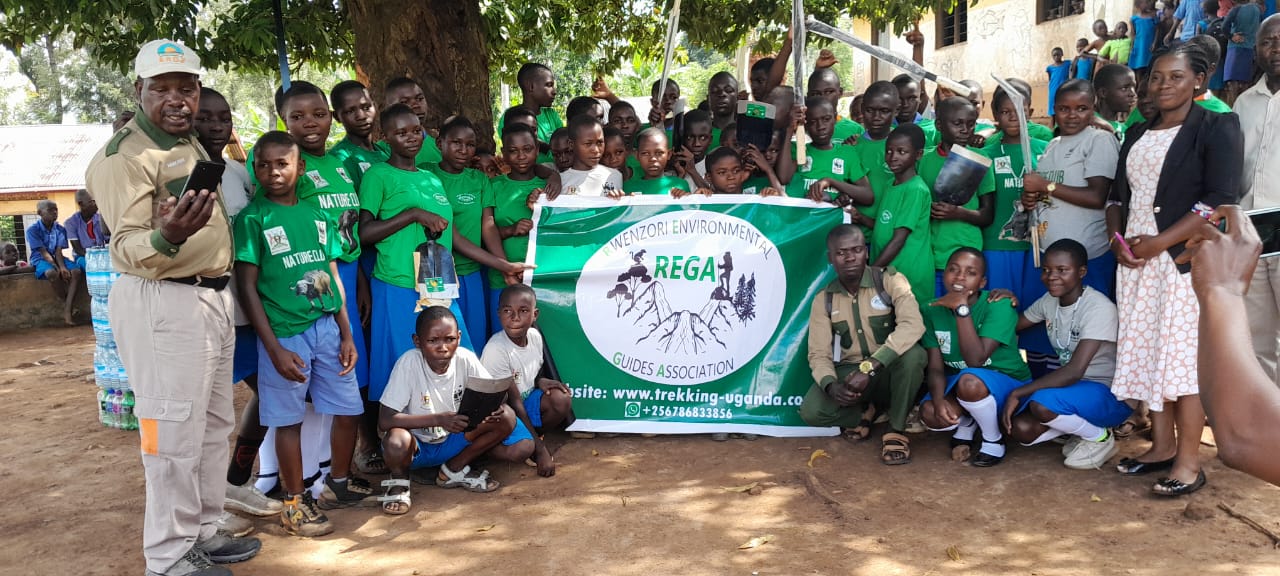
According to Masika, more than 500 primary school pupils have acquired valuable life skills, improved their school environment, and built partnerships with organisations such as the World Wide Fund for Nature (WWF), which donated signage, and the Rwenzori Environmental Guides Association (REGA), a licensed specialised tour operator based in Kasese District.
“Environmentally, our school is doing well. Learners have acquired skills in nature conservation, and we are optimistic that they will continue caring for the planet even beyond school,” she said.
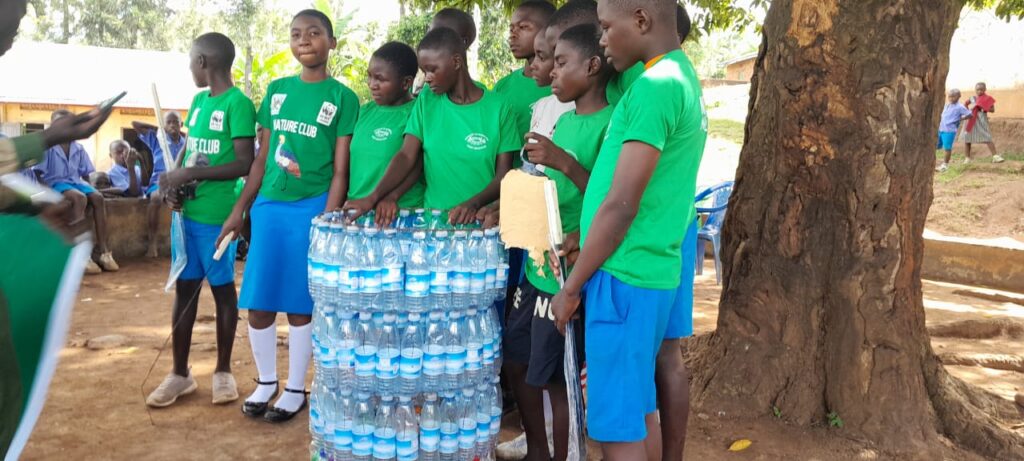
REGA has continued to support the already established Nature Club, which is headed by Moreen Kiconco, a Primary Six pupil. She acknowledged the contributions of the two organisations.
Kiconco leads a team of 40 members who, in addition to their studies, are learning about the importance of eating fruits and vegetables and how to grow them.
The young environmentalist praised the project, which is funded through Children of the World, an annual fundraising gala held in Sweden, for equipping them with essential environmental conservation skills.
“We are now certain that our future will be bright, and we have places to find shade when the sun is strong. Targeting young people in environmental conservation is a great idea,” Kiconco said.
Behind their classrooms, there is a tomato garden ready for harvest. Kiconco explained that the garden is part of their efforts to promote a balanced diet.
“This garden is one of the initiatives we started after learning about environmental conservation. We do not get lunch from here, but teachers allow Nature Club members to harvest ripe tomatoes and take them home,” she said.
Mr. Narcisse Ndayambaje, an environmentalist with REGA, explained that their support for the Green School Project is based on the understanding that young people are key to environmental conservation.
“Sensitising young children about conservation and environmental protection is a strong foundation for caring for the planet,” he said.
He added that tourism depends entirely on nature: “Without nature, there is no tourism.”
REGA also donated T-shirts to Nature Club members.
Mr. George Businge, the Warden in charge of Rwenzori Mountains National Park, emphasised that environmental conservation is an asset the country must protect because of its rich natural resources.
He noted that the park, a UNESCO World Heritage Site in western Uganda, is famous for its stunning scenery, including glaciers, waterfalls, and unique flora. As a result, visitor numbers have continued to increase.
“In 2023, we registered 7,703 visitors. The number increased to 10,483 in 2024 and 2025,” he said.
School-going children are among the most vulnerable groups during disasters, often facing major disruptions to their education. Schools may close temporarily, and financial challenges can prevent children from returning.
A report compiled by the Kasese District Disaster Management Committee following the 2020 floods revealed that many children were unable to attend school as their families struggled to rebuild their homes and livelihoods.
Mr. Joseph Singoma, the Kasese District Planner, said that with funding from Save the Children, the District Disaster Management Committee has trained school administrators, matrons, and patrons to strengthen institutional contingency plans.
“We have established 17 temporary evacuation centres in disaster-prone subcounties ahead of the expected heavy rains. School administrators from these areas have also been trained on how to handle disasters in their respective schools,” he said.
Mr. Moses Kamundu, an environmentalist, advised schools to further integrate conservation messages into co-curricular activities such as debates and Music, Dance, and Drama.