
Radio COMNETU
16 March 2023, 12:05 pm
By Byamukama Alozious
The Ministry of Health has revealed that at least 30 people die from Tuberculosis (TB) every day in Uganda, with men disproportionately affected compared to women.
Tuberculosis is an infectious disease transmitted through the air by a person with the condition when coughing, laughing, singing, or talking, according to the Ministry of Health.
Dr Stavia Turyahabwe, Assistant Commissioner of the National TB and Leprosy Division at the Ministry of Health, explained that the cost of treating TB is high, particularly if treatment is sought from private health facilities, which can lead to poverty. She added that poor people are also more likely to contract TB due to malnutrition. Dr Turyahabwe noted that while TB primarily affects the lungs, it can affect any part of the body and people of all ages. The disease is most commonly spread by individuals who are unaware they have TB or those who fail to complete their prescribed treatment.
Regarding paediatric cases, Dr Turyahabwe stated that many children with TB are either missed or diagnosed but not started on treatment due to lack of information among parents or guardians. “Every child at risk of developing TB should have access to appropriate prevention, diagnosis, and treatment,” she emphasised.
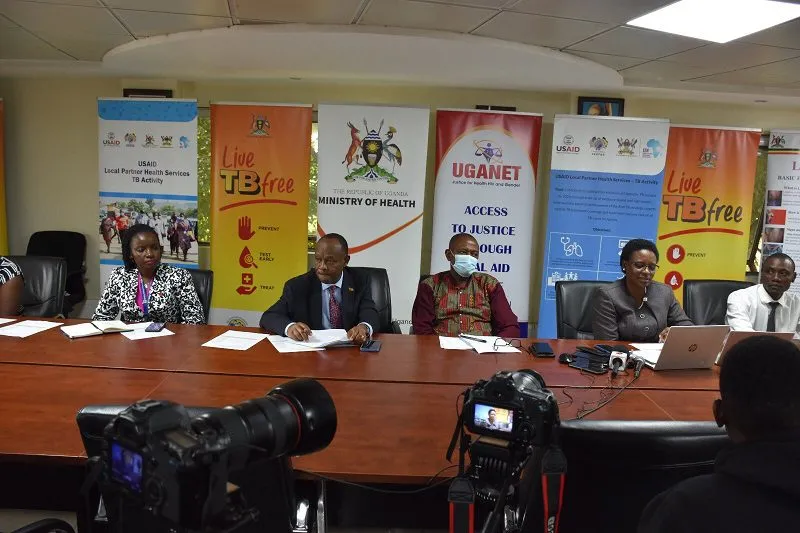
To prevent the spread of the disease, Uganda will join the rest of the world in commemorating World TB and Leprosy Day on 24 March in Butaleja. The Ministry, together with partners such as the United States Agency for International Development (USAID) and the Uganda Network on Law, Ethics, and HIV/AIDS (UGANET), will focus on raising awareness through the media. A media breakfast was hosted on Wednesday to highlight information about TB and leprosy.
Dr Henry Mwebesa, Director General of Health Services at the Ministry of Health, noted that ahead of the World TB commemoration, activities will include community awareness campaigns, screening, testing, prevention, and treatment across the country.
He urged citizens to stop discriminating against TB patients, clarifying that the disease cannot be spread through shaking hands, sharing food or drinks, touching bed linen or toilet seats, sharing toothbrushes, or kissing.
According to the Ministry of Health, Uganda is among the top 30 countries worldwide with a high number of TB cases. Approximately 30 people die of TB every day, more than half of whom are living with HIV. Statistics indicate that TB is four times more common in men than women and is particularly prevalent in the West Nile region of Uganda.
Experts recommend starting TB treatment as soon as the disease is diagnosed.
“TB is curable if detected early and treatment is adhered to as prescribed by a health worker,” Dr Turyahabwe said.
The standard treatment for uncomplicated TB lasts six months with a daily dose. TB may fail to respond to treatment if patients do not test early, do not take their medicines correctly, or are exposed to someone with drug-resistant TB.
“Good news is that drug-resistant TB is also curable. Do not miss your TB treatment,” she added.
Dr Mwebesa stated that Uganda registers over 90,000 new TB cases annually. “However, sometimes we only find about 72,000 to 80,000 cases, leaving many undiagnosed, which remains a major threat to society,” he explained.
He urged stakeholders to use the World TB campaign to identify and start treatment for all affected individuals. “The burden is not only the 20,000 undiagnosed patients but also the spread they cause. If not addressed, next year’s burden could exceed 90,000,” he added.
Dr Mwebesa emphasised that patients who adhere to treatment guidelines can recover fully.