
 Kasese Guide Radio
Kasese Guide Radio
Kasese Guide Radio
23 February 2026, 6:53 pm
By Yoweri Kaguta
Kasese: The effects of climate change continue to intensify in Kasese District, with residents reporting prolonged dry spells, intense rainfall, floods, hailstorms and landslides that have destroyed homes, gardens, bridges, schools and health facilities.
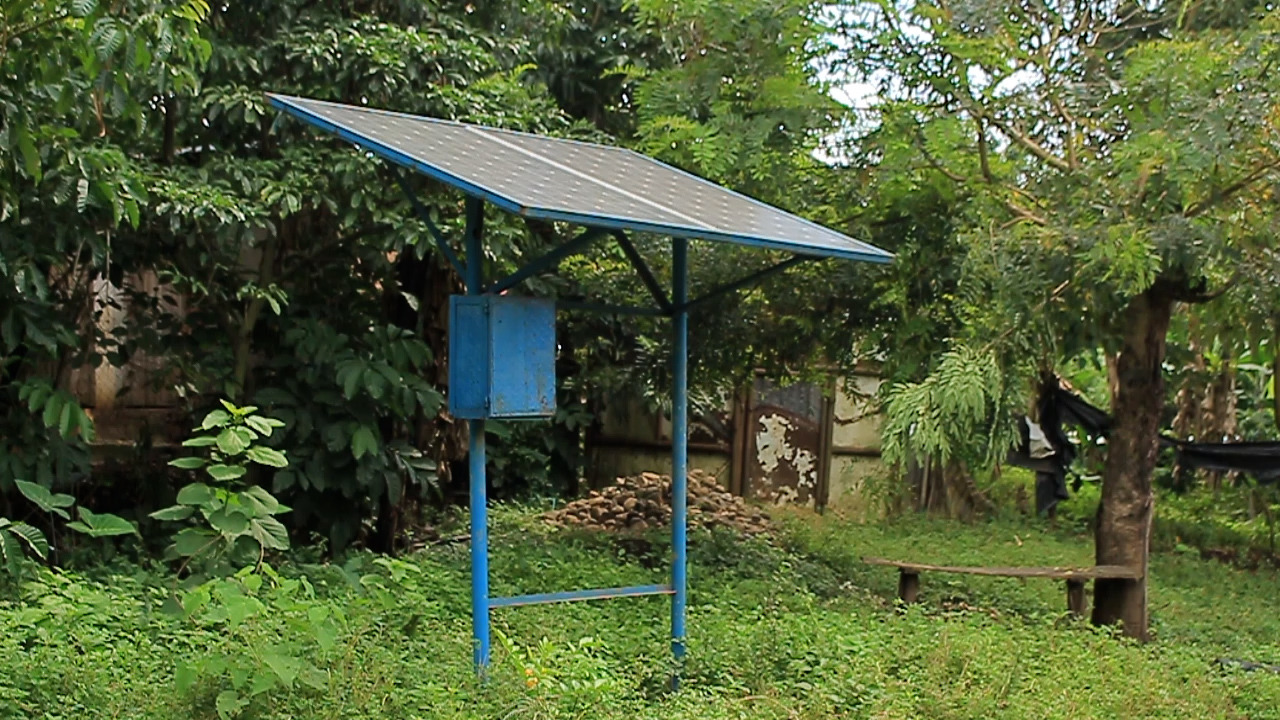
Over the past decade, the situation has compelled communities to adopt solar-powered irrigation technologies as an alternative measure to sustain production for sale and household consumption.
Kasese District has experienced delayed rainfall, and when it does rain, the downpours have displaced many families, leaving them at the mercy of government relief and support from well-wishers.
Climate change therefore remains a significant risk and a lived reality for communities in the district. These climate shocks are interconnected with deep-rooted gender inequalities, placing a heavy burden on women and girls.
Men and boys are also affected by climate change. Recurrent disasters in the district have contributed to psychological trauma and loss of life. Although soil fertility in the area remains favourable, the lack of adequate water has resulted in poor crop yields.
In 2024, the Kasese District Local Government commissioned the Micro-Scale Irrigation Programme, aimed at supporting smallholder farmers to acquire micro-irrigation equipment at subsidised costs.
According to Mr Julius Baluku, the District Production Officer, the programme is supported by the World Bank through the Uganda Fiscal Transfers Reform (UGIFT) and is intended to improve farmers’ livelihoods by promoting expanded agricultural production.
Mr Baluku explained that the programme was designed in line with the National Irrigation Policy, Uganda Vision 2040 and the National Development Plan, all aimed at advancing irrigation development.
please do not underline or highlight
Kasese: The effects of climate change continue to intensify in Kasese District, with residents reporting prolonged dry spells, intense rainfall, floods, hailstorms and landslides that have destroyed homes, gardens, bridges, schools and health facilities.
Over the past decade, the situation has compelled communities to adopt solar-powered irrigation technologies as an alternative measure to sustain production for sale and household consumption.
Kasese District has experienced delayed rainfall, and when it does rain, the downpours have displaced many families, leaving them at the mercy of government relief and support from well-wishers.
Climate change therefore remains a significant risk and a lived reality for communities in the district. These climate shocks are interconnected with deep-rooted gender inequalities, placing a heavy burden on women and girls.
Men and boys are also affected by climate change. Recurrent disasters in the district have contributed to psychological trauma and loss of life. Although soil fertility in the area remains favourable, the lack of adequate water has resulted in poor crop yields.
In 2024, the Kasese District Local Government commissioned the Micro-Scale Irrigation Programme, aimed at supporting smallholder farmers to acquire micro-irrigation equipment at subsidised costs.
According to Mr Julius Baluku, the District Production Officer, the programme is supported by the World Bank through the Uganda Fiscal Transfers Reform (UGIFT) and is intended to improve farmers’ livelihoods by promoting expanded agricultural production.
Mr Baluku explained that the programme was designed in line with the National Irrigation Policy, Uganda Vision 2040 and the National Development Plan, all aimed at advancing irrigation development.
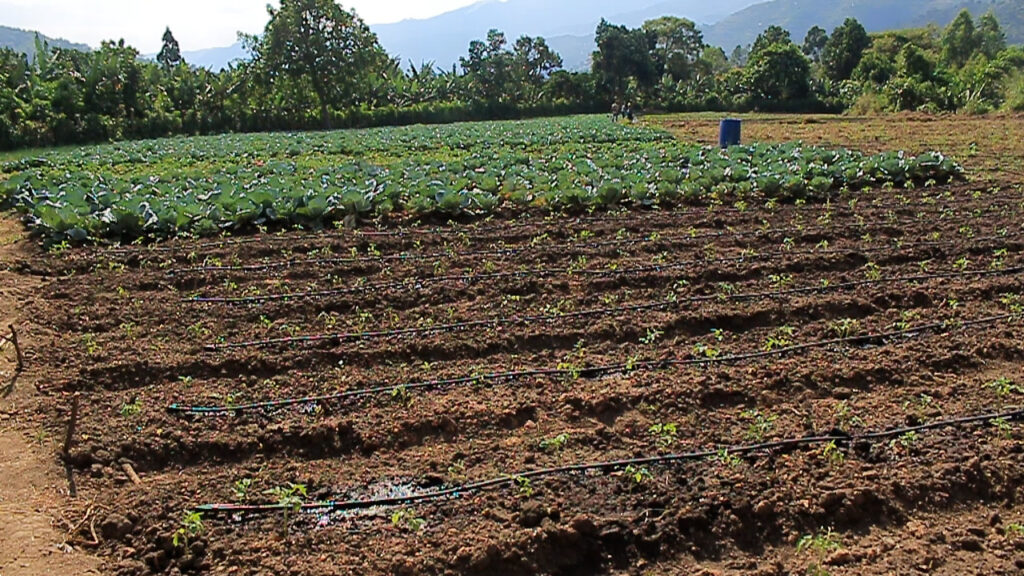
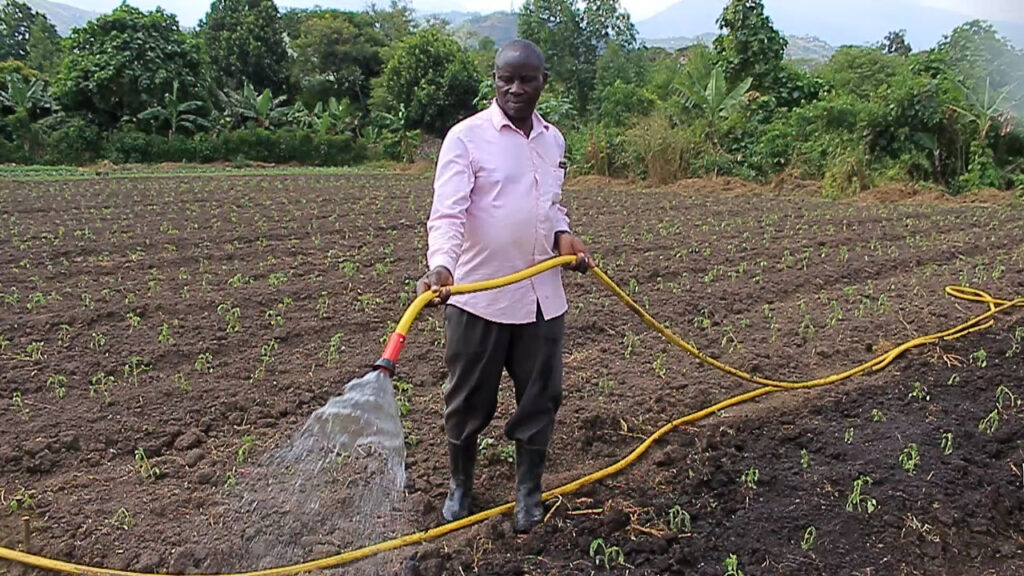
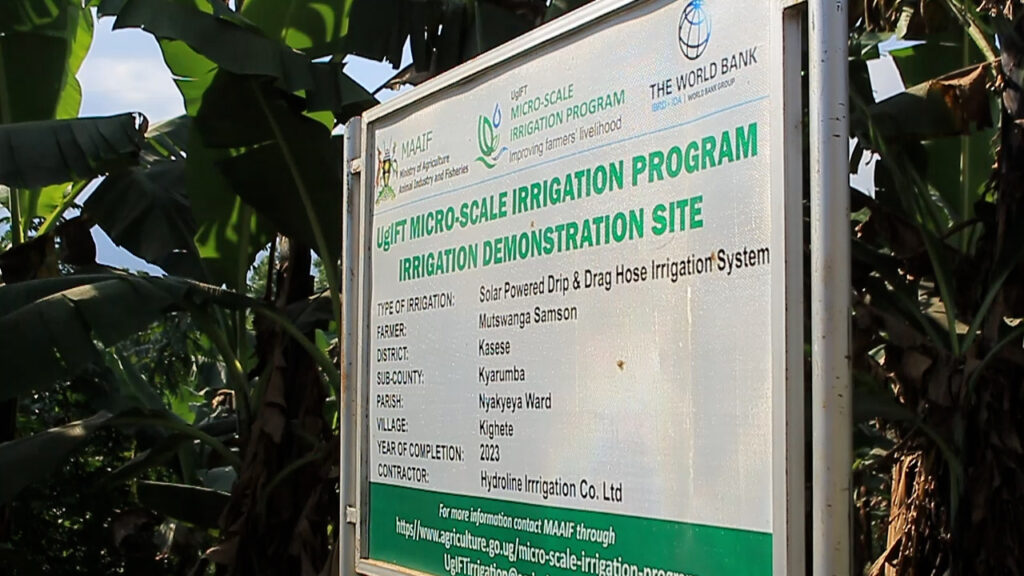
Mr Samson Mutswanga, a farmer from Kyarumba Town Council, is among the beneficiaries of the programme and says he has no regrets. Through the initiative, Mr Mutswanga purchased a 5,000-litre water tank, a solar panel and installed a drip irrigation system.
“I already have more than 3,000 cabbages growing here. I draw water from this flowing river, and it is channelled directly into the tank. I use the solar system to pump the water,” he said.
Mr Mutswanga explained that he contributed Shs 7.5 million towards the project, while the remaining costs were fully covered by the Kasese District Local Government with funding support from the World Bank.
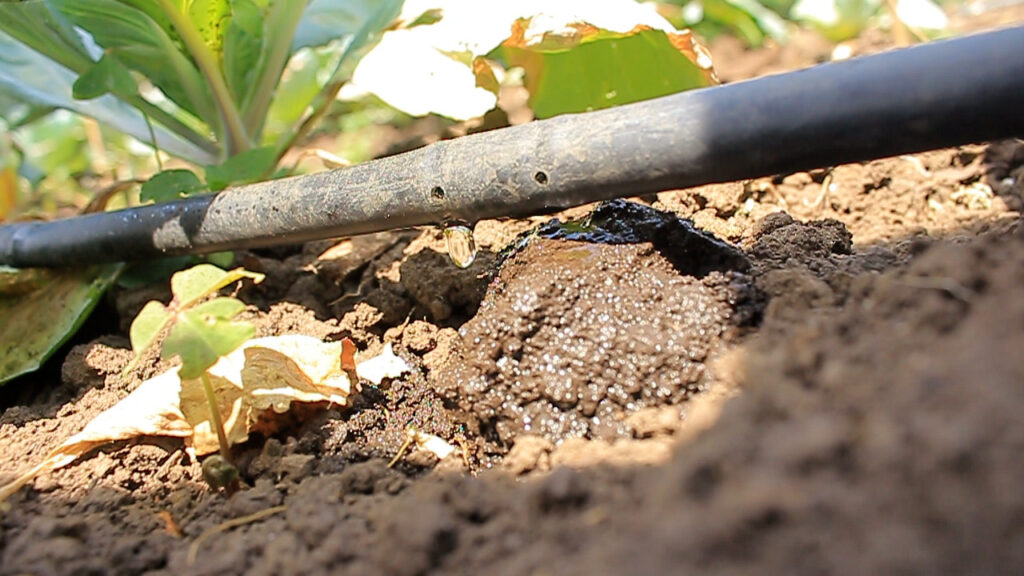
Drip irrigation is a highly efficient, low-volume watering method that delivers water and nutrients directly to a plant’s root zone through a network of valves and pipes. The system is currently performing well in Zambia and several other African countries.
Mr Maate Yonah Tumusiime is another beneficiary of the Uganda Fiscal Transfers Reform (UGIFT). He explained that within a period of nine months, he has earned more than UGX 7.5 million from a variety of crops, including watermelons, carrots and cabbages.
He is now using his experience to encourage other farmers to take advantage of the opportunity so they can harvest throughout the year.
“When I heard about the programme, I thought it was like other government programmes that sometimes require a lot of paperwork. The only thing I did was look for the money and pay. The rest were updates from district officials informing me how far the process had gone,” Mr Tumusiime said.
Mr Benson Agaba, the Kasese District Senior Agricultural Engineer, noted that under the implementation of the programme, the government subsidises the procurement of irrigation equipment by between 25 per cent and 75 per cent, depending on the choice of power source, with a maximum contribution of UGX 18 million per farmer.
Mr Ivan Bwambale Bibuwa, the Local Council Chairperson for Kyarumba Town Council, expressed optimism that drip irrigation is a game changer, given Kasese District’s vulnerability to climate change and its associated effects.
“This programme should have been introduced earlier. It is a game changer. If you see how the beneficiaries are performing, you would appreciate its impact,” he said.