
 QFM
QFM
QFM
QFM
17 April 2026, 8:35 pm

By Andrew Ogwang
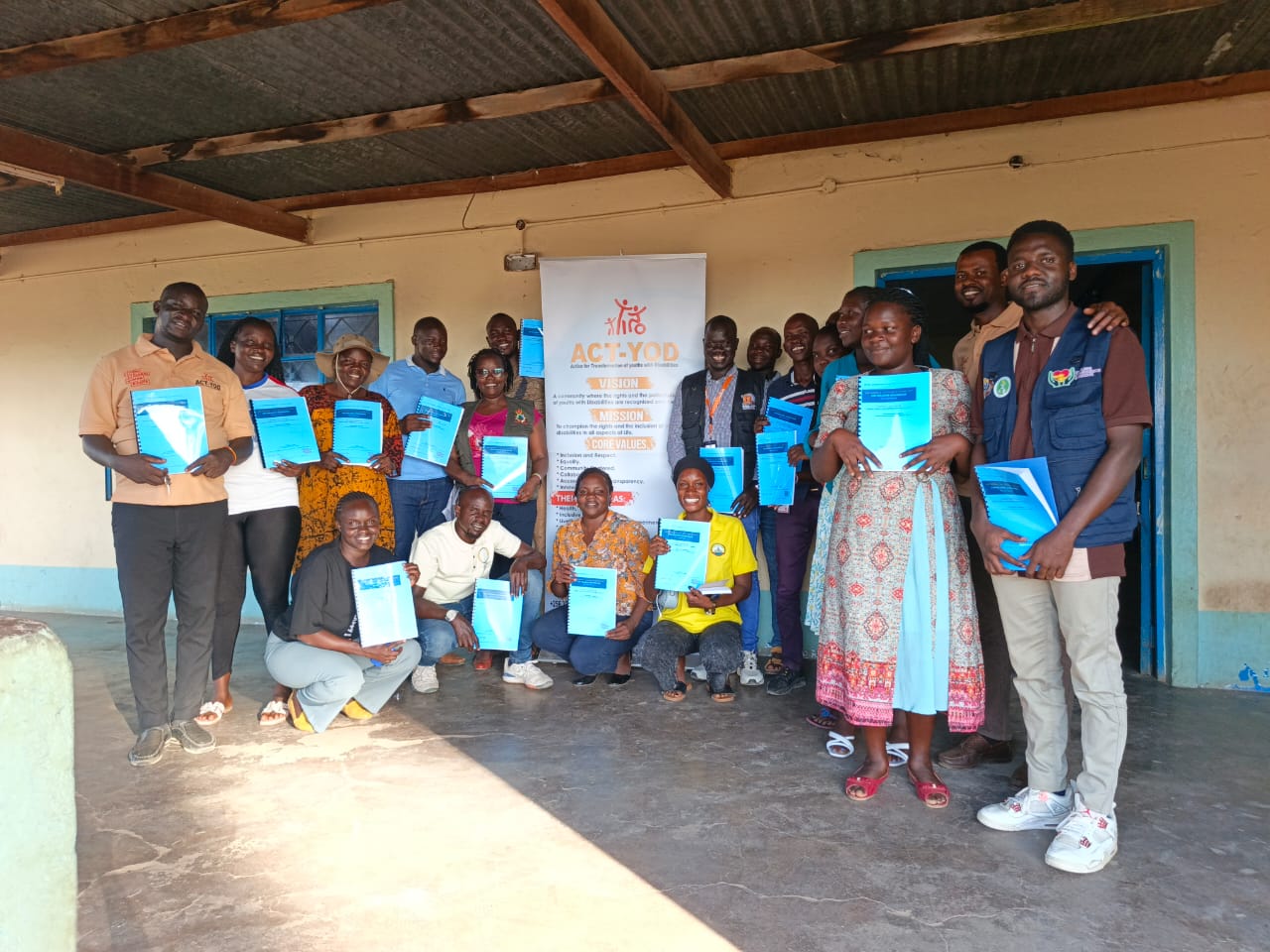
Action for Transformation of Youths with Disabilities (ACT-YOD) is conducting a one-day training programme aimed at empowering youth leaders with disabilities and representatives of civil society organisations (CSOs) in governance.
The training seeks to increase awareness and dissemination of Uganda’s key disability policies and legal frameworks among CSOs, uni-associations, and the Youth Council in Arua Central Division.
Held at the Social Centre in Police Cell, Central Division, Arua City, the training focused on disability rights and legal frameworks, governance structures and participation opportunities, inclusive leadership for youth with disabilities, and practical advocacy skills for local engagement.
Facilitator Emmanuel Geriga, a disability rights activist, highlighted the meaning of persons with disabilities, emphasising that it relates to both impairment and the environment. He stressed the importance of their participation in decision-making and community activities, urging CSOs to include persons with disabilities in their programmes, even at community level.

Maxwell Asiku, Coordinator at ACT-YOD, noted that implementing disability inclusion projects is often perceived as expensive, but said this should not delay action.
“Implementing disability inclusion projects is often seen as expensive, but that should never be a reason to delay action. We can begin with the small resources we have and build steadily. What matters most is intention, commitment, and the structures in place.
“When our governance systems, both at board of directors and management level, are truly inclusive of youth with disabilities, we shall shift from talking about inclusion to actually living it. Inclusion becomes part of our identity, not an added cost. Over time, the narrative that ‘inclusion is expensive’ fades away because we see its value in stronger leadership, better decisions, and more impactful programmes,” he said.
Asiku added that Action for Transformation of Youths with Disabilities (ACT-YOD) aims to create a database to facilitate the sharing of requests and support for youth who are refugees and residents.
Twalib Ayub Ali, Executive Director of ACT-YOD, which is funded by the Fund for Global Human Rights, said the organisation has developed activities and projects that have attracted many youths with disabilities.
“We are still engaging many persons with disabilities through training in sign language, hairdressing, welding, and providing Wi-Fi internet,” Twalib said, adding that ACT-YOD is working to strengthen institutions and build capacity.

Inzikuru Florence Favour, Executive Director of Women with Destiny, welcomed the training, saying it helped her appreciate the importance of inclusive decision-making.
“One of our staff members with a disability was very skilled in decision-making, but he has since passed on, leaving us with challenges and weaknesses in our daily operations,” she said.