
 Time FM
Time FM
Time FM
3 December 2025, 12:32 pm
By Gerald Welikhe
Environmental catastrophe unfolds in Namisindwa as forests fall to stumps, sawdust, and charcoal
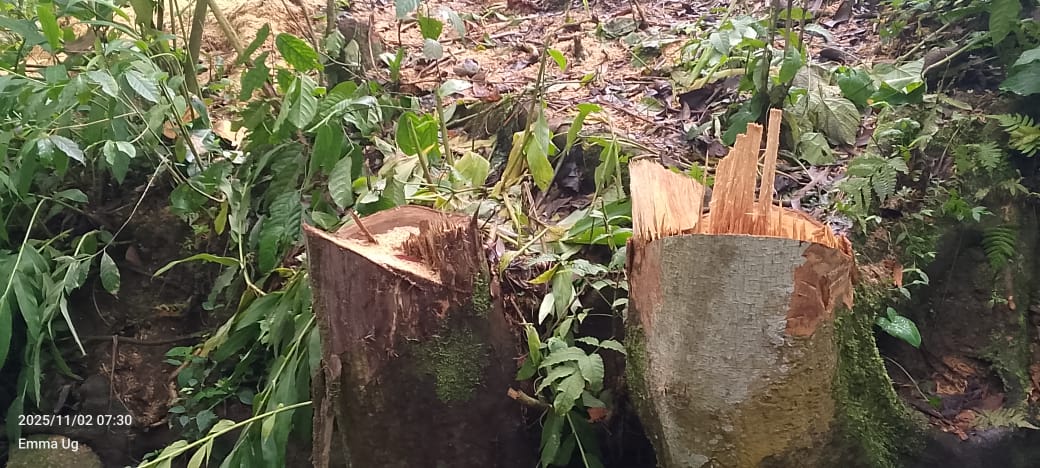
Mukoto Sub county, Namisindwa District — The once-dense Kayewa-Mukoto forest, a critical watershed and climate buffer in eastern Uganda, has been reduced to a graveyard of tree stumps, scattered timber, and charcoal-burning sites, revealing the brutal scale of illegal deforestation ravaging the region.
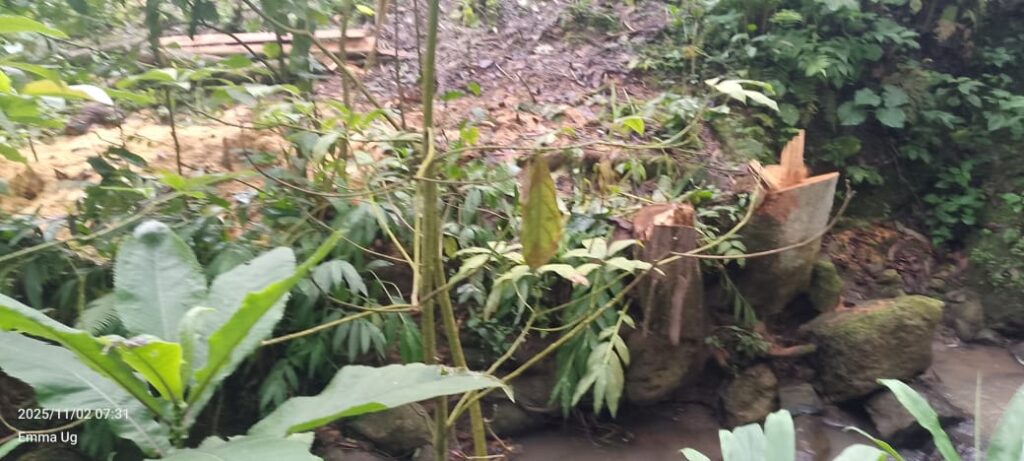
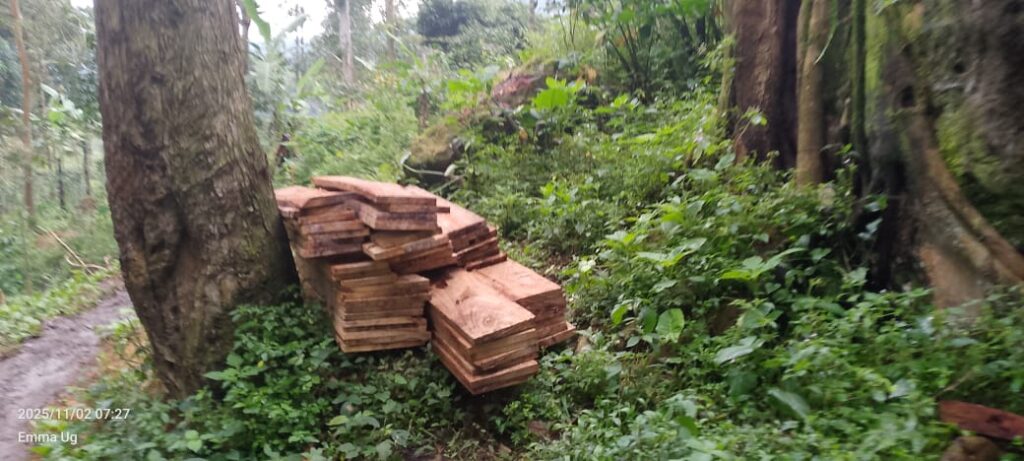
Fresh evidence from the ground shows massive trees felled and processed into timber, their freshly cut stumps still oozing sap amid charred patches of forest floor. Stacks of sawn planks lie abandoned among the undergrowth, while blackened earth marks where charcoal kilns have consumed countless trees. Streams that once flowed clear now run muddy with eroded soil, a stark testament to the ecological devastation underway.
“We are watching our forest disappear before our eyes,” says Nasimolo Emma Musungu, a local resident who has witnessed the destruction accelerate in recent months. “First come the loggers with their chainsaws, then the charcoal burners. They leave nothing but bare ground and ashes.”
“We need the government to reconcile us with forest wardens so we can protect what remains. Without the forest, we have lost our rainfall cycle. Our ancestors understood that protecting the forest meant safeguarding our water and our climate. We must restore that relationship if we are to regain our usual rains,” says Nasimolo Emma Musungu.
The destruction of Kayewa-Mukoto Forest comes at a critical time, as Uganda, like much of East Africa, faces increasingly erratic rainfall patterns, prolonged droughts, and devastating floods linked to climate change. Forests such as Kayewa-Mukoto act as nature’s climate regulators, absorbing carbon dioxide, generating rainfall, and stabilising local weather patterns.
When forests are destroyed, entire climate systems are disrupted. These woodlands represent the first line of defence against climate extremes. Without them, communities face hotter temperatures, unpredictable rainfall, and greater vulnerability to climate disasters.
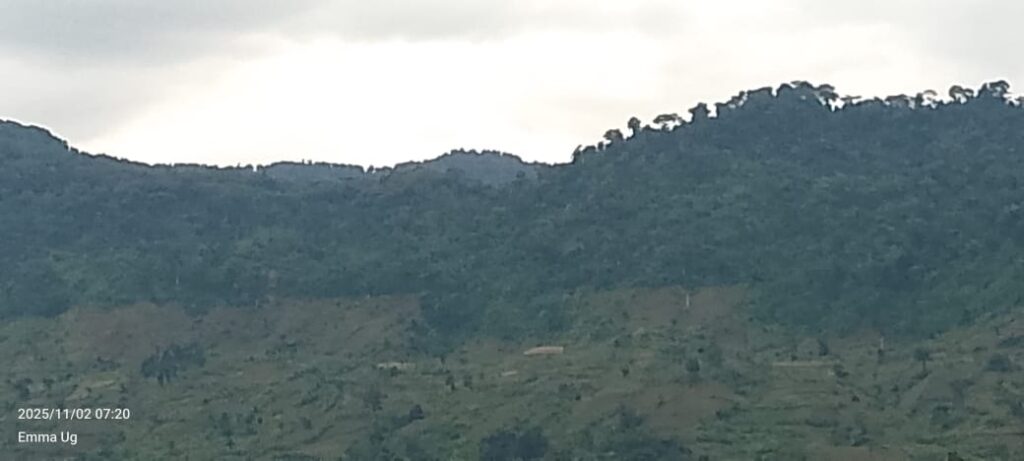
Images from Kayewa-Mukoto paint a grim picture: hillsides stripped bare where thick canopy once stood, logging sites littered with debris, extensive patches of burnt earth from charcoal production, and water sources choked with sediment. The exposed slopes now face severe erosion risks, threatening not only local water quality but also agricultural lands downstream.
While timber logging draws attention, environmental activists say charcoal burning poses an equally devastating threat to Kayewa-Mukoto. Traditional earth-mound kilns, which slowly burn wood to produce charcoal, consume enormous quantities of trees and release significant carbon emissions directly into the atmosphere.
“The charcoal business is destroying what the loggers leave behind,” observes Nelima Merida, an environmental monitor in the area. “Even small trees and branches that timber cutters ignore are being turned into charcoal. The forest has no chance to regenerate.”
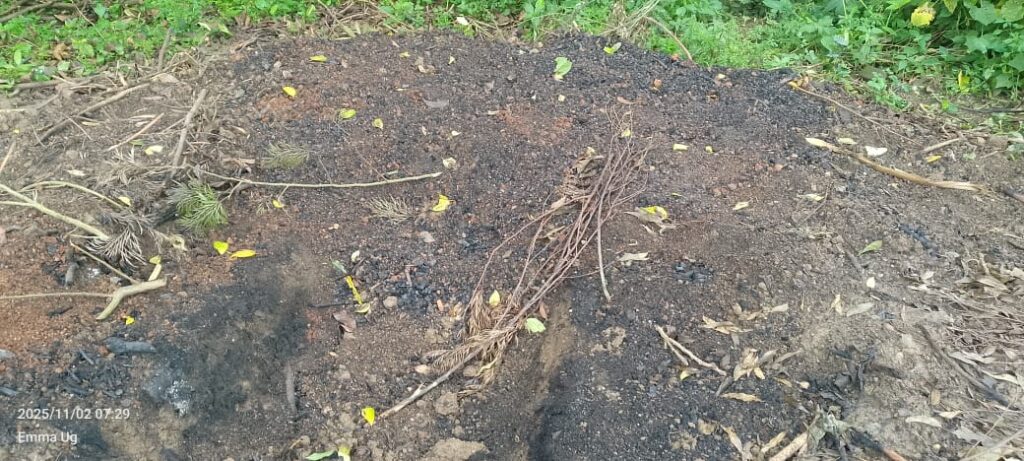
Charcoal production, driven by urban demand for affordable cooking fuel, has become a lucrative but environmentally catastrophic enterprise. A single charcoal kiln can consume several trees, and evidence across Kayewa-Mukoto suggests that dozens of such operations have been active in recent weeks.
The combined impact of logging and charcoal burning creates a climate-crisis multiplier effect. Not only is stored carbon released when trees are cut and burned, but the loss of living trees eliminates the forest’s capacity to absorb future carbon emissions. Meanwhile, the ash and bare soil left behind absorb more heat than forested land, contributing to local temperature increases.
Local residents report alarming changes in weather patterns that they attribute directly to forest loss. Khaukha Richard, a farmer whose land borders the forest, says rainfall has become increasingly unpredictable.
“Our grandfathers told us the forest brings the rain,” Khaukha explains. “Now we see less forest and less rain. Our planting seasons are confused. Sometimes the rains come too late, sometimes too early, sometimes not at all.”
The mountainous terrain, visible in panoramic shots of the scarred landscape, makes the area particularly vulnerable to landslides once tree roots no longer hold the soil in place. The exposed hillsides, stripped of vegetation, now bear the full force of tropical downpours when they do arrive.
The climate implications extend far beyond Namisindwa. Forests act as carbon sinks, storing vast amounts of carbon that, when released through deforestation and charcoal burning, accelerate global warming. They also generate moisture that travels hundreds of kilometres, influencing rainfall patterns across the region. The loss of Kayewa-Mukoto could therefore affect communities far beyond the immediate area.

Environmental activists are calling for urgent government intervention to halt both logging and charcoal production, and to prosecute those responsible. They warn that without immediate action, the remaining forest fragments visible in the distance will soon meet the same fate, leaving the district stripped of its natural climate-defence system.
The situation in Kayewa-Mukoto reflects a broader crisis across Uganda, where forest cover has declined dramatically over recent decades. As climate change intensifies, the loss of these forests creates a vicious cycle: less forest leads to reduced rainfall, higher temperatures, and more extreme weather, making communities increasingly vulnerable to climate shocks.
Ironically, some of those participating in the destruction are themselves victims of climate change, turning to charcoal burning as agricultural yields decline due to erratic weather. This creates a devastating feedback loop in which climate impacts drive deforestation, which in turn worsens the climate crisis.
For the people of Mukoto Sub county, the disappearing forest represents not just lost trees, but a lost future—one in which clean water, stable weather, and fertile soils become increasingly scarce commodities in a warming world.
“If we don’t stop this now, our children will inherit a desert,” warns Nasimolo. “The forest gave us everything: water, rain, cool air, fertile soil. Now we are destroying it for a few bags of charcoal and planks of timber. What will we tell the next generation?”
These concerned residents, however, chose not to speak openly for security reasons. They shared their names on the condition of anonymity, saying they are known by many people in the area.