
 LUO FM
LUO FM
LUO FM
25 March 2026, 7:44 pm
By Geoffrey Okwong
Sanitation remains a significant challenge in Pader District despite notable improvements in access to safe water, district leaders have revealed.
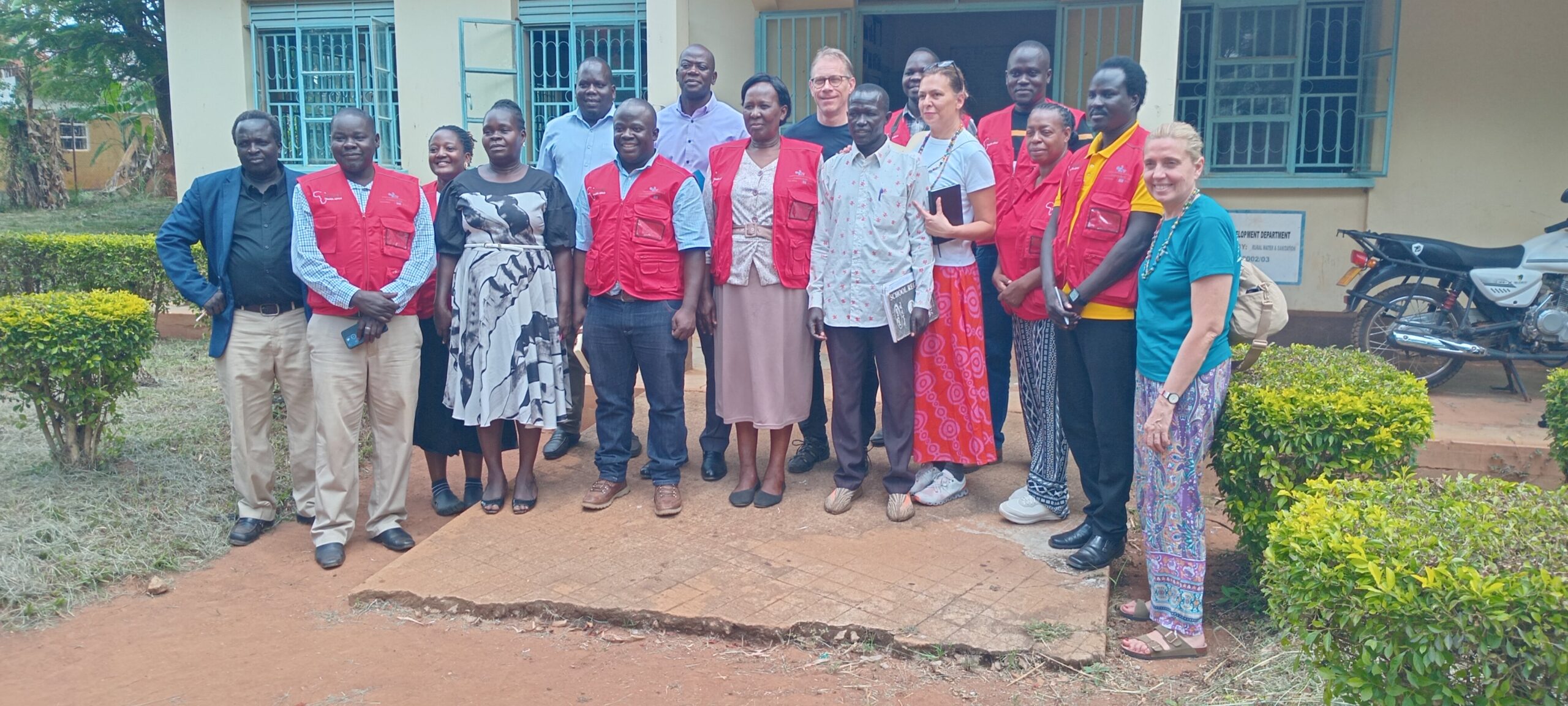
The concern was raised on Tuesday 24, March 2026 during an engagement between district officials and partners including AMREF Health Africa, where leaders discussed progress and remaining gaps in water, sanitation and hygiene (WASH) services.
Speaking during the meeting, the Pader District Water Officer Patrick Olanya said sanitation coverage in the district currently stands at about 69 percent, leaving nearly 31 percent of households still practicing open defecation.
“You may find it sounding strange, but there are still communities practicing open defecation in some parts of the district,” Olanya said.
He explained that although official statistics show that the district has high water coverage, the situation on the ground is different because many water sources were constructed during the time communities were living in internally displaced persons camps during the insurgency in northern Uganda.
After residents returned to their villages, some of the water points remained concentrated in the former camp areas while other communities were left without access to safe water.
“You may find several boreholes within a short distance in the former camps, while other villages still have none,” he said.
Olanya also cited limited government funding as a major constraint in addressing water and sanitation gaps, noting that the district can only drill a few boreholes each financial year despite the high demand across sub-counties.
Margret Alanyo, the Pader District Education Officer (DEO) said while access to water in schools has improved, sanitation infrastructure such as latrines remains a serious challenge.
Alanyo explained that some school latrines have collapsed due to floods and weak soil conditions, leaving schools struggling to provide adequate sanitation facilities for learners.
“If there is no latrine in a school, then the school should actually be closed,” she said, adding that some communities have been mobilized to construct temporary facilities as the district plans for permanent structures.
Meanwhile, the Assistant Resident District Commissioner for Pader, Boniface Pule, called for more support to improve sanitation and hygiene facilities, particularly in schools.
Pule commended AMREF Health Africa for constructing washrooms and disposal units for girls in some schools, saying the facilities help address menstrual hygiene challenges that often affect school attendance.
He narrated an incident where he encountered a schoolgirl leaving school because she could not manage her menstrual period due to lack of proper facilities.
“When I stopped to ask why she was leaving school, she told me she was on her menstrual period. I had to give her some money and call a boda boda rider to take her home,” Pule said.
He said such situations demonstrate the urgent need for improved sanitation facilities to ensure girls remain in school during their menstrual periods.
Pule also urged development partners to extend water and sanitation projects to more sub-counties in the district.
Lillian Kamanzi Mugisha, Communications and Fundraising Manager with AMREF Uganda, said the organisation has supported mini water systems and school latrines, improving the student-to-latrine ratio from 1:200 to 1:80 and boosting enrolment in some schools.
District leaders commended AMREF Health Africa for supporting WASH programs but emphasized that more support is needed to address sanitation challenges affecting communities and schools across Pader District.