
 Radio Wang Ooh
Radio Wang Ooh
Radio Wang Ooh
31 July 2026, 9:17 am
By Freeman Canogura
Farmers and local leaders in Agago District have called for stronger action to address the effects of climate change, warning that unpredictable rainfall patterns, prolonged dry spells, and environmental degradation are increasingly threatening food production and household livelihoods.
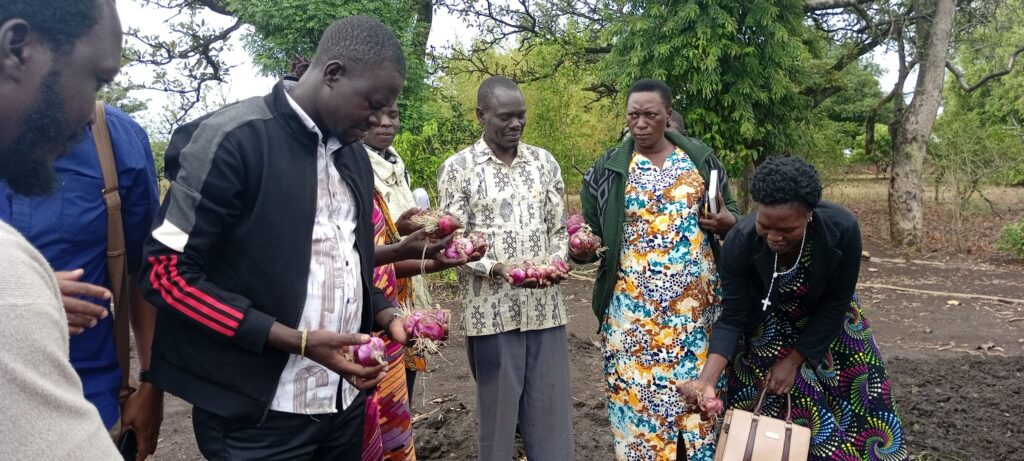
The concerns were raised during the third week of the Lok Pa Lapur (Farmers’ Voice) Community Meeting, an initiative organised by Radio Wang Ooh FM that brings farmers together every week to discuss agricultural challenges and learn practical solutions from experts.
The session was facilitated by Ojok Kyte Okidi, the LC III Chairperson of Lira Kato Sub-county, who urged farmers to embrace nature-based solutions to strengthen their resilience against climate change.
Okidi said farming communities in Agago District, whose livelihoods largely depend on rain-fed agriculture, are becoming increasingly vulnerable to changing weather patterns. He encouraged farmers to protect trees, restore degraded land, conserve wetlands and water sources, and adopt climate-smart farming practices that improve soil fertility and enhance moisture retention.
He also appealed to communities to stop indiscriminate tree cutting, emphasising that environmental conservation is essential for safeguarding agricultural production and the livelihoods of future generations.
Participants welcomed the discussion and shared experiences from their respective communities.
Mzee Encio Okech, a farmer from Pakor, commended Okidi for educating farmers and warned that stray livestock, including cattle and goats, continue to destroy crops. He also expressed concern about outsiders entering the district to cut trees for commercial purposes, saying the practice is accelerating environmental degradation.
Alice Min Kibedmot, a farmer from Lira Kato, called for stronger government intervention to help communities adapt to climate change. She questioned whether some of the seeds supplied to farmers are genuinely improved varieties capable of withstanding harsh weather conditions. She further alleged that corruption is undermining efforts to curb illegal charcoal production.
From Laperebong Sub-county, Geoffrey Akere urged leaders to move beyond awareness campaigns by strengthening laws that compel communities to protect the environment. He praised the district resolution encouraging every household to plant cassava, saying the initiative has helped many families cope with food shortages during difficult seasons. Akere also blamed some landowners for allowing trees to be cut down for charcoal production in exchange for small amounts of money.
Engineer Pip Okidi, the LC I Chairperson of Oporot South Cell in Patongo Town Council, challenged residents to consider the long-term consequences of environmental destruction. He urged communities to stop selling trees for charcoal production and advised farmers to market their produce strategically instead of selling cheaply to middlemen who exploit them.
Meanwhile, Ocen Paul from Geregere Sub-county attributed continued environmental degradation to residents who ignore advice from local leaders. He proposed holding village chairpersons accountable for charcoal burning in their respective areas, arguing that such responsibility would strengthen enforcement against the practice.
Chombe Amic from Labworeyemo in Patongo Sub-county encouraged farmers to embrace modern farming methods, saying agriculture should not only provide food for household consumption but also generate income through commercial production.
Mego Anjoletta Bimeny from Kalongo urged farmers to make better use of their time by carefully planning agricultural activities and investing in practices such as irrigation to reduce dependence on rainfall.
The discussions concluded with a renewed call for communities, leaders, and government agencies to work together to promote environmental conservation, strengthen climate adaptation measures, and equip farmers with practical skills to improve agricultural productivity despite changing weather conditions.