
 Rapa FM Pader
Rapa FM Pader
Rapa FM Pader
31 December 2025, 19:37
By Ekel Bonny Daniel
Farmers in Pader District are grappling with the harsh realities of climate change after consecutive seasons of floods and prolonged droughts devastated crops, threatened household food security, and left families struggling to educate their children.
Mukasa Justine Oruma, a farmer and resident of Wangduku Village in Pajule Sub county, says the second farming season has been the worst in years.
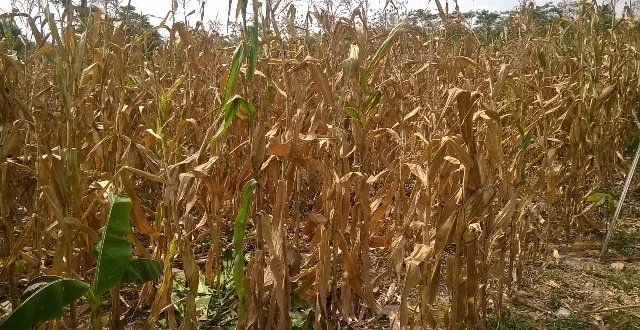
Standing in his garden harvesting maize, Mukasa recounts how excessive sunshine dashed his expectations.
“In my three acres of maize, I expected to harvest between 30 and 40 sacks,” he says. “But because of the prolonged drought, I may not even get three sacks.”
The losses have far-reaching consequences. Mukasa explains that his harvest was intended to pay school fees and support his family in the coming year.
“I may not be able to send my children back to school. Providing food for my family and paying secondary school fees next year will be extremely difficult.”
While the second season was marked by drought, the first season also presented significant challenges.
Many farmers living near water sources suffered losses due to flooding, which damaged crops and made drying and storage nearly impossible.
Mego Rose Oleke, a resident of Conner Kilak in Pader Sub county, describes 2025 as a year of extremes.
“The first season brought floods everywhere, and the second season was severely affected by drought. We are harvesting simsim, maize, and groundnuts, but the yields are very poor.”
Rose adds that farmers are now struggling to pay school fees and are uncertain about how they will feed their families next year.
Poor road conditions have compounded the problem, limiting access to markets and forcing farmers to sell their produce at very low prices, despite having purchased seeds at high costs.
In Puranga Town Council, Rev. Michael Ocan says that timing made the difference between success and failure this season.
“Those who planted maize early in August are seeing some harvest, but those who planted in September are suffering severely from the drought.”
Rev. Ocan also highlights the challenges posed by pest infestations and crop storage.
“If you do not spray your crops, you may harvest nothing. Even after harvesting, storage remains a major challenge, as crops spoil easily.”
He appeals to the government and development partners to support farmers with affordable seedlings and value-addition equipment.
“If we can process maize into flour, farmers will be able to earn higher prices.”
Ojwini Richard, the LCIII Chairperson of Pukor Sub county, has warned of a looming food crisis.
“In the first season, floods destroyed crops, and in the second season, drought affected maize, sunflower, and soya beans. There are serious signs of famine next year.”
He urges farmers to use their limited resources wisely and cautions against selling produce for short-term celebrations.
He also calls on the government and NGOs to support farmers with improved seeds, modern agricultural training, and protection from exploitative middlemen.
“Farmers buy 2–5 kg of sunflower seeds for 60,000 to 75,000 shillings, but after harvest, middlemen purchase the produce at very low prices,” he says.
Mr Charles Odongtoo, LCIII Chairperson of Lunyiri Sub county, acknowledges that farmers currently receive limited direct support but commends the Parish Development Model (PDM) for assisting communities.
“The biggest complaint from farmers is low prices at harvest,” he says. “Our land is fertile, but the second season was severely affected by drought. Many farmers now rely on village savings and loan associations (VSLA) to buy seeds and pay school fees.”
Produce dealers are not spared either. Ojara Apoowegi, a trader in Pader Town Council, says that sourcing produce has become increasingly difficult.
“We buy sorghum at 850 shillings, maize at 800, and sunflower between 1,000 and 1,200 per kilogram,” he explains. “But this season, obtaining produce from villages is very difficult, and the quality is poor due to the drought.”
Poor roads and high fuel costs further reduce profits, often forcing traders to return empty-handed.
According to Mr Seydou Opoka Adolatona, the Pader District Agricultural and Production Officer, rainfall was generally adequate in 2025, but late planting proved costly.
“Farmers who planted late in the second season were the most affected by the drought,” he says. “We advise early planting in both seasons and the use of suitable seedlings.”
He also urges farmers to avoid replanting diseased cassava cuttings and to follow agricultural advice to improve yields.
As climate change continues to disrupt traditional farming patterns, farmers across Pader District are calling for urgent support, including affordable seeds, improved storage facilities, value addition, market regulation, and ongoing training.
Without intervention, many fear that today’s losses could lead to widespread hunger tomorrow.