
 Rapa FM Pader
Rapa FM Pader
Rapa FM Pader
3 February 2026, 17:42
By Ekel Bonny Daniel
Pader District is taking a bold step towards climate resilience as local farmers begin adopting solar-powered irrigation to tackle erratic weather and enhance food security.
On 3 February, the African Leadership and Reconciliation Ministries (ALARM–Uganda) launched its Climate Smart Agriculture Project at the ALARM Technical Centre in Pader District, marking a new chapter in sustainable farming for the region.
The initiative addresses the mounting challenges faced by smallholder farmers in Northern Uganda, where climate change has disrupted traditional rain-fed agriculture.
Frequent dry spells, unpredictable rainfall, and prolonged droughts have led to repeated crop failures, threatening both livelihoods and local food supplies.
ALARM’s project seeks to transform these challenges into opportunities by introducing solar-powered irrigation systems, enabling year-round cultivation of high-value horticultural crops such as tomatoes, cabbages, onions, eggplants, and ntula.
The project is led by Rev. Stephen Olika Enenu, Country Director of ALARM–Uganda and Project Coordinator for all ALARM initiatives in the country.
Under his leadership, ALARM runs three core programmes: Community Transformation, Servant Leadership Development, and Peace, Justice, and Reconciliation.
The Climate Smart Agriculture Project falls under the Community Transformation Programme and is designed to empower communities to address challenges posed by climate change.
This pilot initiative targets food insecurity, nutritional deficits, and low household incomes.
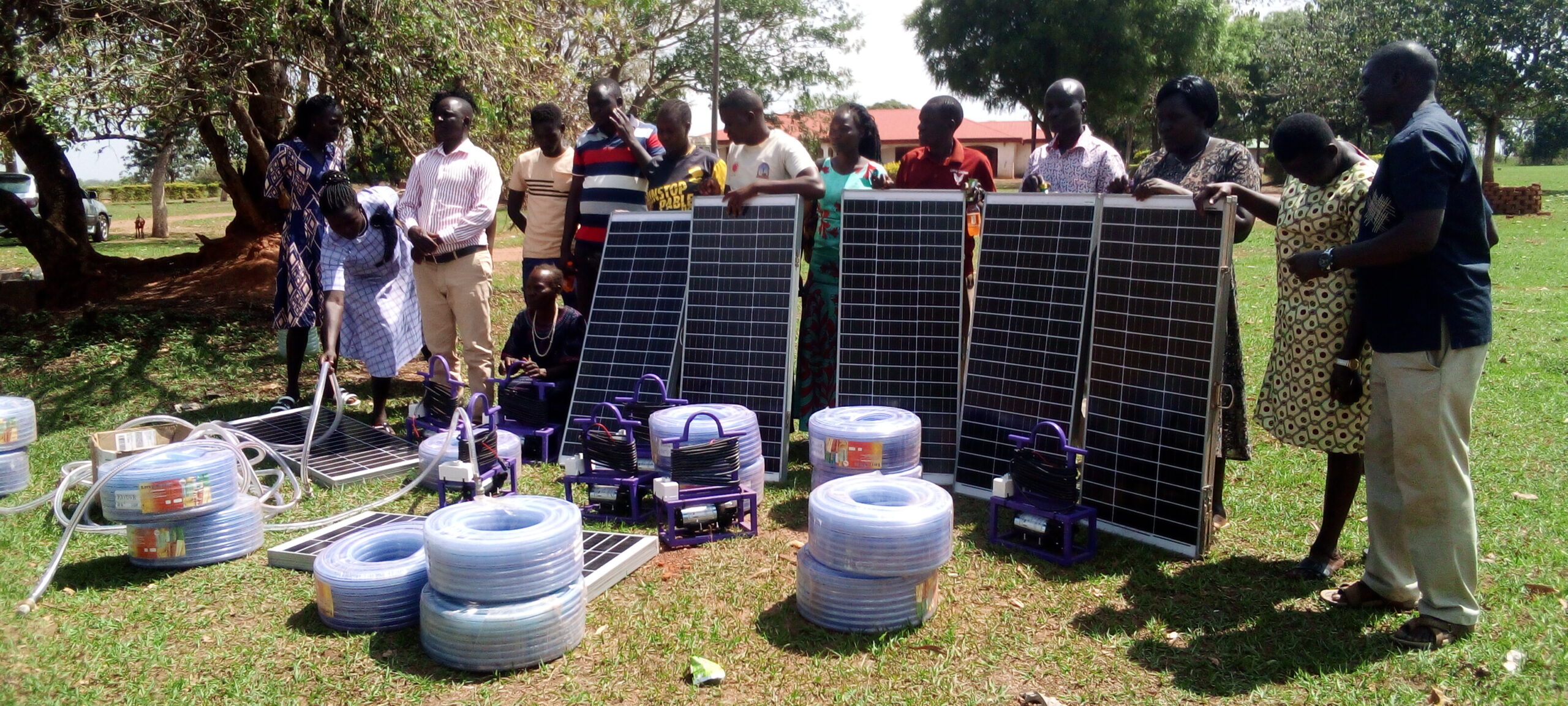
Solar-powered irrigation kits are being distributed to seven farmer groups—four in Pader Town Council and three in Pukor Sub-County.
Each kit includes a solar pump, piping, a water spout for drawing water from underground sources, and a user guide to ensure proper use.
By tapping into underground water and distributing it via sprinklers and spray systems, farmers can cultivate crops independently of rainfall.
The initiative initially focuses on high-value horticultural crops to maximise income potential and ensure local markets are supplied year-round.
The pilot phase officially began on 3 February 2026 in Pader Town Council and Pukor Sub-County.
Local leaders have welcomed the project, emphasising its alignment with regional development and environmental strategies.
Mr Kilama Fearless Wodacholi, LCIII Chairperson of Pader Town Council, noted that the initiative complements the council’s plans to protect the environment and promote sustainable farming.
In Pukor Sub county, Acirocan Grace, Parish Councillor for Olam Parish and Secretary for Education and Health, representing the LCIII Chairperson of Pukor Sub county, highlighted that the area’s proximity to key water sources—particularly the Agago River and the under-construction Aluka Dam—will greatly enhance the long-term sustainability of the solar irrigation systems.
Northern Uganda has experienced severe impacts from climate change. Unpredictable rainfall, prolonged dry spells, and frequent crop failures have left farmers struggling to sustain their livelihoods.
By introducing solar-powered irrigation, the project offers a practical solution to ensure consistent crop production, improved nutrition, and increased household incomes.
The initiative also tackles broader community challenges. Okello Scisor, Chairperson of Rwot Dit Farmers Group, emphasised that the project will encourage other community members to adopt climate-smart agricultural practices.
Farmers who previously struggled to grow vegetables during the dry season now have the means to produce crops consistently and reliably.
Residents have also expressed optimism. Ayela Richard, a local resident from Tejingi in Pader Kilak, welcomed the project and assured market vendors that green vegetables will be available in May, June, and July, ensuring a continuous supply.
Meanwhile, Apio Grace Akello, a member of St. Philip Farmer Group in Pader Town Council, acknowledged the challenges farmers previously faced during dry seasons and praised the project for enabling continuous production through solar-powered irrigation.
The seven farmer groups are responsible for the proper care, protection, and fair use of the solar-powered irrigation equipment.
ALARM Uganda has established clear terms and conditions for sustainability: equipment must be safeguarded from damage, shared equitably among members, and used solely for its intended purpose.
Groups are also expected to participate actively in programmes organised by ALARM, contribute to maintenance when necessary, and invest in collective development.
ALARM staff will monitor progress, provide guidance, and report to funding partners, ensuring accountability and long-term sustainability.
The solar-powered irrigation kits enable farmers to cultivate crops year-round, overcoming the limitations of seasonal rainfall and providing reliable access to both household and market food supplies.
This ensures food security for families and a stable supply of vegetables for local traders.
The Climate Smart Agriculture Project in Pader District represents a model of community-led climate resilience.
By combining renewable energy technology with organised local farming practices, the initiative creates a replicable example for other regions facing similar climate challenges.
The pilot project demonstrates how local innovation, coupled with technology and community cooperation, can transform vulnerability into opportunity.
ALARM Uganda’s strategy not only supports immediate agricultural productivity but also strengthens long-term resilience against climate change.
As the programme develops, ALARM aims to scale the initiative across Northern Uganda and eventually nationwide.
This approach shows that with the right combination of technology, leadership, and community engagement, climate-smart agriculture can deliver tangible benefits in nutrition, income, and sustainability.