
 Voice of Lango
Voice of Lango
Voice of Lango
31 December 2025, 3:14 pm

By Denish Ongora and Odota Adubango Moureen
A group of community members of Okere Parish, Adwari Sub County, Otuke District, has launched a Shea tree planting drive to save the endangered species from extinction caused by widespread deforestation for charcoal and firewood.
Shea trees (Vitellaria paradoxa) are vital for both livelihoods and the environment.
They provide raw materials for skin and hair products, cooking butter, and herbal medicine, while also enhancing climate resilience and stabilizing ecosystems.
Otuke District lies within Uganda’s Shea belt, which spans 18 northern and eastern districts.
In these regions, both government agencies and non-governmental organizations have stepped up conservation efforts after reports of increasing Shea tree destruction for charcoal and firewood.
On May 19, 2023, President Yoweri Kaguta Museveni issued Executive Order Number Three, banning the cutting and trade of endangered indigenous tree species, including Shea trees, to curb deforestation and environmental degradation.
Despite the ban, destruction persists in Otuke District, as the hardwood is highly valued for charcoal and firewood that burns longer, placing the species under severe pressure.
In response, Ojok Okello founded the women-led Okere Shea Butter Cooperative Society, which brings together 1,000 members from Otuke and Agago districts.
The initiative followed reports from the National Environment Management Authority (NEMA) and the National Forestry Authority (NFA), which indicated that Shea tree destruction had increased by 60% after the return of communities displaced during the Lord’s Resistance Army insurgency.
The cooperative is part of the broader Okere Community Development Project, also known as Okere City, launched in 2019 in Okere-momkok village as a community-driven social enterprise aiming to build a sustainable eco-village.
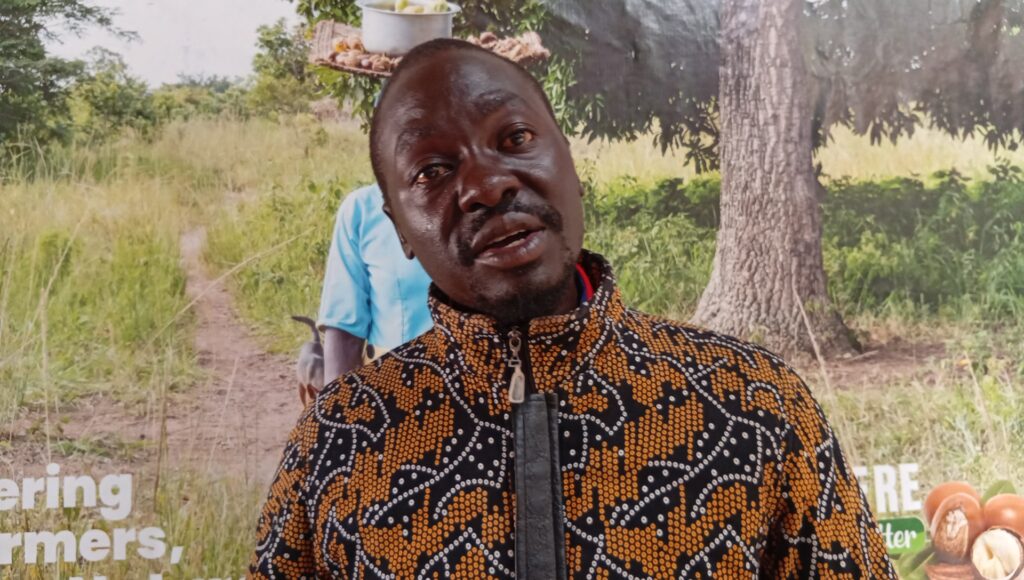
Okello, the Chief Executive Officer, says the cooperative works with farmers to protect existing Shea trees and plant new ones to restore degraded landscapes and enhance climate adaptation.
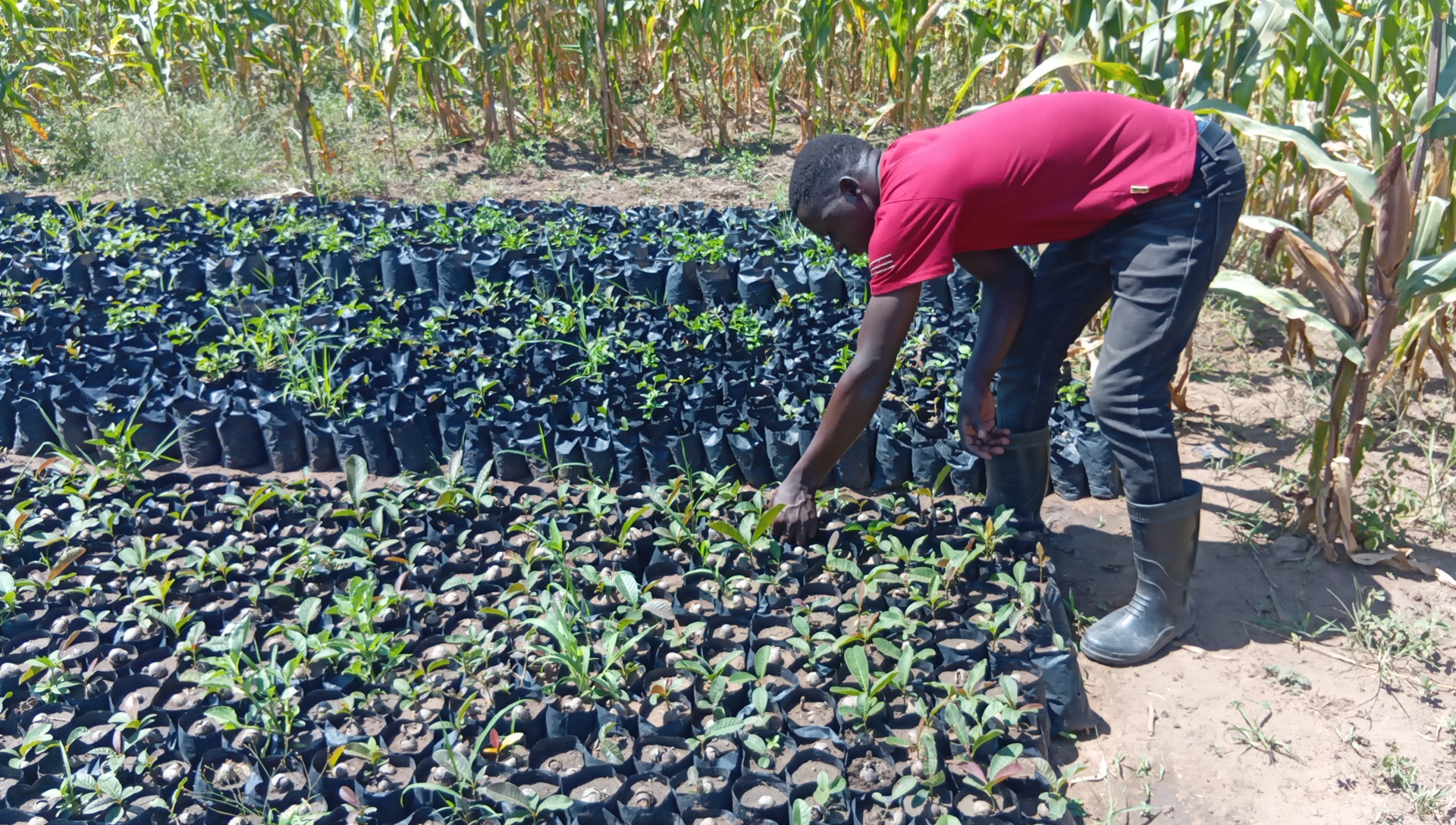
Currently, the group has raised 3,000 Shea seedlings, which will be distributed to farmers for this year.
Okello says plans are also underway to establish a demonstration garden to train farmers in proper Shea tree management and conservation practices.
He explains that the seedlings are grown from seeds collected from mature indigenous Shea trees to preserve their natural characteristics, growth cycle, and ecological value
Okello adds that they have partnered with Pallidum Group that will support Okere Shea Butter Cooperative Society to raise 100,000 Shea tree seedlings and farmers will benefit from carbon credits.
Okello adds that they have equally signed memoranda of understanding with international firms involved in Shea butter production to generate carbon credits.
These funds will train local farmers in growing Shea and other trees for fruits and timber, promoting livelihoods while strengthening environmental protection.
Etany Solomon, confirmed their partnership with Okere Shea Butter Cooperative Society to co-fund the raising of Shea trees, as well as maintenance of existing ones as farmers benefit from carbon credits.
Ambrose Opii, an agricultural extension officer with the cooperative, says farmers are being sensitized on the economic and environmental importance of Shea trees, including protecting them from cutting, bushfires, and other forms of degradation.
Josephine Anyanga, a 45-year-old resident of Omuku village and cooperative member, says the training has taught them how to protect Shea trees from wind damage and illegal cutting for sustainable benefit.
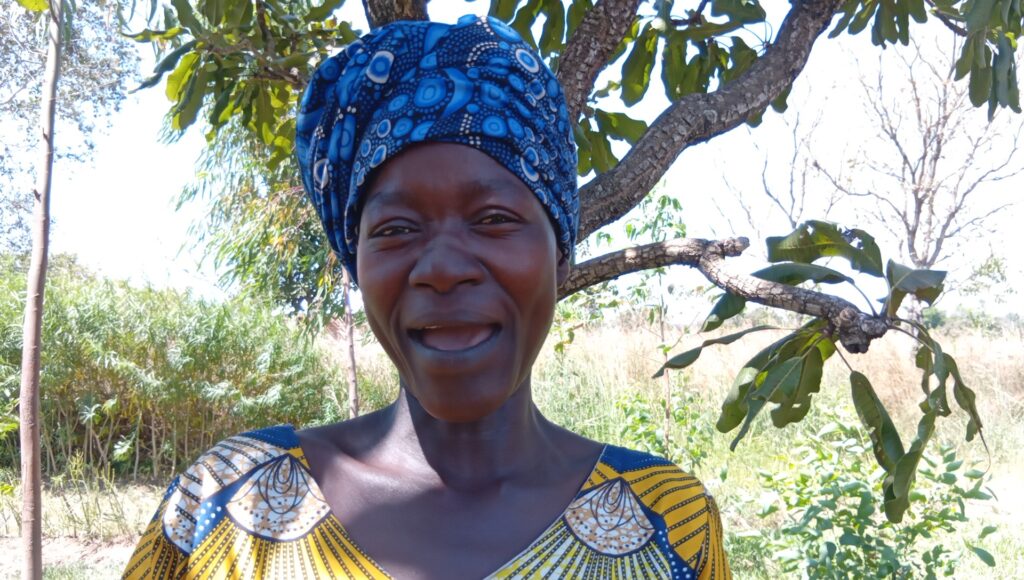
Another member, Scovia Awili from Oketpur village, says she earns income by buying Shea seeds during the harvest season, storing them, and selling them during the off-season at 2,800 shillings per kilogram when supply is low.
She says this has motivated her to actively protect the trees.

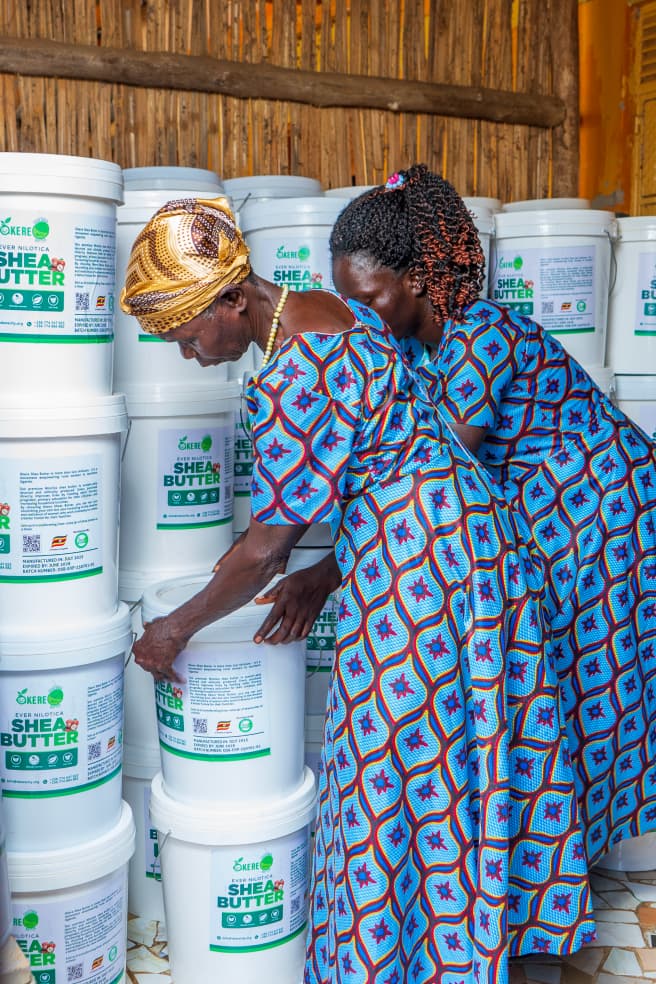
In August last year, Okere Shea Butter Cooperative Society exported nine tons of Shea butter to the US.
The shipment was made under a Memorandum of Understanding between Okere City and Bands Beauty Group, a cosmetics company based in New York City, USA.
This story was supported by ACME (Africa Centre for Media Excellence) in partnership with Climate Smart Jobs Uganda (CSJ.