
 Etoil A Karamoja
Etoil A Karamoja
Etoil A Karamoja
13 July 2026, 1:49 pm
By Alexander Mackey Okori
Food Rights Alliance, has called on the government to release contingency funds to district disaster management committees to enable rapid local response as prolonged drought plunges several parts of the country into a severe hunger crisis, leaving hundreds of people malnourished and several others dead.
In its hunger situation report published on Thursday, July 9, 2026, Food Rights Alliance indicates that 18 people have so far died in Kotido district since June, as a result of prolonged dry spell-induced hunger.
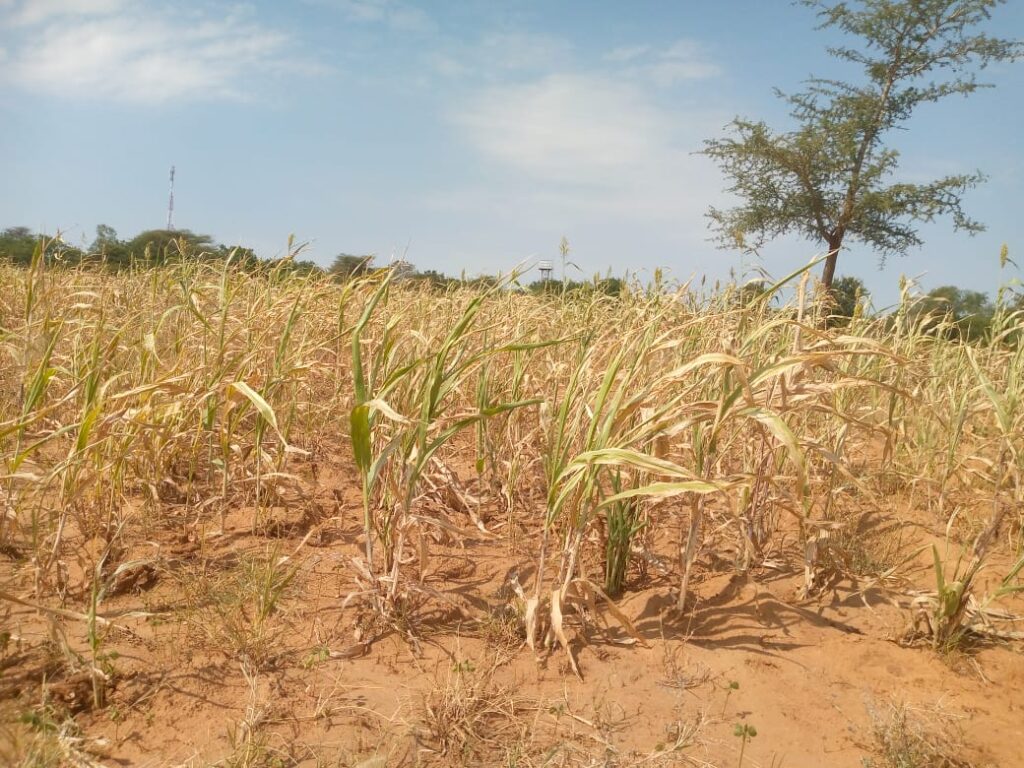
The report further highlights that over five thousand hectares of crops worth 200 billion shillings have been destroyed in Kotido, leaving families now to survive on ajono residue locally known as “Adakai,” and children who should be in school have turned to mining for gold and quarrying sites to earn money for food.
The current hunger crisis, according to FRA, is not an isolated incident, as the Karamoja Sub-region has experienced repeated food crises over the years, dating back to the 1990s and heightening in 2022, when over 2,124 deaths were registered due to drought-induced hunger (Uganda Human Rights Commission Report, 2022).
“In 2025, the Integrated Food Security Phase Classification (IPC) Acute Food Insecurity (AFI) analysis Report noted that up to 30 percent of people in Karamoja faced high levels of acute food insecurity between April and July 2025 and 20 percent of people in the region were expected to be in a food crisis by February 2026”, the report reads in part.
According to FRA, the food crisis is being worsened by the rising cost of basic food staples across Uganda, making it harder for poor households to afford even the most common foods.
“The food crisis is being exacerbated by the soaring cost of basic food stables across the country, making it hard for poor households especially in Karamoja subregion to afford even the most common foods”, the report adds.
FRA further noted that some schools in the Lango sub region had started sourcing food supplies from western Uganda because local shortages had disrupted feeding programmes, highlighting the wider impact of the prolonged dry conditions.
In Agago District alone, health authorities have recorded 351 cases of malnutrition between January and July this year, with 45 are severe cases currently admitted to health facilities, while 294 are classified as mild malnutrition.
District officials attribute the worsening malnutrition situation to widespread crop failure during the first planting season, which has left many families without adequate food.
Children account for majority of patients admitted with severe malnutrition, while most affected adults are suffering from mild malnutrition.
According to the District Production department, more than 64,400 households lost their crops to the prolonged drought.
Wilson Otto, the Agago District LCV chairperson said the prolonged drought some households which suffered total crop failure have resorted to eating raw pawpaws as sauce, while others survive on wild leaves collected from nearby bushes.
He revealed that the food crisis is also taking toll on education, as about 15 percent of learners have dropped out of school because their families can no longer provide food and other basic necessities.
It’s for this reason Agnes Kirabo, the Executive Director of the Food Rights Alliance (FRA), is calling on Cabinet to fast-track approval of the revised Food and Nutrition Policy and called on Parliament to expedite enactment of the National Food and Nutrition Bill to strengthen the country’s food governance framework.
She further urged the Office of the Prime Minister to release contingency funds, prioritise early warning signs of drought and hunger and set aside plans and resources for timely responses not after more lives are lost.
“The government of Uganda must release contingency funds to district disaster management committees to enable rapid local response, and invest in water infrastructure in Karamoja as a strategic sustainable approach to addressing hunger challenges of the region, among other interventions”, Kirabo added.
Kirabo pointed out that hunger crisis in Karamoja is not primarily a climate crisis, but a governance issue noting the region has adequate rainfall and water route from Masaba and Sebei regions to achieve food self-sufficiency but it lacks political will to strategically invest in a full-blown water infrastructure to enhance production in the region.
“We have repeatedly called on the Office of the Prime Minister to prioritise early warning signs of drought and hunger and set aside plans and resources for timely responses. However, timely release of food aid remains a challenge, and as such what Karamoja lacks is accountable governance that treats the right to food as non-negotiable”, she explained.
Drought Forecast beyond Karamoja
Beatrice Anywar the state Minister for Environment, warned that Uganda is expected to experience predominantly dry and warmer-than -normal weather conditions throughout July, with below -average rainfall forecast across most parts of the country.
According to her, the monthly weather outlook indicates that the Northern region, including Karamoja, Acholi, Lango, and parts of Eastern Uganda will receive only occasional light and isolated rainfall.
The central, Lake Victoria basin, Southwest and other parts of the east are expected to remain largely dry.
“The forecast is consistent with the June-July-August seasonal outlook issued by the Ministry of Water and Environment recently, which projects below-normal rainfall across the country as a result of developing El Nino marvel over the Equatorial Central and Eastern Pacific Ocean”, Anywar said.
She warned that the ongoing prolonged drought is likely to affect agriculture through poor yields, livestock stress, diminished pasture, increased pests and diseases and low food production.
“Water resources could come under pressure following declining water levels, water shortages, an increased risk of wildfires, and degradation of ecosystems and biodiversity”, Anywar noted.
In order to cope up with the prolonged drought, communities are encouraged to practice water conservation strategies and promote efficient water use for domestic and production purposes.