
 Hot FM
Hot FM
Hot FM
22 May 2026, 10:45 am
By Sarah Ejang
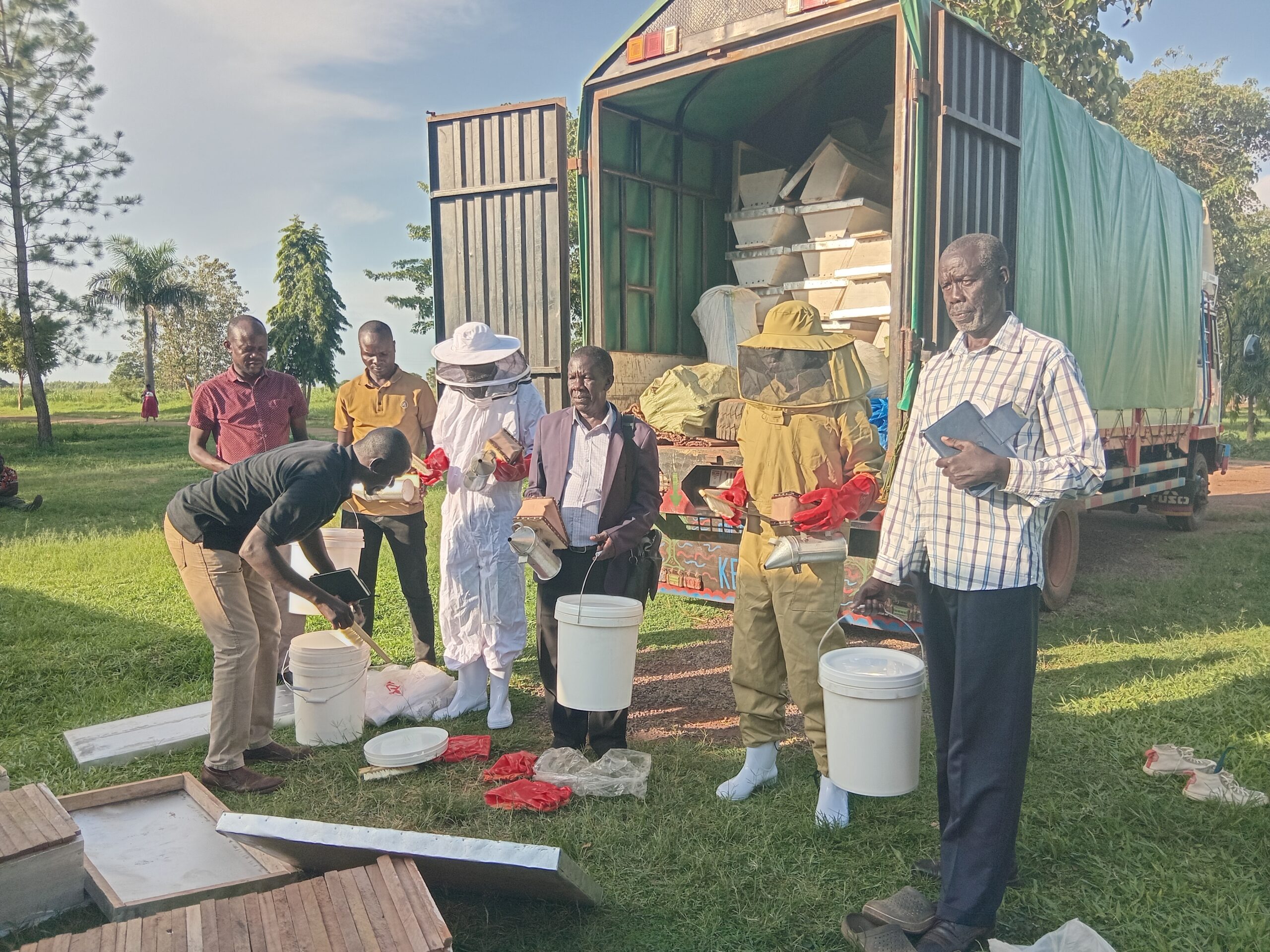
The first group among the 175 registered participants in the Uganda climate-smart agricultural transformation project in Amolatar district have received their package.
The Nen Anyim beekeeping groups, located in Anamwany, Awelo subcounty, were handed improved beehives and essential tools on Thursday, May 21, 2026, after contributing their 20% cost share, with the government covering the remaining 80%.
Dulson Okello, the district entomologist and focal point for the project, highlighted beekeeping as a highly lucrative agricultural practice for farmers saying Nen Anyim paid their 20% and government 80% totaling to 29.9 million benefiting from the project.
He noted, however, that several challenges affect bees, including the improper timing of insecticide application on crops, which poses significant risks to bee health and productivity.
Dulson urged the remaining groups to fulfill their 20% cost-sharing obligations so they too can receive their supplies.
The Chief Administrative Officer (CAO) of Amolatar, upon accepting the inputs from the supplier, praised the team for their excellent work and pledged continued support to farmers engaged in the project.
Meanwhile, the Resident District Commissioner (RDC) of Amolatar, Mr. Okello Odoki Francis Rwotlonyo, reaffirmed the government’s commitment to promoting agriculture in the district and expressed gratitude for the quantity of farming tools received.
He also thanked farmers who had contributed their 20% cost-share and encouraged remaining groups to do likewise to benefit from the program
Mr. Ekong Jospeh, the secretary of the Nen Anyim beekeeping group, shared their high expectations of generating substantial income from the project.
He raised concerns about potential theft and questioned whether bees would be able to access all the beehives effectively.
He further encouraged other groups to contribute, emphasizing that cost-sharing initiatives tend to instill a greater sense of responsibility among participants.
Additionally, the group’s vice-chairperson, Mr. Joel Ayato, confirmed their commitment to meeting the cost-sharing requirement.
He explained that they opted for beekeeping due to its medicinal benefits and income-generating potential. For those unable to afford the costs, he urged them to continue engaging in traditional beekeeping methods.
Christine Ojok, a member of the Kica Rwot beekeeping group in Agwingiri, reported that her group has completed their cost-sharing and is hopeful to receive their tool packages soon.
The distribution of improved beehives marks a significant milestone in Amolatar’s climate-smart agricultural transformation project, promising enhanced livelihoods through sustainable and profitable beekeeping practices.