
 QFM
QFM
QFM
QFM
23 May 2026, 1:58 pm
By Frank Oyugi
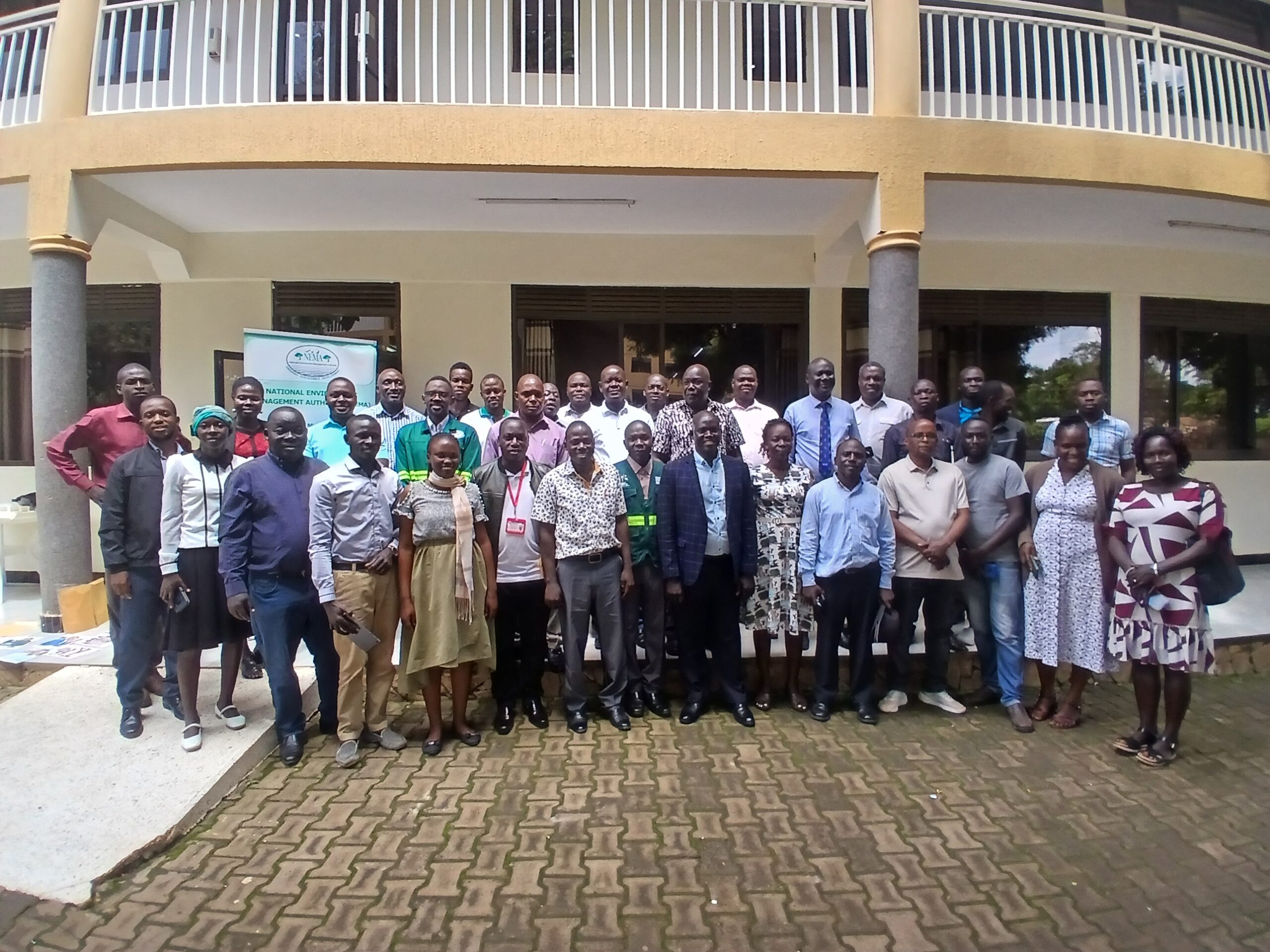
LIRA CITY — The National Environment Management Authority (NEMA) has concluded a two-day intensive sensitisation workshop in Lira City aimed at training local leaders, civil society organisations, the media and factory owners on the management of hazardous substances ahead of the enforcement of new strict environmental laws.
The workshop, held on Wednesday and Thursday at Margarita Hotel in Lira City, brought together participants from Gulu City and various districts across the Lango sub-region.
The initiative aligns with NEMA’s mandate to regulate toxic substances and ensure that industrial operators, vendors and educational institutions prevent chemical contamination of the ecosystem. The exercise comes as Uganda prepares to operationalise the National Environment (Management of Hazardous and Products Containing Hazardous Chemicals) Regulations, which were drafted in 2024 and are expected to be enforced nationwide.
Andrew Othieno, Manager of Standards at the Uganda National Bureau of Standards (UNBS), led the technical sessions during the workshop. He said that under the forthcoming legal framework, strict reporting and containment measures will be mandatory for all actors in the chemical supply chain.
“Whether an individual or entity intends to manufacture, import, export or purchase hazardous chemicals for local use, they must formally notify NEMA,” Othieno said.
He added that NEMA must be provided with detailed information, including chemical composition, trade names and potential toxicological impacts on human health and the environment. Vehicles transporting hazardous materials will also be required to display clear, standardised safety signage.
Othieno warned against illegal dumping or accidental spillage of chemicals into water bodies and soil, noting that the new regulations will place strong emphasis on emergency containment systems such as bunding to prevent environmental disasters.
“Have you put in place bunding — a wall around the tank — so that if it leaks, the chemical is contained within that walled area?” he asked factory owners. “Emergency preparedness and response must be in place, even when you are shutting down a manufacturing facility.”
He further noted that chemical pollution is increasingly linked to the rising burden of non-communicable diseases in Uganda, citing cases at the Mulago National Referral Hospital Cancer Institute that are associated with long-term chemical exposure.
The workshop also highlighted gaps in regional handling of hazardous materials. A representative from Gulu City raised concerns about the movement and clearance of large-scale industrial chemicals linked to infrastructure projects, including the Achwa Hydropower Plant.
The official said such materials often pass through or are stored within urban centres, with unclear guidance on clearance procedures.
“We are sometimes stuck on how to handle them,” the representative said.
Officials also raised alarm over the widespread handling of asbestos roofing materials by households and institutions, despite its classification as a known carcinogen linked to lung cancer.
In some cases, asbestos waste is reportedly reused or discarded without proper safeguards. The representative also cited concerns from health facilities, including St Mary’s Hospital Lacor, which has reportedly sought guidance on safe disposal of decommissioned asbestos materials.
NEMA was urged to provide clear national guidelines for safe isolation, transport and disposal of asbestos waste.
James Okola, an environmental officer in Lira District Local Government, said authorities are investigating cases involving chemical smuggling and non-compliance with agrochemical regulations.
He noted that while regulations may be well developed, enforcement remains a challenge.
“We may have very good regulations, but with weak enforcement, nothing good will be realised,” Okola said.
Monica Angom, Senior Environmental Inspector at NEMA headquarters, reminded participants that inspectors have full legal authority to access industrial premises for compliance checks.
She warned that denying access to inspectors is an offence punishable under the National Environment Act.
“Inspectors have the legal right to access facilities,” Angom said. “Where access is denied, enforcement action, including prosecution, can follow.”
Dr Innocent Achaye, Manager of Chemical Safety, Radiation and Pollution at NEMA, said proper chemical management is critical as Uganda expands its industrial base.
He noted that oil production in the Albertine Graben is expected to begin in July, which will increase the volume of hazardous waste generated in the country.
He also highlighted the planned establishment of a nuclear research facility at Soroti University, warning that such developments require strong regulatory oversight.
“We need to manage chemicals effectively from extraction through production to final disposal,” Dr Achaye said.
Environmental activists and residents in Lira have raised concerns over ongoing pollution, including allegations of untreated chemical discharge into water systems such as the Okole wetland.
Authorities have warned that once the new regulations come into force, violators will face strict legal penalties.