
 Etoil A Karamoja
Etoil A Karamoja
Etoil A Karamoja
19 August 2026, 9:54 am
By Moses Lokeris
Karamoja: The outgoing Archbishop of the Church of Uganda, the Most Rev Dr Stephen Kaziimba Mugalu, has joined calls for long-term investment in irrigation, water harvesting, infrastructure and mechanised agriculture to enable the Karamoja Sub-region to shift from reliance on emergency food relief to sustainable climate resilience.
Although the sub-region has rich and fertile soils, unpredictable rainfall and prolonged droughts frequently destroy crops, leaving communities vulnerable to chronic hunger.
According to the latest Integrated Food Security Phase Classification (IPC) report, more than 473,000 people in the Karamoja Sub-region are facing acute food insecurity, with tens of thousands of households already in emergency conditions.
The report ranks Kotido, Moroto, Nabilatuk, Karenga and Kaabong among the most affected districts, with five per cent of the population reportedly in emergency conditions and 45 per cent facing severe food insecurity.
The hunger crisis has been attributed to drought that began in late May and has persisted, causing widespread crop failure across the region.
Against this background, Archbishop Kaziimba called on the government to establish a Karamoja Climate Justice and Agricultural Transformation Initiative to unlock the region’s immense potential, while prioritising sustainable pastoral development, irrigation, watershed restoration and climate-smart agriculture to ensure sustainable food production.
“Karamoja’s recurring hunger sits at the intersection of climate change, environmental degradation and decades of underinvestment, a reason the government should consider investing in long-term interventions to salvage the situation,” the Archbishop said.
He said countries around the world had demonstrated that harsh climatic conditions did not have to condemn communities to chronic food insecurity.
The Archbishop cited Israel as a global leader in dryland agriculture through sustained investment in irrigation, water management, scientific research and innovation. He called on the government to draw lessons from countries that have turned climate constraints into agricultural opportunities.
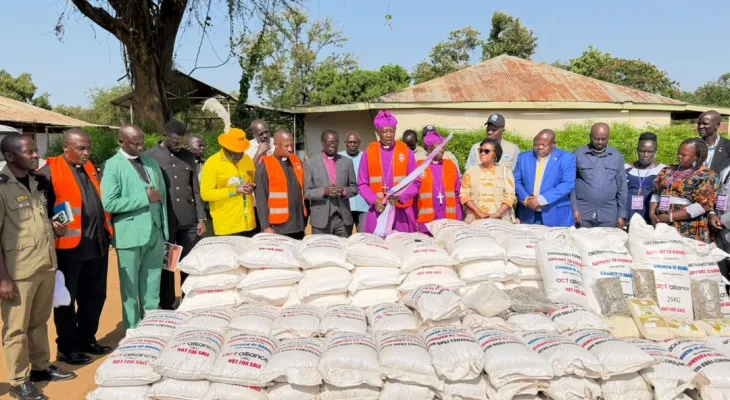
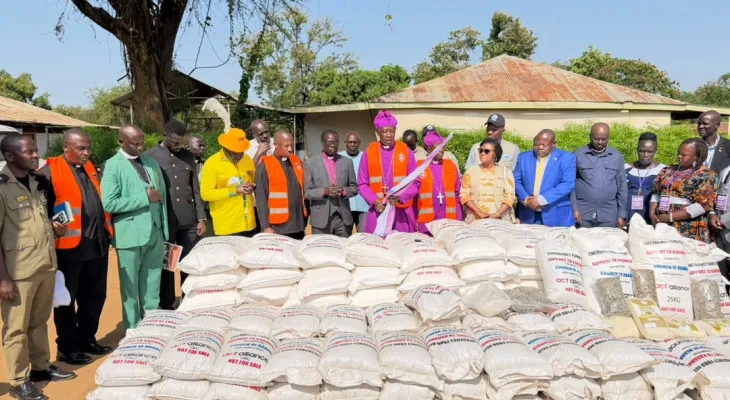
Archbishop Kaziimba made the remarks on Tuesday, August 19, 2026, while flagging off an emergency food relief distribution exercise in North Karamoja Diocese, as the Church intensifies its response to the prolonged hunger crisis affecting communities in the Karamoja Sub-region.
The consignment includes 45,775kg of posho, 45,775kg of beans, 800kg of soya beans and 400kg of silver fish, targeting more than 2,000 beneficiaries affected by food insecurity.
The intervention follows a request by the Bishop of North Karamoja Diocese, the Rt Rev Simon Akol Aisu, to the Church of Uganda Board of Trustees during its meeting at Nabugabo Holiday Centre in Masaka in July.
Following the appeal, the Church of Uganda mobilised support from ACT Alliance, dioceses, institutions, Christians and other partners to provide emergency food assistance to vulnerable households.
The Archbishop also challenged well-off individuals and leaders from the Karamoja Sub-region to stand in solidarity with hunger-stricken communities by contributing food to those in need rather than waiting for external support.
Charles Ichogor, the Kotido Resident District Commissioner, who witnessed the launch of the emergency food distribution on behalf of the government, appreciated the Church of Uganda and its development partners for their ongoing interventions in Karamoja.
He appealed for continued support to help affected communities rebuild their livelihoods and strengthen their resilience.
Meanwhile, Peter Abrams Irar, the Mayor of Kotido Municipality, called on the Archbishop to use his influential position to advocate for communities in Karamoja, which often struggle to have their voices heard.
Mayor Irar noted that when weather conditions are favourable, the region can achieve sustainable harvests, offering hope for improved livelihoods.
His remarks reflected a growing consensus that emergency food relief should be complemented by long-term investments to strengthen resilience against recurring droughts.
He stressed the importance of sustained support and attention to ensure that communities thrive despite the hardships they face.