
 Kyaka FM
13 November 2026, 8:36 am
By Collins Ainomugisha
The government expects the project to be completed by September 2028. It was launched in May 2025 at a function held at Bwizi Seed Secondary School, presided over by Prime Minister Robinah Nabbanja, who represented President Yoweri Kaguta Museveni.
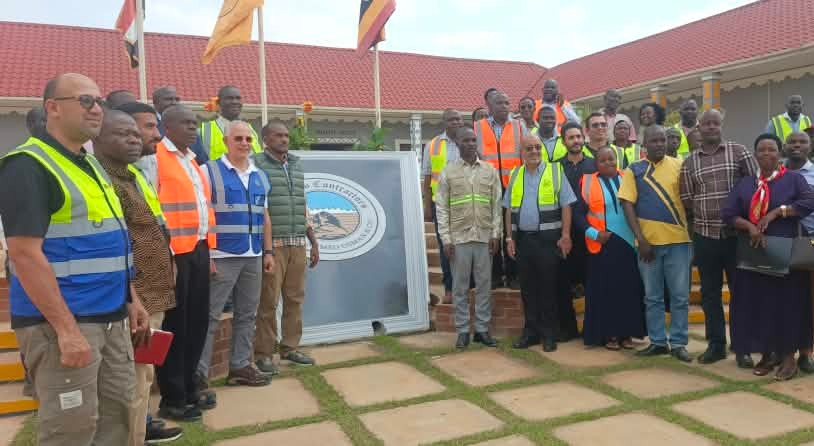
Minister of Works and Transport Fred Byamukama on Thursday, 12 November 2026, led a team of officials to assess progress on the 106-kilometre Kahunge–Kihura, Bwizi–Mpala tarmac road project.
The road, which connects Kahunge in Kamwenge District to Kihura in Kyenjojo District and Mpala in Kyegegwa District, is being constructed by Egyptian firm Arab Contractors at a cost of UGX463 billion, funded by the Islamic Development Bank.
Accompanied by the Minister of Agriculture, Animal Industry and Fisheries, Frank Tumwebaze, and local leaders from Kamwenge, Kyenjojo and Kyegegwa districts, Byamukama commended the progress of the works. He said the government was working to ensure that all people affected by the road project are compensated by February 2027.
Byamukama directed Resident District Commissioners (RDCs) and District Internal Security Officers (DISOs) to engage the contractors to identify and address the concerns of residents along the road.
Minister Frank Tumwebaze, who is also the Member of Parliament for Kibale East County, commended residents of Kamwenge, Kyenjojo and Kyegegwa districts for welcoming the project. He noted that the road would improve access to refugee settlements and ease the transportation of agricultural produce, thereby promoting development in the area.
According to an inspection update from the Ministry of Works and Transport, physical construction progress currently stands at 12.85 per cent.
The government expects the project to be completed by September 2028. It was launched in May 2025 at a function held at Bwizi Seed Secondary School, presided over by Prime Minister Robinah Nabbanja, who represented President Yoweri Kaguta Museveni.
The contract also includes the construction of 20 kilometres of paved town roads in key trading centres along the route. The roads are being constructed to Class II bituminous standards, featuring seven-metre-wide carriageways and paved shoulders. In major urban centres, dual carriageways with walkways are also being constructed.