
 Hot FM
Hot FM
Hot FM
17 June 2026, 8:59 pm
By Sarah Ejang
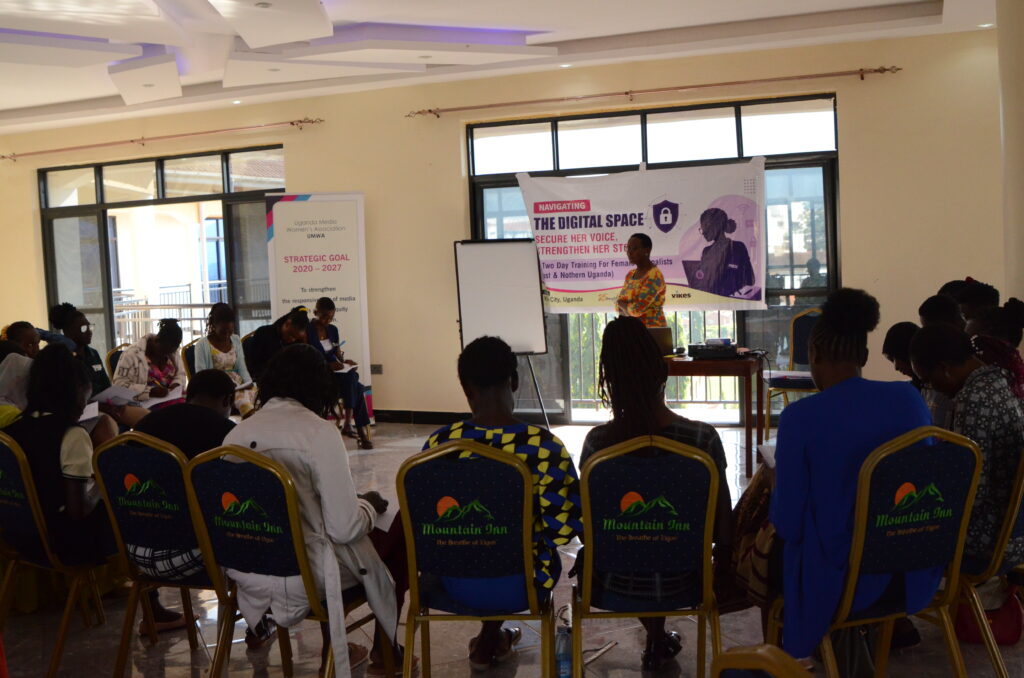
A two-day intensive digital safety training for female journalists from Northern and Eastern Uganda concluded on Tuesday, June 16, 2026, with a strong call for media practitioners to secure their online environments against rising cyber threats.
The training aimed to enhance journalists’ knowledge of digital security risk protection and equip them with practical skills to protect their devices, online accounts, and communication channels.
The workshop was organized by the Uganda Media Women’s Association (UMWA) in partnership with VIKES (the Finnish Foundation for Media and Development).
It forms part of a strategic four-year programme designed to promote media equality, rights, inclusion, quality journalism, and independent media across Uganda.
Speaking at the Mountain Inn Hotel in Mbale City, UMWA Programmes Officer Catherine Apalat revealed that the capacity-building initiative was prompted by a disturbing 2023 study.
The research exposed widespread digital violations against female media professionals, including systemic cyber harassment and online abuse.
“The media fraternity is increasingly operating in digital spaces, and journalists cannot run away from online platforms,” Ms. Apalat stated.
“However, our study found that many female journalists face cyber harassment and often suffer in silence because they lack reporting channels and strategies to address these challenges.
”In a troubling disclosure, Ms. Apalat noted that some of the primary perpetrators of this online abuse include news sources and male colleagues within their own media organizations, which severely complicates victims’ efforts to seek redress or report the behavior internally.
Addressing Regional Inequities and Knowledge GapsUMWA intentionally focused this cohort on Northern and Eastern Uganda, noting that these regions are frequently overlooked by mainstream capacity-building interventions.
A baseline assessment conducted by UMWA prior to the training highlighted severe digital safety gaps among regional reporters. Many participants lacked basic knowledge of essential security protocols, such as:• Creating strong, resilient passwords.• Activating two-factor authentication (2FA).• Managing strict privacy settings on social networks.• Protecting sensitive personal data from public exposure.
The assessment also pointed out a critical lack of awareness regarding the identification and mitigation of misinformation, disinformation, and the inherent risks of unprotected digital communications.
Positive Trajectory and Career GrowthPreliminary feedback indicates the training has already yielded immediate behavioral changes.
Participants expressed a renewed commitment to revamping their personal and professional digital habits.
According to Ms. Apalat, several attendees have opened professional social media accounts for the first time, viewing them no longer just as hazard zones, but as viable platforms for career branding and income generation.
The four-year UMWA-VIKES initiative will continue monitoring the safety of regional journalists while advocating for safer corporate media policies and clear, localized reporting channels for online abuse victims.