
 Tembo FM
Tembo FM
Tembo FM
30 January 2026, 10:14 am
By Otim Moses
Climate change is reshaping livelihoods in Kitgum District, as farmers turn prolonged dry seasons into an opportunity through green business farming.
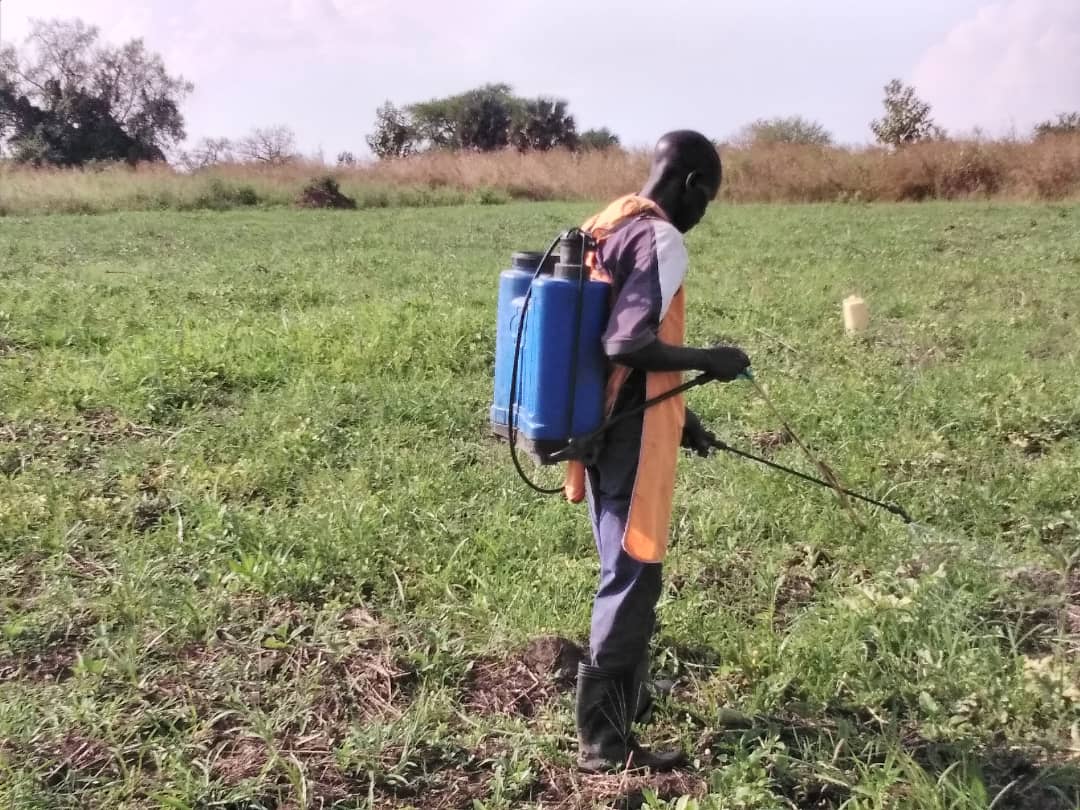
In northern Uganda, the dry season, which begins in early November, has become longer and hotter, forcing farmers to adopt new farming methods to sustain their livelihoods. Instead of relying solely on rain-fed agriculture, some farmers are now investing in irrigation and climate-smart practices.
Mr. Eirnesti Lapat, a farmer from Adiye Village in Labongo Akwang Sub-county, says climate change has prompted him and his colleagues to embrace green business farming, although it comes with high costs due to extreme heat and increased water demand.
“We grow watermelon, sukuma wiki, green vegetables, onions and eggplants,” Mr Lapat said. “Because of the heat, we use a lot of water. Each batch of watermelon requires about six litres of water every day.”
Despite the challenges, Mr Lapat says climate change has created opportunities for farmers to earn a living even during the dry season. He adds that green business farming helps maintain a greener environment while reducing over-dependence on rainfall.
He notes that during the dry season, he earns more than UGX 10 million, although unpredictable weather and water scarcity sometimes affect production.
Another farmer from the same area, Mr Odong David Simon, says climate change has encouraged farmers to think beyond traditional crop production. He explains that some farmers are planting trees using solar-powered water pumps to help mitigate rising temperatures.
“We are using solar energy to pump water so that we can plant trees and reduce the effects of heat,” Mr Ocan said, urging the community to adapt to climate change through innovation.
The Agricultural Officer for Greater Namokora North Sub-county, Mr Nyeko Jerry, says climate change has left many farmers vulnerable because they fail to adjust to changing weather patterns.
“Climate change should encourage farmers to explore irrigation and other climate-smart farming methods so that they can earn a living even during the dry season,” Mr Nyeko said.
He advised farmers to adopt solar-powered irrigation, while noting that it requires proper management to cope with extreme heat.
Meanwhile, the Kitgum District Forest Officer, Mr Anywar Martin, attributes the rising temperatures in part to deforestation. He appealed to farmers and communities to plant more trees to help reduce heat and restore rainfall.
As climate change continues to affect weather patterns in northern Uganda, farmers in Kitgum are showing that adaptation through green business farming and environmental conservation can provide both livelihoods and resilience.