
 LUO FM
LUO FM
LUO FM
7 September 2026, 11:11 pm
By Geoffrey Okwong
A quarterly health report has revealed that 579 children contracted diarrhoea in Ogom Sub-county during the quarter, a situation health officials have linked to low latrine coverage and poor adherence to basic household sanitation guidelines.
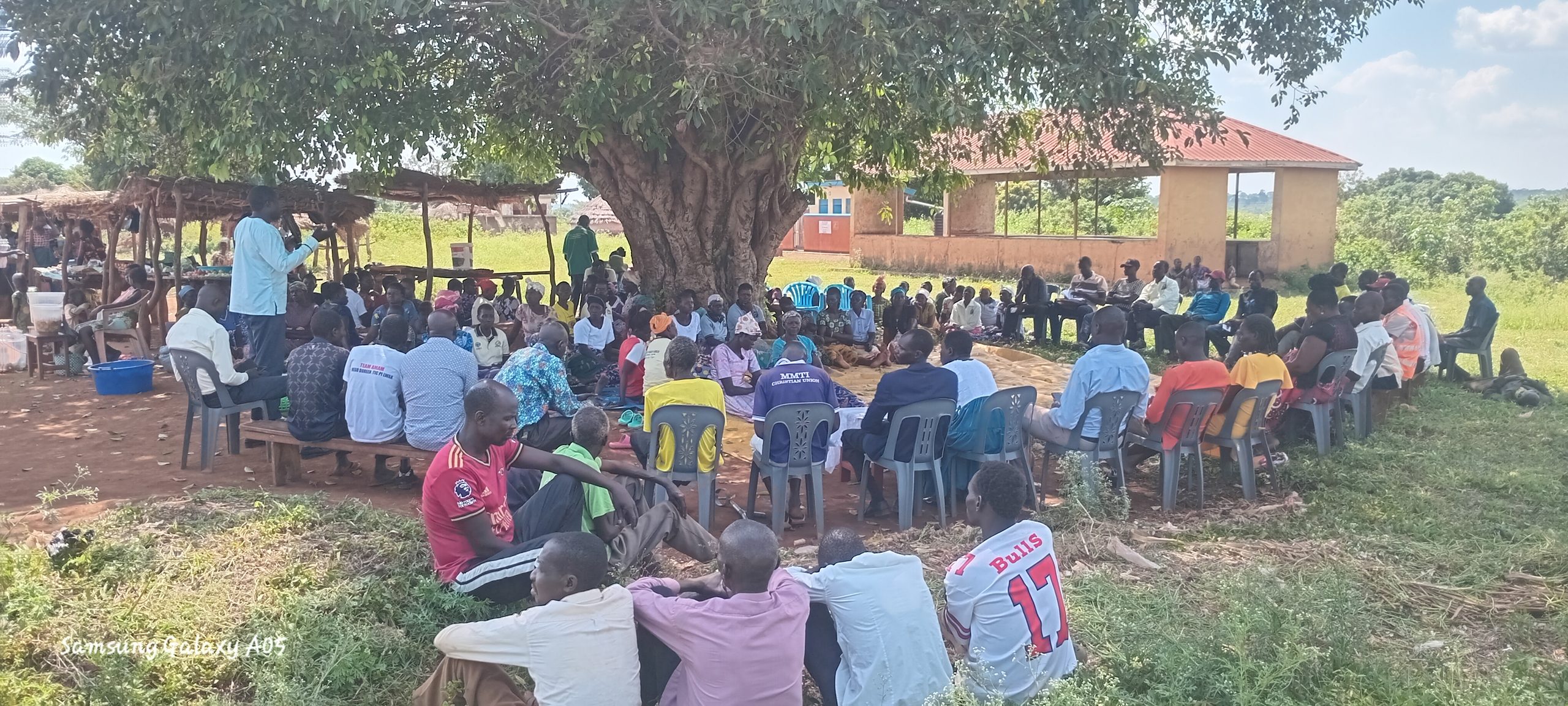
The figures were revealed by Walter Olanya, the Village Health Team (VHT) team leader for Ogom Sub-county, while addressing a community advocacy meeting on social protection and children’s rights.
The engagement was organised by the Tute Ryemo Can Youth Group with financial support from the Adventist Development and Relief Agency (ADRA).
According to the final results of the 2024 Uganda National Population and Housing Census (NPHC), released by the Uganda Bureau of Statistics (UBOS), Ogom Sub-county in Pader District has a population of 8,510 people. Local health officials have warned that preventable communicable diseases can spread rapidly in communities if they are not properly controlled.
The meeting brought together community members, local council chairpersons (LCI and LCII), and leaders from the youth group’s affiliate organisations, including Wa Cit Anyim in Ogom Telela, One Heart in Wii Gweng and Yoo Leng in Telela Central.
Olanya said 3,300 children were screened and assessed by VHTs in the sub-county over the past three months.
Of these, 579 were found to have acute diarrhoea. Olanya attributed the high number of cases to poor latrine use, noting that Ogom Sub-county has one of the lowest levels of latrine coverage in Pader District.
The report also recorded 2,300 cases of malaria among children. Olanya said the number increased partly because the sub-county went an entire quarter without receiving essential anti-malarial medicines from the Government, leaving health workers with only rapid diagnostic test kits.
A further 421 children were reported to have suffered from severe coughs during the same period.
Olanya criticised parents for failing to follow medical referral procedures, citing cases in which parents disregard guidance from VHTs.
He said some parents take children to alternative clinics instead of designated public health facilities after they test positive for diseases, potentially delaying appropriate treatment.
Olanya also warned community members against sharing or borrowing latrines simply because they are neighbours.
He said VHTs would step up efforts to enforce household sanitation standards and discourage the practice.
According to VHT structural guidelines, every functional household is expected to maintain four basic sanitation facilities: a rubbish pit, a utensil-drying rack, a pit latrine and a bathing shelter.
However, Olanya expressed disappointment, revealing that their data shows only 36 households in the entire Ogom Sub-county have functional utensil-drying racks.
Reflecting on the theme of the day, which focused on social protection and child rights advocacy, the Vice Chairperson of Ogom Sub-county, Beatrice Kidega, reminded the gathering of the responsibilities of parenthood.
She urged parents and guardians to actively guide their children while cautioning them against using excessively harsh or violent methods.
Responding to the broader water, sanitation and hygiene (WASH) concerns raised during the meeting, Kidega expressed frustration, saying discussions about sanitation had become a recurring message that leaders deliver in communities without corresponding action.
Kidega said community members routinely go to the sub-county headquarters to demand new water sources in their villages, yet often fail to protect and maintain the infrastructure they already have.
She said that if existing facilities are neglected and left unmaintained, the local government would have no justification for providing additional boreholes.
Compounding the sub-county’s health challenges, Olanya warned that Ogom Trading Centre risks losing access to its water sources next week if beneficiaries fail to comply with sanitation and maintenance requirements.
Although the trading centre currently has functional water sources, Olanya said water points that are poorly maintained or unhygienic face closure.
According to directives from the Pader District Water Office, community boreholes must be securely fenced by their beneficiaries. Olanya explained that unfenced water points allow stray animals to access the sources and come into direct contact with water used by people.
He said this can contaminate the water source and increase the risk of waterborne diseases in the community.
In addition, every household is required to pay a monthly water user fee of UGX 2,000 to support maintenance work managed by local Water User Committees.
Supporting the VHT guidelines, Kidega issued a warning to beneficiaries who have failed to secure and maintain their water points. She said the sub-county will enforce the water office directives by removing borehole pump heads from non-compliant sites next week.
However, Olanya praised Gulnam Parish for recording the highest latrine coverage in the sub-county. Oyeng Yeng Village ranked second in sanitation compliance.
The VHT leader attributed the success of the two communities to their decision to introduce and enforce sanitation measures internally.
Olanya urged other residents in the sub-county to construct and use latrines voluntarily rather than wait for enforcement officers to intervene.
He reminded families that poor household hygiene can ultimately place a financial burden on households through increased expenditure on medical treatment.