
 LUO FM
LUO FM
LUO FM
31 July 2026, 12:07 pm
By Geoffrey Okwong
Kineni Primary School in Pader District is struggling to fully implement the government’s school feeding policy due to continued reluctance by parents to provide food for their children, despite ongoing sensitisation efforts by the school administration.
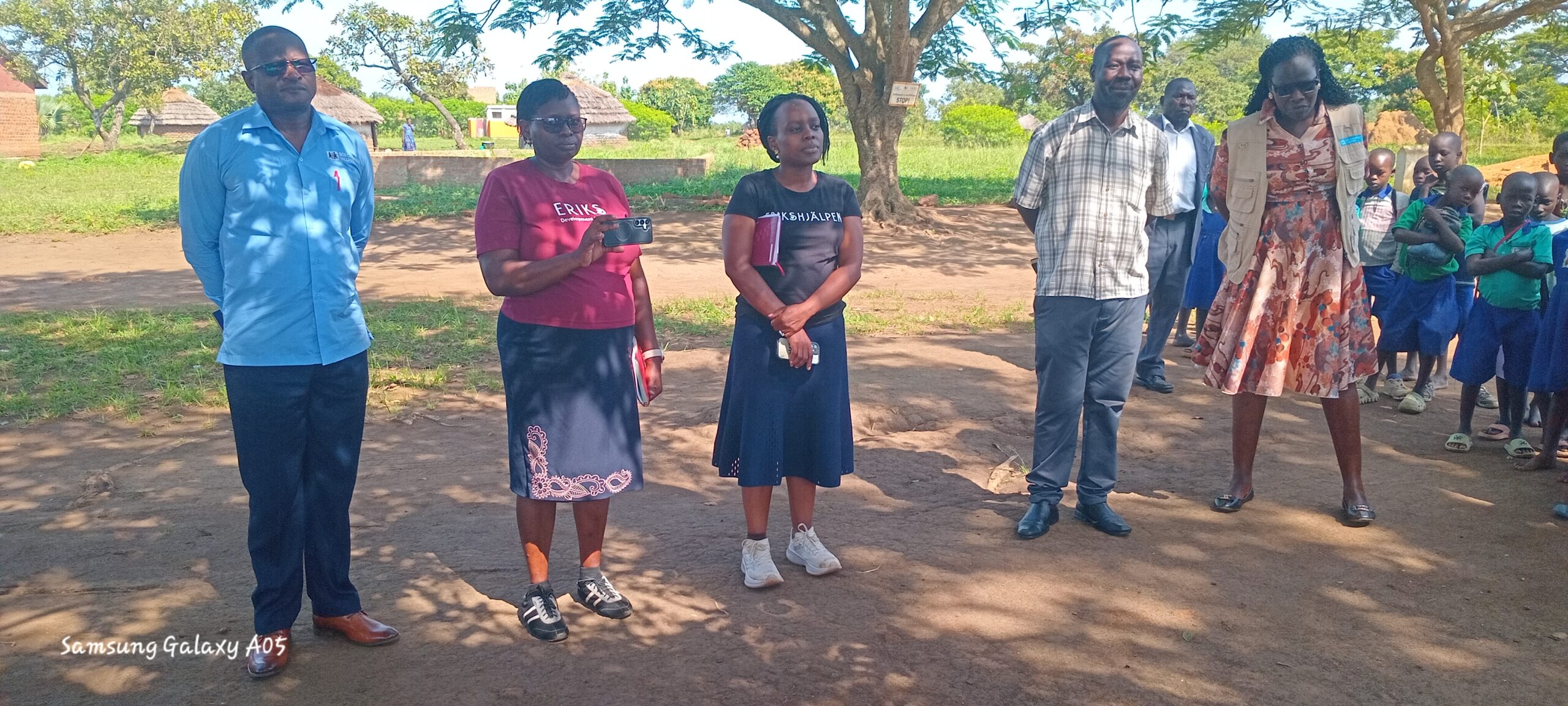
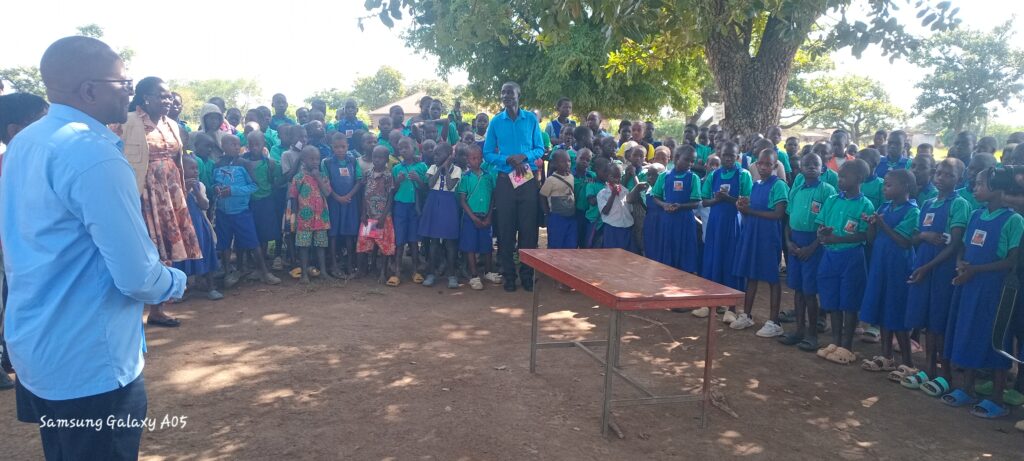
The concern was raised by the Head Teacher, Titus Okello, during a monitoring visit to the school by SOS Children’s Villages Uganda and its development partner, ERIKS, which are supporting child protection and education programmes in the area.
Okello said the school introduced the feeding programme gradually after consultations with parents, but many have been unwilling to contribute food for their children.
According to him, the programme currently benefits only a small number of learners, mainly those in the nursery section and a few pupils in the lower primary classes whose parents have embraced the initiative.
The Head Teacher explained that the school proposed a modest contribution of about 10 kilogrammes of maize flour and seven kilogrammes of beans per child each term, but many parents still insist they cannot afford it, despite most households engaging in food production.
He said the few learners benefiting from the programme are expected to encourage other parents by demonstrating the positive impact of school meals on children’s learning.
Okello attributed the slow uptake partly to misconceptions about Universal Primary Education (UPE), saying many parents mistakenly believe that the government should provide everything for learners, including meals, uniforms, and scholastic materials.
He observed that while parents willingly make contributions for children attending nursery school, many become reluctant to support the same children once they transition to primary school.
The Interim National Director of SOS Children’s Villages Uganda, Moses Kadobera Leneker, acknowledged that school feeding remains one of the key challenges affecting schools supported under the programme.
Leneker said SOS Children’s Villages Uganda will not directly provide food for learners but will continue working with school leaders, Parent-Teacher Associations, School Management Committees, and government structures to strengthen awareness among parents about their responsibilities under the government’s school feeding policy.
He emphasised that every child should have a meal while at school, noting that hungry learners cannot concentrate in class or perform well academically.
Leneker urged parents who are unable to contribute to the school feeding arrangement to at least pack food for their children. He added that providing food, clothing, education, and other basic needs is a parental responsibility and an important child protection obligation.
Both the school administration and SOS Children’s Villages Uganda said they will continue engaging parents through meetings and community sensitisation to improve participation in the school feeding programme and enhance learners’ welfare and academic performance.
The challenge facing Kineni Primary School reflects a wider national situation. Although the Government of Uganda requires parents to ensure that children have meals while at school, a fully government-funded school feeding programme for primary schools has not yet been rolled out nationwide, pending the finalisation and implementation of the national school feeding policy.
Available national statistics indicate that only about 34 per cent of school-going children in Uganda receive meals at school. Data from the Uganda Bureau of Statistics shows that while nearly half of government primary schools provide lunch, a significant number of learners still spend the school day without a meal.
The situation is more pronounced in rural areas, where access to school meals remains lower than in urban centres, leaving many children vulnerable to hunger during school hours.
Once fully implemented, the proposed national school feeding programme is expected to benefit about 9.1 million learners in more than 12,500 government primary schools across the country.