
 Hot FM
Hot FM
Hot FM
28 August 2026, 9:07 am
By Sarah Ejang
In the sun-drenched landscape of Camurasa B Village, tucked away in Nalubwoyo Sub-county, Amolatar District, cracks in the soil often tell a story of hardship. For many smallholder farmers in Northern Uganda, unpredictable weather patterns and prolonged droughts have turned traditional crop farming into a risky gamble. Yet, amid the changing weather, one farmer has found a resilient and highly lucrative way of balancing the demands of nature with business.
Meet Odic Samson, an accountant by profession, a husband and a father of two. Samson is the visionary behind Samrach Mixed Farm, an enterprise redefining climate-smart agriculture in the region. Driven by a childhood passion and armed with a sharp analytical mind, Samson has turned to a reliable livestock asset: goats.
“I grew up in a family where animals were kept,” Samson says, his voice reflecting a deep-seated passion. “When I was growing up, I always wanted to be a goat farmer because I saw the benefits first-hand.”
For an accountant, the numbers behind goat rearing simply add up. As climate change brings harsher dry seasons to Amolatar, traditional cattle rearing has become increasingly expensive and resource-intensive. Goats, however, are highly adaptable animals.
They adapt to erratic weather conditions and generally cope better with dry seasons than heavy rains.
They are cheaper to purchase than cattle, reproduce quickly, often giving birth to twins, and reach market maturity relatively quickly.
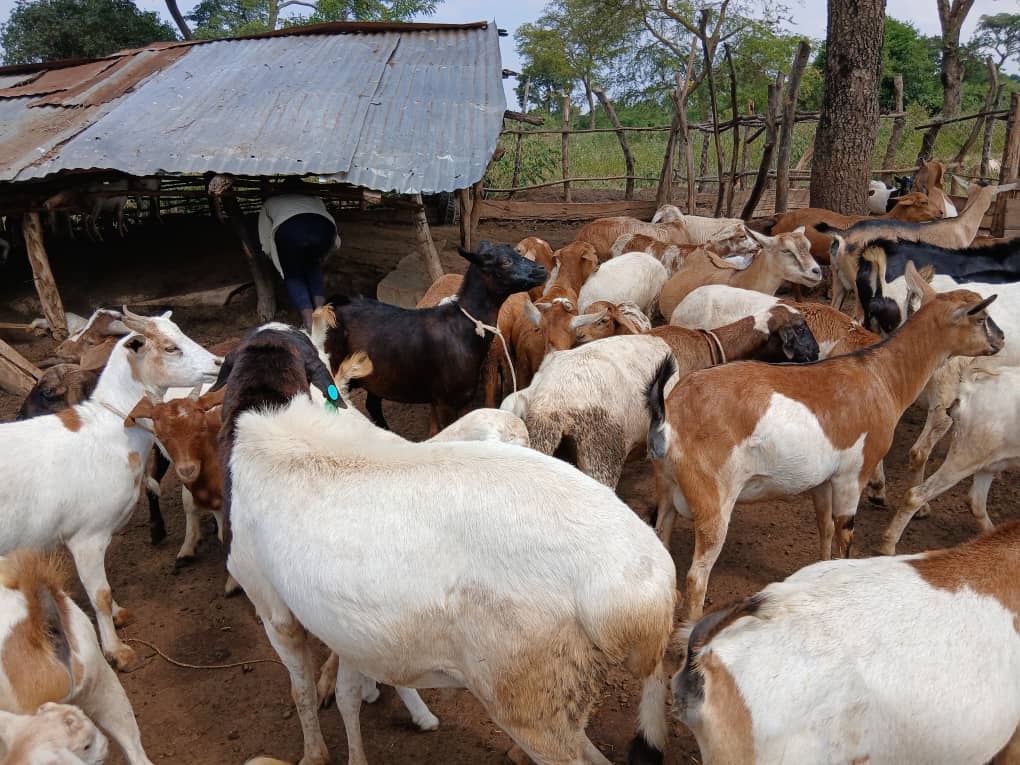
Samson manages a thriving herd of Savannah and local breeds.
The goats graze on naturally growing pasture in his gardens, supplemented with essential minerals and clean borehole water. From a land-management perspective, goats are a relatively gentle choice. Unlike heavy cattle, their grazing habits are less likely to degrade the soil. They also provide organic manure, which Samson applies to his crop gardens, creating a self-sustaining mixed-farming system.
The financial performance of Samrach Mixed Farm is also encouraging. Since 2021, Samson’s sales records have shown steady growth:
Today, young goats are sold at the farm gate for about UGX 200,000. Adult females fetch between UGX 250,000 and UGX 350,000, while mature males can sell for about UGX 400,000. Annually, the enterprise generates average revenue of approximately UGX 16 million.
Success, however, does not come without challenges. In Nalubwoyo, land use has become a growing concern.
“The biggest problem is land shortage,” Samson explains. “Most people buy animals without having enough personal space for grazing. They bring their animals to communal areas, making the available land insufficient for everyone.”
Managing a growing herd in a crowded ecosystem requires strict discipline.
To prevent overgrazing and maintain ecological balance, Samson enforces a strict limit on the size of his herd.
When the herd reaches its maximum capacity, he strategically reduces the number of animals by selling younger stock to buyers.
Animal health management is another constant challenge. Samson closely monitors his herd for common livestock diseases and conditions, including Foot and Mouth Disease (FMD), bloat, internal and external parasites, and pregnancy toxaemia.
He currently manages the daily operations with the help of two herdsmen and plans to hire a female worker next year as he diversifies and expands his team.
While local demand for goat meat remains high, Samson says a significant gap persists: many local farmers remain unaware of lucrative export opportunities. Bridging the gap between isolated homesteads and commercial markets requires a stronger and more connected agricultural ecosystem.
Government agricultural extension workers occasionally visit communities to encourage farmers to transition from subsistence farming to commercial livestock production. However, grassroots transformation also depends on dedicated networks.
Initiatives such as WIIGOT, working with Commercial Agents through climate-smart jobs support, play a role in helping smallholder farmers access opportunities within the agricultural value chain.
By embedding Commercial Agents within communities such as Amolatar, smallholder farmers can gain access to vital market information, veterinary knowledge and financial literacy.
These agents can serve as a link between farmers and wider markets, helping transform individual producers into a more organised economic network capable of exploring international export opportunities, negotiating better prices and building long-term climate resilience.
Odic Samson’s journey from accountancy to running Samrach Mixed Farm demonstrates what can happen when passion is combined with planning and business discipline.
In a changing climate, he is not simply surviving the dry seasons; he is turning the challenges they bring into an opportunity, demonstrating that with the right livestock, a balanced ecosystem and supportive community networks, smallholder farming can become a profitable and sustainable business.