
 Mama FM
Mama FM
Mama FM
27 January 2026, 5:17 pm
By Byamukama Alozious
The Ministry of Health has reaffirmed its commitment to routine immunisation as a critical pillar of public health, even as the country faces recurrent outbreaks of vaccine-preventable diseases, reduced partner funding, and rising misinformation about vaccines.
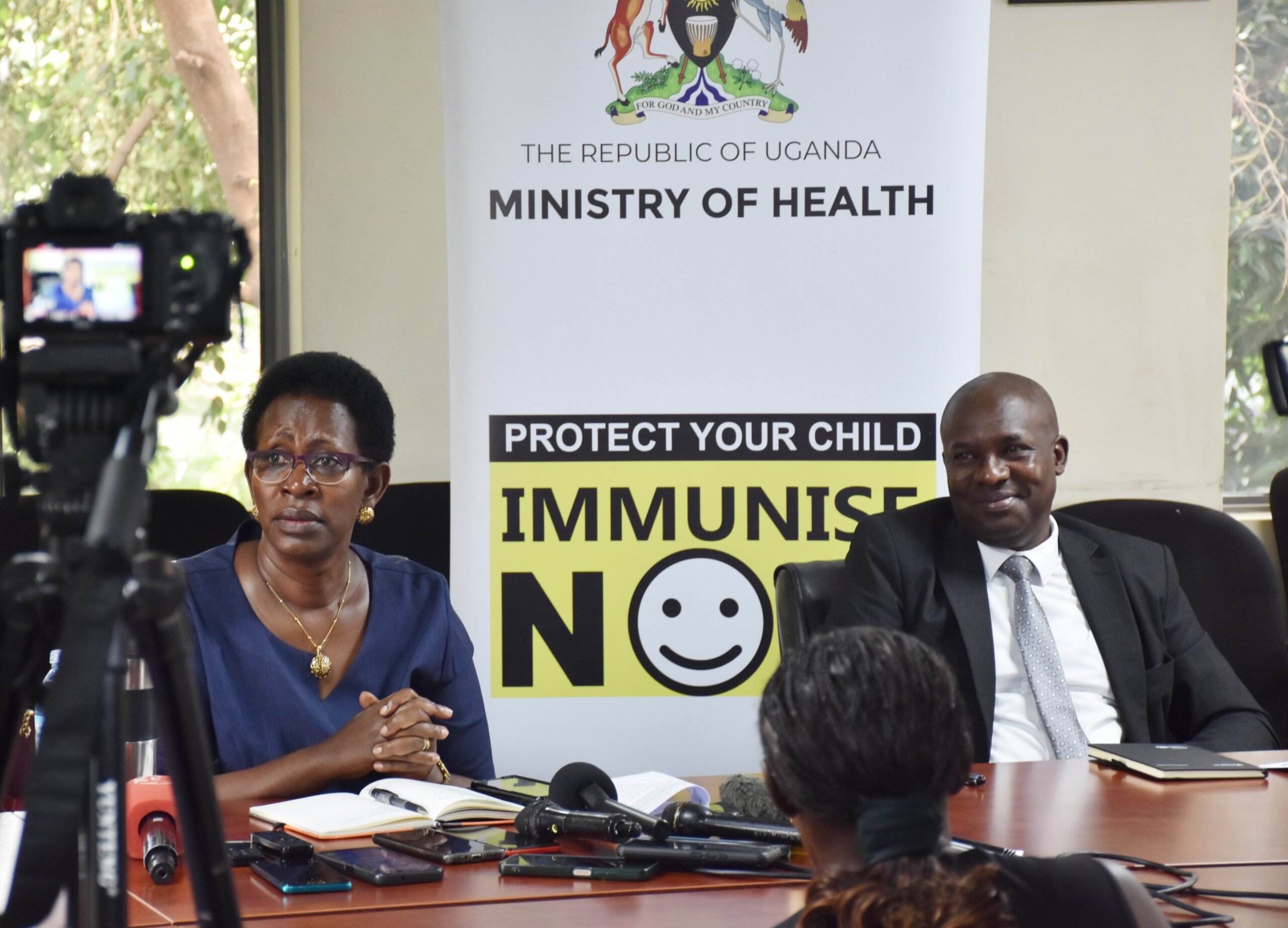
Speaking at a media briefing, the Permanent Secretary at the Ministry of Health, Dr Diana Atwine, said routine immunisation continues to play a major role in reducing disease burden and preventing avoidable deaths, noting that vaccines have protected millions of Ugandans. She emphasised that no child should die from diseases preventable through timely vaccination, adding that the government will continue to prioritise immunisation despite financial constraints.
Currently, the Uganda Expanded Programme on Immunisation (UNEPI) protects against 14 vaccine-preventable diseases, including polio, tuberculosis, measles and rubella, tetanus, hepatitis B, yellow fever, malaria, and cervical cancer caused by HPV. In 2025, most antigens recorded coverage above 90 per cent, driven by sustained service delivery, expanded outreach, and stronger community engagement.
However, the country continues to experience outbreaks such as Mpox, measles, yellow fever, and malaria, largely linked to low vaccine uptake, gaps in routine immunisation, and misinformation that intensified during and after the COVID-19 pandemic. From January to December 2025, 66 districts reported measles outbreaks, with a small number still active, particularly in Karamoja and parts of the Kampala Metropolitan Area.
Targeted vaccination has shown significant impact, especially against Mpox. Uganda confirmed its first Mpox case in July 2024, with rapid spread along urban centres and transport corridors. Following the rollout of vaccination in 45 districts from February 2025, health authorities reported a sustained decline in cases from mid-2025, with no serious adverse events recorded. Further targeted rollouts are planned in high-risk districts along the Northern transport corridor in 2026.
Uganda also made global headlines with the introduction of the malaria vaccine in April 2025 in 107 high-burden districts, the largest rollout worldwide. More than one million children have already received the first dose, while follow-up efforts are being strengthened through Village Health Teams and community leaders to improve completion of the four-dose schedule.
On cervical cancer prevention, Uganda adopted World Health Organisation guidance in 2025 to switch to a single-dose HPV vaccine schedule for immuno-competent girls, while immunocompromised girls continue to receive two doses. Dr Atwine noted that cervical cancer remains the leading cancer among Ugandan women, calling on parents and schools, including private institutions, to ensure 10-year-old girls are vaccinated.
UNEPI Director, Dr Michael Maganizi, said vaccines are available nationwide and urged parents to adhere to the immunisation schedule, including yellow fever vaccination at nine months, malaria vaccination from six months, and HPV vaccination at age ten. He added that intensified community mobilisation, improved cold-chain systems, and solarisation of health facilities have strengthened service delivery, particularly in hard-to-reach communities.
Dr Atwine acknowledged that misinformation, especially among urban and elite populations in the Kampala Metropolitan Area, has contributed to vaccine delays and increased outbreak risks. She said the government is countering this through community dialogues, leader engagement, and partnerships with the media, while also developing an Immunisation Investment Case with support from the World Health Organisation to mobilise more domestic financing.
Despite cuts in external funding, the Ministry of Health has allocated 8.5 million US dollars in the next financial year to sustain immunisation services. Health officials stressed that routine immunisation remains one of Uganda’s strongest public health successes, but maintaining these gains will require accurate information, community trust, and shared responsibility to protect every child.
UNEPI notes that the Karamoja region remains prone to outbreaks due to malnutrition-related challenges and awareness gaps. The government has introduced special programmes for the nine-district region, including Kaboong, Kotido, Abim, Moroto, Napak, Amudat, Karenga, Nabilatuk, and Nakapiripiti.