
 Mama FM
Mama FM
Mama FM
24 October 2025, 4:39 pm
By Byamukama Alozious & Mosh Ddamba
The National Union of Disabled Persons of Uganda (NUDIPU) has unveiled its 2026–2031 Disability Manifesto, outlining nine key demands to advance inclusion and equal participation of persons with disabilities (PWDs) in all sectors of national life.
The manifesto was launched on Friday, 24th October 2025, at the NUDIPU headquarters in Kampala, in partnership with the Uganda Parliamentary Forum for Persons with Disabilities, Uganda Parliamentary Forum on Social Protection, East Africa Centre for Disability Law and Policy (EA-CDIP), Uganda Media Women’s Association (UMWA), and various Organisations of Persons with Disabilities (OPDs)
Speaking at the launch, Esther Kyozira, the Executive Director of NUDIPU, described the manifesto as a strategic advocacy and accountability tool aimed at ensuring equality, dignity, and full inclusion of persons with disabilities in Uganda’s democratic and development processes.
“This manifesto is a roadmap toward an inclusive Uganda where persons with disabilities can thrive, participate, and contribute meaningfully to national growth,” Kyozira said.
Hon Alex Ndeezi , a representative of Uganda Parliamentary forum for people living with disabilities said people living with disabilities make up 6 million and their challenges have to be addressed ‘’ Political parties and individuals have already launched their manifestos, and it’s now us to present ours for the next 5 year’’ he said
Esther noted that the document builds on Uganda’s legal frameworks such as the Persons with Disabilities Act (2020), the Building Control Act (2013), and international commitments under the UN Convention on the Rights of Persons with Disabilities (UNCRPD).
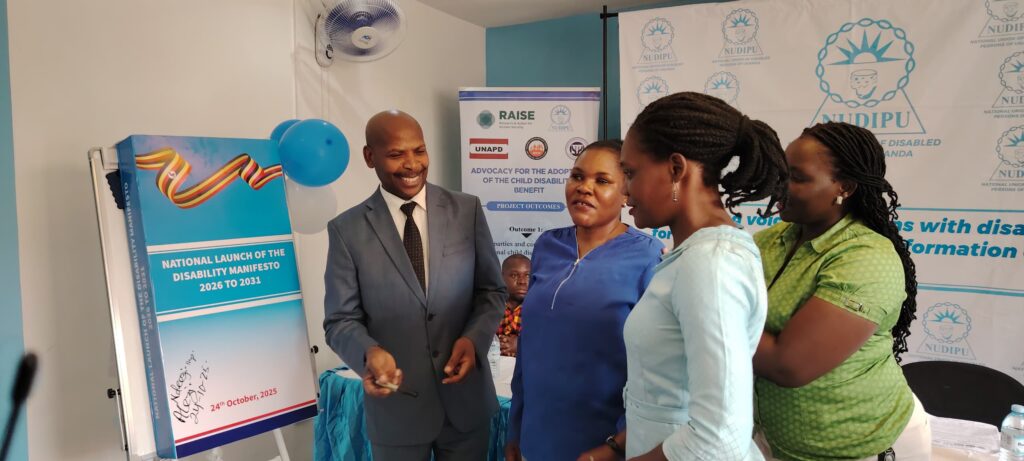
Despite progress through initiatives like the Special Grant for Persons with Disabilities and the 10% ring-fenced Parish Development Model (PDM) funds, NUDIPU says gaps persist in access to education, healthcare, justice, and infrastructure.
Mukasa Apollo, Executive Director of the Uganda National Action on Physical Disability (UNAPD), emphasised the need to strengthen social protection systems for children and adults with disabilities.
“Government should establish a National Child Disability Assistance Programme and ensure persons with severe disabilities benefit from economic empowerment programs,” he said.
UMWA is spearheading the media advocacy component of the manifesto, a key reason for its strong involvement in the event. The coalition emphasised that advancing disability rights in Uganda requires strategic media advocacy to ensure visibility and inclusion in national conversations.
This was the second press conference under the coalition’s disability inclusion campaign. Last year, the UMWA and NUDIPU conducted visits to various media houses to assess why disability issues are not prioritised in news reporting and to promote the use of appropriate language and narratives that amplify voices of persons with disabilities.
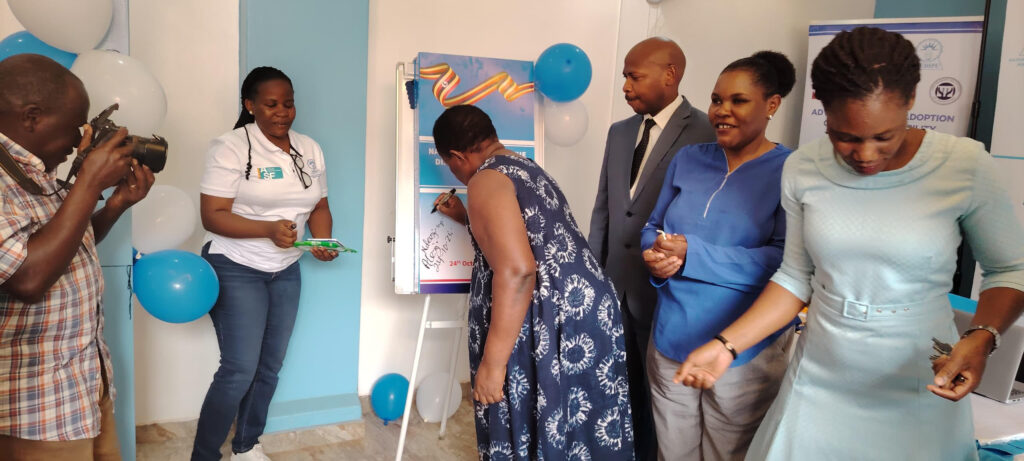
UMWA’s Programs Officer, Doreen Sampa, said the organisation joined the initiative to amplify the voices of persons with disabilities, especially during this political season when different parties are drafting their manifestos. “This is the time for disability voices to be heard, and their issues included in political party manifestos,” she noted
He further urged the government to conduct research to assess how current social programs impact persons with disabilities.
In education, Musaana Joel from the Foundation of Persons Affected by Dwarfism called for fast-tracking the National Inclusive Education Policy and increasing university sponsorships for learners with disabilities from 64 to 320 slots. He also called for inclusive school infrastructure, accessible learning materials, and free provision of mobility aids to promote retention and equity in education.
On inclusive health and assistive technology, stakeholders demanded the revitalisation of orthopedic workshops, training of health workers on disability inclusion, and tax waivers on assistive devices like wheelchairs, hearing aids, and white canes.
David Nangosi, NUDIPU’s Programmes Officer, echoed concerns about the country’s infrastructural environment, calling for accessible public buildings and transport systems.
“All new and existing infrastructure should reflect disability-friendly standards to guarantee safe and independent mobility,” he stated.
The manifesto also highlights disability-inclusive disaster and climate resilience planning, urging the government to establish accessible early warning systems and inclusive disaster risk management programs to protect persons with disabilities in emergencies.
Other demands touch on access to justice, political participation, and the need for a National Reasonable Accommodation Policy to guide institutions in supporting persons with disabilities at workplaces and public offices.
The 2026–2031 Disability Manifesto will guide advocacy efforts for the next five years, calling on government ministries, parliament, and development partners to ensure disability inclusion remains central to Uganda’s national development agenda.