
 Mama FM
Mama FM
Mama FM
2 June 2026, 2:50 pm
By Byamukama Alozious
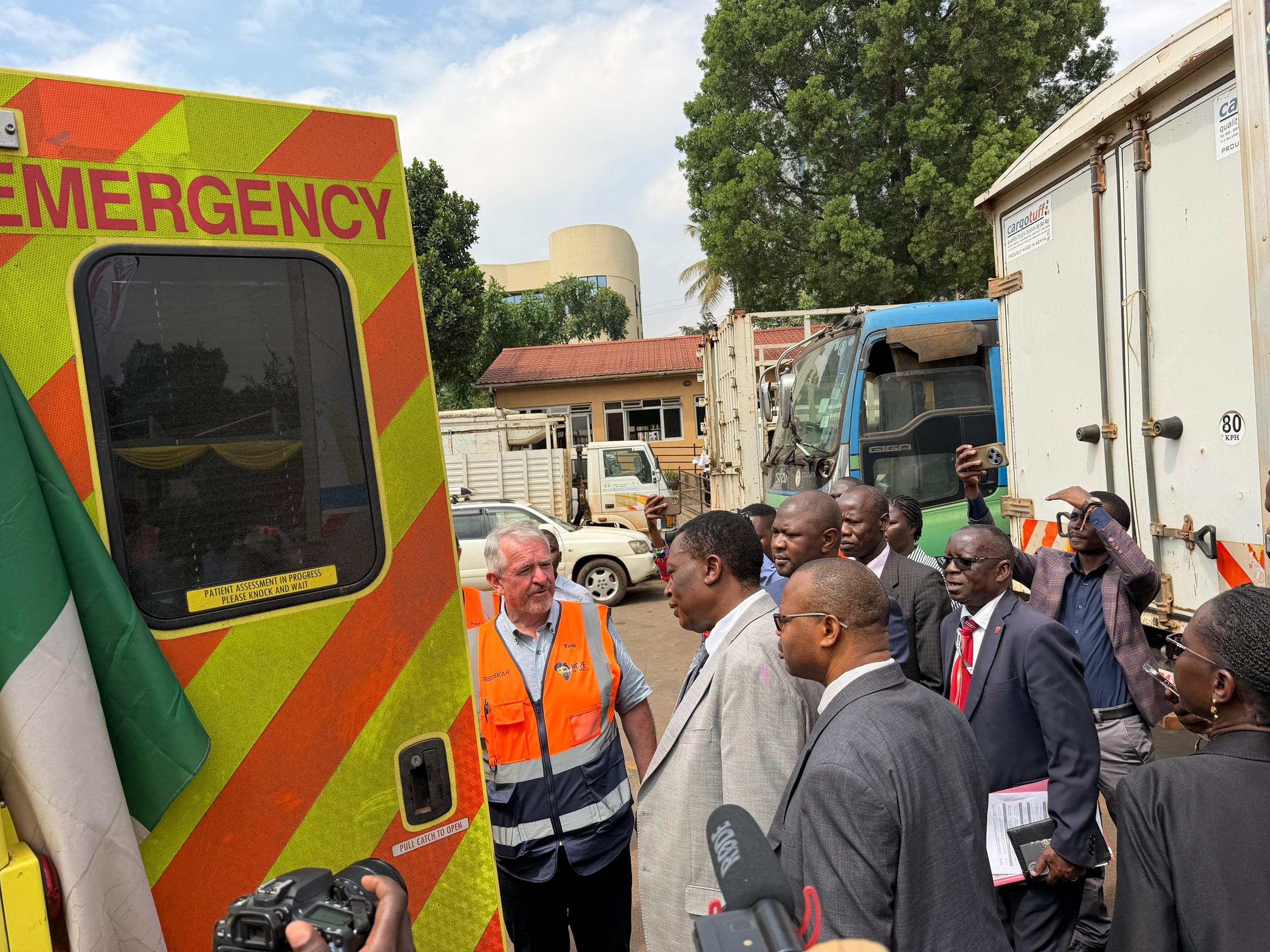
Uganda has strengthened its palliative care services following the handover of 11 fully equipped mobile clinic ambulances donated through the Hope on Wheels initiative to support hospice and community outreach services across the country.
The ambulances, which will be managed by hospice units and palliative care providers, are expected to improve access to treatment, pain management and home-based care for patients living with cancer, HIV/AIDS and other life-limiting illnesses, particularly in hard-to-reach communities.
The handover ceremony, held at the Ministry of Health headquarters in Kampala, brought together officials from the Ministry of Health, the Palliative Care Association of Uganda (PCAU), Hospice Africa Uganda, development partners and the Hope on Wheels Africa team from Ireland.
Presiding over the event on behalf of the Ministry of Health, the Director General of Health Services, Dr Charles Olaro, said Uganda has continued to make remarkable progress in palliative care, attracting countries across Africa that come to benchmark its model of care.
Dr Olaro, who represented the Permanent Secretary, Dr Diana Atwine, said the Ministry of Health has deliberately prioritised palliative care services to ensure patients receive dignified and compassionate healthcare.
“We have continued to strengthen palliative care in Uganda, and today many countries come to learn from our experience and progress,” Dr Olaro said.
He added that the Ministry of Health has established a commissioner position specifically responsible for palliative care programmes to oversee the implementation and coordination of services nationwide.
Dr Olaro welcomed the donation of the ambulances, saying they will play a critical role in extending services closer to patients, especially those in remote communities who struggle to access healthcare facilities.
The Director of Public Health, Dr Daniel Kyabayinze, also welcomed the support, noting that Uganda is now giving palliative care greater priority than ever before.
“This support comes at the right time as Uganda continues to increase focus and investment in palliative care services,” Dr Kyabayinze said.
According to the latest World Health Organization assessment covering 201 countries globally, Uganda was ranked the leading country in Africa in palliative care development, ahead of South Africa, Malawi, Kenya, Morocco and Rwanda.
Uganda’s palliative care journey began in 1993 when the late Dr Anne Merriman founded Hospice Africa Uganda, the first standalone hospice in the country. The country later established the Palliative Care Association of Uganda, becoming the first national palliative care association on the African continent.
Today, more than 300 health facilities across 107 of Uganda’s 146 districts provide palliative care services. However, despite this progress, access remains limited.
Statistics from the Palliative Care Association of Uganda indicate that palliative care currently reaches only about 11 per cent of those estimated to need the service across the country. Uganda also requires more than 3,000 trained palliative care providers, yet only just over 350 are currently available.
Speaking during the event, Ms Grace Naiga, a board member of the Palliative Care Association of Uganda, praised Uganda’s leadership in palliative care and paid tribute to the late Dr Anne Merriman for laying the foundation of hospice care in the country.
“We honour Dr Anne Merriman for founding Hospice Africa Uganda in 1993 as the first standalone hospice in the country,” Ms Naiga said. “This was followed by the establishment of the Palliative Care Association of Uganda, the first national palliative care association on the African continent.”
Ms Naiga said Uganda’s progressive policies have helped integrate palliative care into the national health system and the Universal Health Coverage agenda.
Despite these achievements, she noted that major gaps still exist in access to care.
“Uganda’s palliative care services currently reach only about 11 per cent of those in need,” she said. “The country requires more than 3,000 qualified palliative care providers, yet only just over 350 are currently available.”
Ms Naiga also revealed that the Board of Directors of the Palliative Care Association of Uganda has resolved to establish the Dr Anne Merriman Fund for Palliative Care in Uganda to continue the late pioneer’s legacy.
“It is named in enduring tribute to our beloved founder, Dr Anne Merriman, whose impact was felt not only in Uganda but across Africa,” she said.
Hope on Wheels Africa Chairperson Mr Tom Doyle said the ambulance donation was informed by needs identified during previous visits to Uganda.
Mr Doyle explained that the convoy was supported by 23 volunteers from Ireland working in different sectors, including government and emergency services, who mobilised resources out of compassion and commitment to humanitarian service.
“This support was mobilised by the people of Ireland because they believe in the importance of palliative care and compassionate healthcare,” Mr Doyle said.
He urged the Ministry of Health and hospice units to ensure the ambulances are properly maintained and actively deployed to serve communities, rather than remaining parked.
Mr Mwesigwa said more support is still needed under the proposed Dr Anne Merriman Fund for Palliative Care in Uganda to strengthen training, outreach services and home-based care.
“This support is highly welcome because the need remains enormous,” Mr Mwesigwa said. “More resources are needed to train health workers, improve outreach services and ensure patients receive dignified care wherever they are.”
The ambulances are expected to ease transportation challenges faced by hospice teams and improve home-based care services for patients who cannot easily access hospitals.
Health officials and palliative care advocates say the new fleet marks another milestone in Uganda’s efforts to ensure compassionate healthcare reaches every community.