
 Mama FM
Mama FM
Mama FM
21 April 2026, 12:40 pm
By Byamukama Alozious
The AIDS Healthcare Foundation (AHF) Uganda Cares has called on World Health Organization Member States to adopt a strong and binding Pathogen Access and Benefit-Sharing (PABS) Annex to the Pandemic Agreement.
Speaking during a media briefing in Kampala on 20 April, Mr Henry Magala, Country Programme Director of AHF Uganda Cares, warned that the upcoming Intergovernmental Working Group session in Geneva, scheduled for 27 April to 1 May, represents the final opportunity to secure a fair and enforceable framework before the World Health Assembly convenes in May.
The AIDS Healthcare Foundation stressed that while the Pandemic Agreement adopted in 2025 aims to strengthen global preparedness, it remains incomplete without the PABS Annex, which is expected to define how pathogen samples and genetic data are shared, and how resulting benefits such as vaccines, diagnostics and treatments are distributed.
AHF’s renewed push comes against the backdrop of lessons from the COVID-19 pandemic, which exposed deep global inequalities. Despite contributing critical data and biological samples, many countries in Africa and the Global South faced delayed and limited access to life-saving interventions, a situation the organisation says must not be repeated.
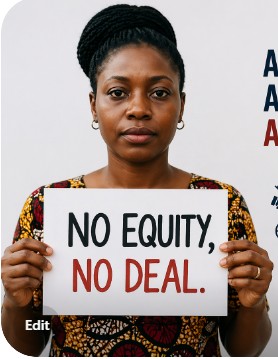
In its updated advocacy position, AHF Uganda Cares is demanding firm commitments from countries, emphasising that equity must be non-negotiable. Central to its position is the call for mandatory benefit-sharing mechanisms that go beyond voluntary or delayed arrangements. These include guaranteed allocations of vaccines and treatments, technology transfer, financial contributions, and open access to non-commercial research outputs.
The organisation is also pushing for standardised contractual frameworks to ensure accountability, arguing that leaving such agreements to bilateral negotiations could weaken enforcement and allow powerful actors to sidestep obligations.
AHF further stated that pathogen data-related benefit-sharing obligations must not create loopholes that undermine the entire framework. Instead, it is advocating for a unified system that ensures fairness and reciprocity.
On intellectual property, AHF is calling for a pro-public health approach in which innovation does not come at the cost of access. It argues that IP rules should not create monopolies over shared resources and must allow for sublicensing, especially to support production in developing countries.
With Africa still heavily reliant on imported vaccines and limited manufacturing capacity, AHF Uganda Cares says the outcome of the Geneva negotiations will determine whether future responses to pandemics and Public Health Emergencies of International Concern are driven by equity and cooperation, or by exclusion and inequality.