
 Mama FM
Mama FM
Mama FM
24 April 2026, 10:58 am
By Byamukama Alozious
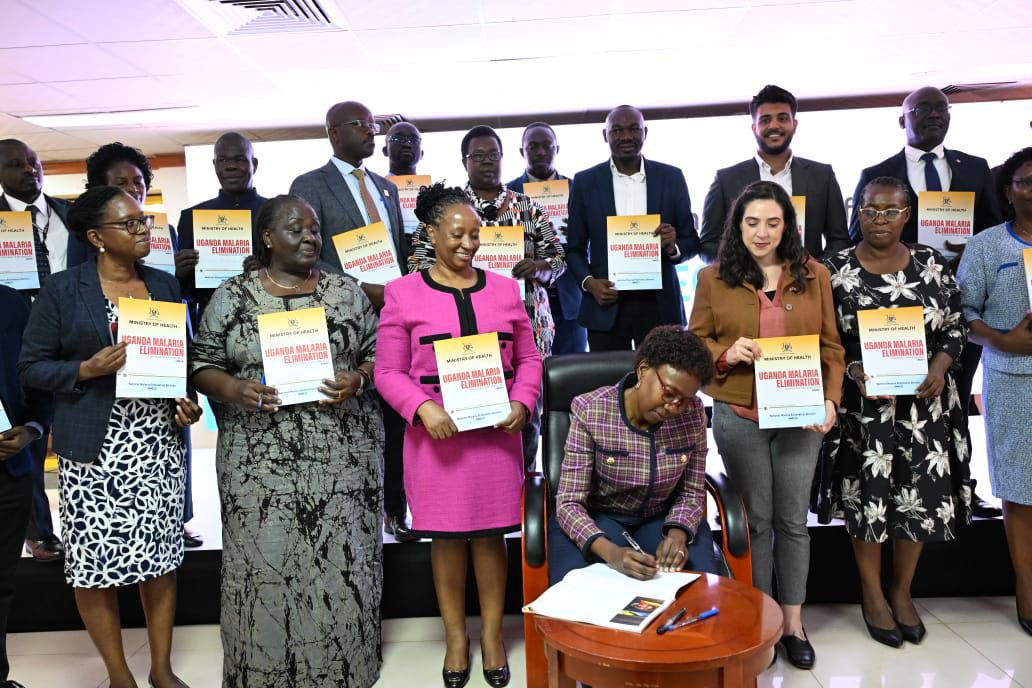
The Ministry of Health has launched the 2026–2030 Malaria Elimination Strategic Plan, setting an ambitious target of achieving zero malaria deaths and accelerating Uganda’s transition from malaria control to full elimination.
The strategy, unveiled at Hotel Africana under the theme *“Advancing for a Malaria-Free Uganda that Drives Socio-Economic Growth and National Development,”* provides a comprehensive roadmap aimed at reducing malaria infections, strengthening prevention and treatment, and moving high-burden districts into pre-elimination status by 2030.
Speaking at the launch, the Minister of Health, Dr. Ruth Aceng, described the plan as a major milestone in Uganda’s public health response, emphasizing stronger health systems, sustained investment, and partnerships as key to achieving elimination.
Uganda continues to carry one of the highest malaria burdens globally. According to the World Health Organization World Malaria Report 2024, the country recorded about 12 to 13 million malaria cases, placing it among the most affected countries worldwide. Uganda remains endemic in over 95% of its districts, with transmission occurring year-round in many areas.
WHO-based estimates further indicate that Uganda experiences between 15,000 and 16,000 malaria-related deaths annually, although official health facility records report significantly lower figures about 2,700 to 3,000 deaths in 2023–2024 largely due to underreporting of deaths occurring outside health facilities.
Children under five years remain the most affected group, accounting for about 80% of malaria deaths, while pregnant women are also highly vulnerable due to reduced immunity. The disease continues to place a heavy burden on the health system, contributing to 30–40% of outpatient visits and 20–25% of hospital admissions, making it one of the leading causes of morbidity and healthcare utilization in Uganda.
Rita Atugonza, in charge of Vaccines at the Ministry of Health, said that while Uganda has made progress in malaria treatment and prevention, lack of vaccine advocacy and persistent misinformation continue to limit uptake of the malaria vaccine introduced in April 2025.
“The vaccine is given in four doses at 6, 7, 8, and 18 months, targeting children in high-risk districts, but awareness remains low,” she said, adding that government is strengthening communication through media, community health workers, and engagement with local leaders, religious institutions, and cultural leaders.
Dr. Godfrey Mugumba from the Malaria Consortium warned that emerging challenges such as climate change are increasing malaria transmission patterns and introducing harder-to-detect mosquito vectors.
“Some infections remain asymptomatic, and certain malaria parasites can only be detected through microscopic analysis,” he said, stressing the need to strengthen laboratory capacity and surveillance systems in health facilities.
Recent research also highlights concerns such as drug resistance, climate-driven transmission, and persistent parasite diversity, all of which could slow progress if not addressed through sustained intervention.
Uganda’s malaria response includes distribution of insecticide-treated mosquito nets, indoor residual spraying, vaccination, early diagnosis, and effective treatment. The new strategic plan aims to scale up these interventions while improving data systems, surveillance, and community engagement.
The launch was attended by several dignitaries, including former Vice President Specioza Kazibwe, who emphasized the importance of sustained investment in public health.
Stakeholders said malaria is not only a health issue but also a major development challenge affecting productivity, education, and economic growth. With the new strategy in place, Uganda is positioning itself to turn ambition into action and move closer to a malaria-free future.