
 Mama FM
Mama FM
Mama FM
24 May 2026, 4:54 pm
By Byamukama Alozious
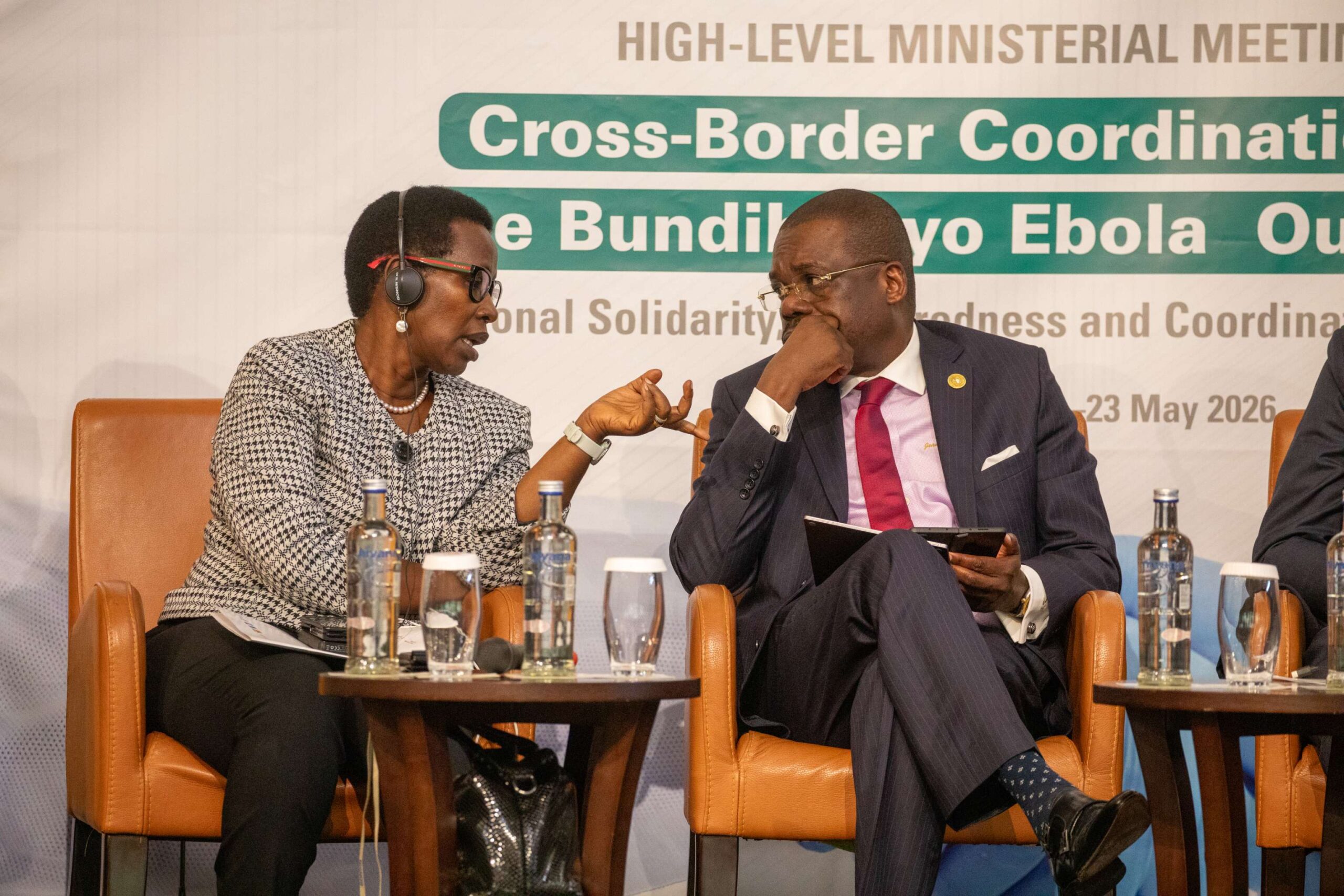
Health ministers and delegates from across Africa have called for stronger regional coordination and urgent action to contain the growing Ebola outbreak linked to the Bundibugyo strain, warning that if Uganda and the Democratic Republic of Congo fail to control the disease, the wider region and the world remain at risk.
The call was made during a high-level ministerial meeting on cross-border coordination for regional solidarity held in Kampala, bringing together health officials, technical experts and partners to strengthen preparedness, surveillance, laboratory systems and treatment efforts between Uganda and the DRC.
Speaking during the meeting, the Director General of the Africa Centres for Disease Control and Prevention (Africa CDC), Dr Jean Kaseya, said African countries had learnt key lessons from previous outbreaks and were now prioritising faster domestic investment and coordinated responses before relying on external partners.
Kaseya said he had held discussions with regional leaders, including President Yoweri Museveni of Uganda and leaders in the DRC and Burundi, all of whom had expressed commitment to supporting outbreak response efforts.
He noted that several African countries, including South Africa and Nigeria, had already mobilised financial support, while international partners such as France, China and the United States had also pledged assistance.
“This is not the first time the Bundibugyo strain has affected East Africa. Uganda and the DRC have experienced similar outbreaks before, and we must move quickly with resources, tools and technical support,” Dr Kaseya said.
He added that Uganda would host the regional emergency coordination centre overseeing the current Ebola response.
Health officials revealed that the DRC has so far registered more than 500 Ebola cases and multiple deaths linked to the outbreak, while Uganda on Friday confirmed three cases involving a pilot who reportedly transported a suspected patient from Arua to Entebbe without initially knowing the individual’s condition, a health worker, and a Congolese national.
Sudan’s Health Minister, Luke Thompson, called for transparency, solidarity and timely information sharing among countries, stressing the importance of involving local leaders and communities in response efforts.
Uganda’s Permanent Secretary at the Ministry of Health, Dr Diana Atwine, warned that continued cross-border movement remains a major challenge despite existing restrictions.
“At the same time as we strengthen our internal systems, we also have to support the other side because the problem is bigger there, and we will continue to experience spillover if the outbreak is not controlled,” Dr Atwine said.
She revealed that Uganda and the DRC are discussing plans to establish laboratories and temporary isolation centres within affected Congolese communities to support faster testing, quicker isolation of suspected cases and treatment closer to affected populations.
“We cannot completely close the borders; people are still moving, so we must continue strengthening surveillance while also supporting the response across the border,” she added.
According to Dr Atwine, technical teams from both countries have already held discussions on operational plans covering human resources, laboratory systems, isolation facilities and coordinated treatment mechanisms.
The meeting emphasised the need for “one coordinated plan, one budget and one monitoring framework” to avoid fragmented interventions from different agencies and partners responding to the outbreak.
Health experts warned that delays in identifying and isolating symptomatic individuals continue to fuel infections in affected communities. Uganda and the DRC are now prioritising rapid testing, case detection and isolation to reduce further transmission.
Delegates also discussed strengthening Ebola Treatment Units, infection prevention and control systems, safe and dignified burials, and improving water, sanitation and hygiene services in schools, health facilities and high-risk communities.
Under the continental preparedness strategy, countries are expected to activate Public Health Emergency Operations Centres, strengthen surveillance at border points, pre-position personal protective equipment, train health workers and expand laboratory readiness.
The meeting further highlighted the importance of accelerating research and access to vaccines, therapeutics and other medical countermeasures targeting the Bundibugyo strain, while promoting African-led scientific research, innovation and data sharing.
Officials noted that more than 200 partners and responders are expected to support the regional response, although concerns were raised about delays between funding pledges and implementation on the ground.
“We are ready to move with whatever resources are available because the issue now is urgency,” one official said during the discussions.
The ministerial meeting concluded with renewed calls for stronger regional solidarity, with delegates warning that Ebola outbreaks can no longer be managed by individual countries alone due to increasing cross-border movement and trade.