
 Mama FM
Mama FM
Mama FM
19 June 2026, 12:54 pm
By Byamukama Alozious
Uganda has renewed its commitment to tackling sickle cell disease, one of the country’s most pressing public health challenges, through expanded new-born screening, improved access to treatment, community awareness, and premarital testing.
Speaking ahead of the World Sickle Cell Day commemorations, health experts revealed that Uganda carries one of the world’s highest burdens of sickle cell disease. According to Dr. Sarah Kiguli, the national sickle cell task force said Uganda ranks fifth globally and fourth in Africa for the number of people living with the disease.
Dr. Kiguli said about 13 percent of Uganda’s population carries the sickle cell trait, meaning 13 out of every 100 people have the gene responsible for the disease. While carriers do not have sickle cell disease themselves, they can pass the gene to their children. He noted that approximately one percent of babies born in Uganda inherit sickle cell disease, translating to nearly 25,000 newborns every year.
“This is a major public health challenge, but it is preventable and manageable if appropriate interventions are implemented,” Dr. Kiguli said.
She explained that Uganda has already adopted key interventions that significantly improve the survival and quality of life of people living with sickle cell disease. These include newborn screening, early linkage to specialised care, routine immunisation, preventive treatment against bacterial infections using penicillin, malaria prevention, and the use of hydroxyurea, a medicine that reduces the frequency and severity of sickle cell complications.
Although these interventions have been successfully piloted in different parts of the country, Dr. Kiguli said the priority now is to ensure they are available nationwide.
She also emphasised the need for increased public awareness, urging Ugandans to know their sickle cell status before marriage or starting a family to reduce the number of children born with the disease.
“We need every Ugandan to know their sickle cell status. Premarital testing and genetic counselling can help couples make informed decisions and reduce transmission of the disease to future generations,” she said.
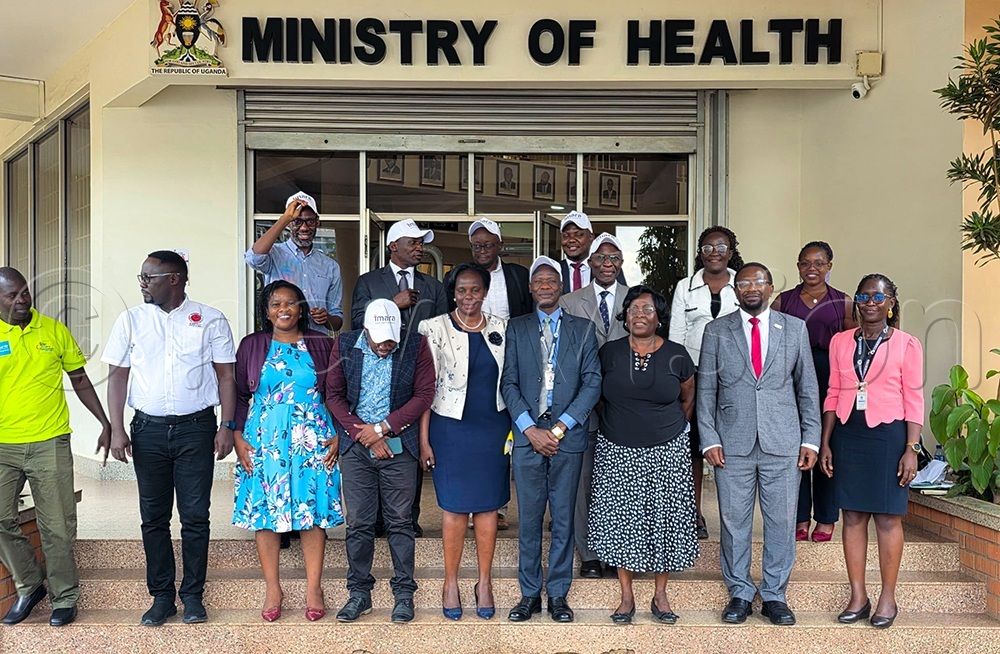
Speaking during a media brief, Director General of Health Services Dr. Charles Olaro called for stronger collaboration among government, Members of Parliament, religious leaders, civil society organisations, development partners, and the private sector to strengthen Uganda’s sickle cell response.
Dr. Olaro appealed for increased funding to support the procurement of hydroxyurea and expand access to comprehensive sickle cell services across the country. He also urged religious leaders to use their platforms to educate communities about sickle cell disease and promote premarital screening.
“We need to build new alliances and strengthen community awareness. Religious leaders have an important role in encouraging people to know their sickle cell status before marriage,” he said.
The Ministry of Health is also promoting genetic counselling and plans to train more counsellors to support families and individuals undergoing sickle cell testing.
Dr. Olaro reaffirmed the ministry’s commitment to ensuring every child born with sickle cell disease is diagnosed early and linked to quality care before complications develop.
He cited the example of Kayunga District, where the introduction of hydroxyurea has significantly reduced hospital admissions among children living with sickle cell disease.
“Previously, more than half of the children’s ward was occupied by sickle cell patients. Since introducing hydroxyurea, admissions have reduced to about 20 to 30 percent, showing how effective the treatment is,” he said.
The ministry has distributed rapid diagnostic test kits to health facilities and is expanding newborn screening services to ensure babies diagnosed with sickle cell disease receive timely treatment.
Dr. Olaro stressed that many children still die without ever receiving a formal diagnosis, making nationwide newborn screening essential.
“It is estimated that about 20,000 newborns are born with sickle cell disease every year, and between 6,000 and 9,000 die before their fifth birthday. This contributes significantly to Uganda’s under-five mortality,” he said.

He added that sickle cell disease accounts for nearly 16 percent of under-five deaths and noted that with proper care, patients can live long and productive lives. He cited a 52-year-old woman living with sickle cell disease as evidence that survival has greatly improved with access to treatment.
Dr. Olaro invited Ugandans to participate in the national World Sickle Cell Day commemorations scheduled for June 19 in Jinja City, noting that the Busoga subregion was selected because it has one of the country’s highest burdens of sickle cell disease.
The organisation also welcomed Uganda’s decision to introduce nationwide newborn screening this year, describing it as a major milestone in ensuring early diagnosis, prompt linkage to care, and improved survival for children born with sickle cell disease.