
 Mama FM
Mama FM
Mama FM
30 June 2026, 4:55 pm

By Alozious Byamukama
Sexual abuse, corporal punishment, emotional violence, bullying, harassment, child labour, neglect, and the denial of basic needs such as food, shelter and scholastic materials continue to threaten the safety and education of children in Uganda’s schools.
New data presented at the National Good School Symposium shows that 28% of women aged 18–24, 25% of girls aged 13–17, 27% of men aged 18–24, and 21% of boys aged 13–17 missed school due to physical violence. The findings further reveal that 35% of girls have experienced sexual violence compared to 17% of boys, highlighting the urgent need to strengthen child protection in schools.
Phyllis Chemutai, the State Minister for Primary Education, officially launched the two-day National Good School Symposium in Kampala and said Uganda has established strong legal and policy frameworks to protect children, including the Children (Amendment) Act, the National Strategy to End Violence Against Children in Schools, and the National Guidelines for Safe School Zones. Despite these efforts, she said violence and corporal punishment continue to persist in schools. She called on teachers to adopt non-violent methods of discipline and urged parents, community members and all adults to take responsibility for protecting children from abuse.
Chemutai noted that poor nutrition at home and in schools continues to affect children’s participation in education, with many learners attending school hungry or suffering from health conditions that affect their concentration and performance. She said strengthening enforcement of child protection laws, improving school feeding programmes, promoting school-based food production, and increasing community oversight are essential to creating safe learning environments. She added that Uganda is working towards eliminating corporal punishment in schools by 2030.
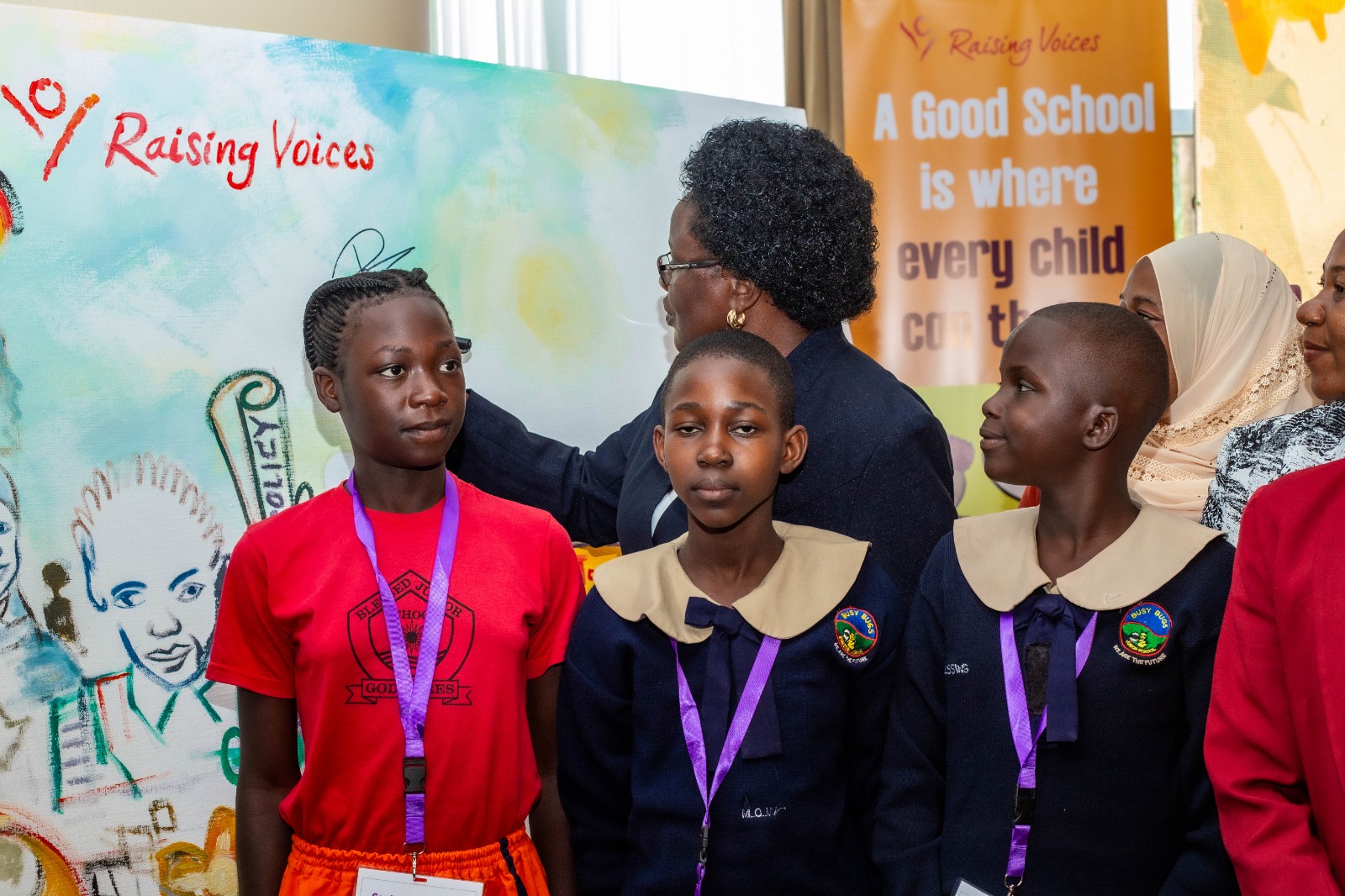
The symposium, organised by Raising Voices under the theme “Sustaining Violence-Free Schools: National Symposium on the Good School Toolkit,” has brought together about 105 participants, including officials from the Ministry of Education and Sports, the Ministry of Gender, Labour and Social Development, the National Curriculum Development Centre, district education officers, head teachers, teachers, learners, academics, civil society organisations, community representatives and media practitioners to discuss how to sustain violence prevention efforts in schools.
Presenting research findings during the symposium, Eddy Walakira, Professor of Social Work and Social Administration at Makerere University, described violence as a learned behaviour, saying compassion and respect can also be learned and nurtured. He said violence in schools extends beyond corporal punishment to include sexual violence, emotional abuse, bullying, harassment, neglect, child labour and the denial of basic needs such as food, shelter and scholastic materials.
Prof. Walakira said violence against children remains a global concern, with an estimated 1 billion children aged between 2 and 17 years experiencing violence in the past year. Nearly half of school-age children experience peer violence, while girls and children with disabilities continue to face multiple forms of abuse. He added that children sent home due to school fees, lack of scholastic materials, or those attending school hungry are also victims of neglect that affects their learning and development.
According to Prossy Nakanjako, Co-Director of Raising Voices, the Good School Toolkit was developed in 2009 with the support of the Ministry of Education and Sports to prevent violence against children in schools. It was evaluated through a randomised controlled trial conducted between 2012 and 2014, which found that learners in schools implementing the toolkit were 42% less likely to experience physical violence from teachers and other school staff. The study also found that 50% fewer teachers in intervention schools reported using physical violence against learners compared to those in control schools.
Today, the Good School Toolkit has been implemented in more than 2,500 schools across 34 districts in Uganda. Ghebrebrhan said the symposium was created to provide a platform where government, schools and partners can share experiences, learn from one another and develop strategies to sustain violence prevention efforts long after schools complete the programme.
Speaking on implementation, Hassan Muluusi said the toolkit succeeds because it places responsibility on the entire school community. Every participating school establishes teacher committees, learner committees and community committees that work together to promote children’s safety, participation and respect. However, he noted that sustaining these gains remains a challenge, particularly in urban schools, making continuous collaboration among stakeholders essential.
Schools represented at the symposium came from Kampala, Wakiso, Lira, Luwero, Kabarole and several other implementing districts. District education officers, teachers, learners and community representatives are expected to develop practical recommendations that will strengthen the sustainability of violence prevention interventions and ensure every child in Uganda learns in a safe, inclusive and violence-free school environment.