
 Mama FM
Mama FM
Mama FM
14 August 2026, 4:10 pm
By Byamukama Alozious
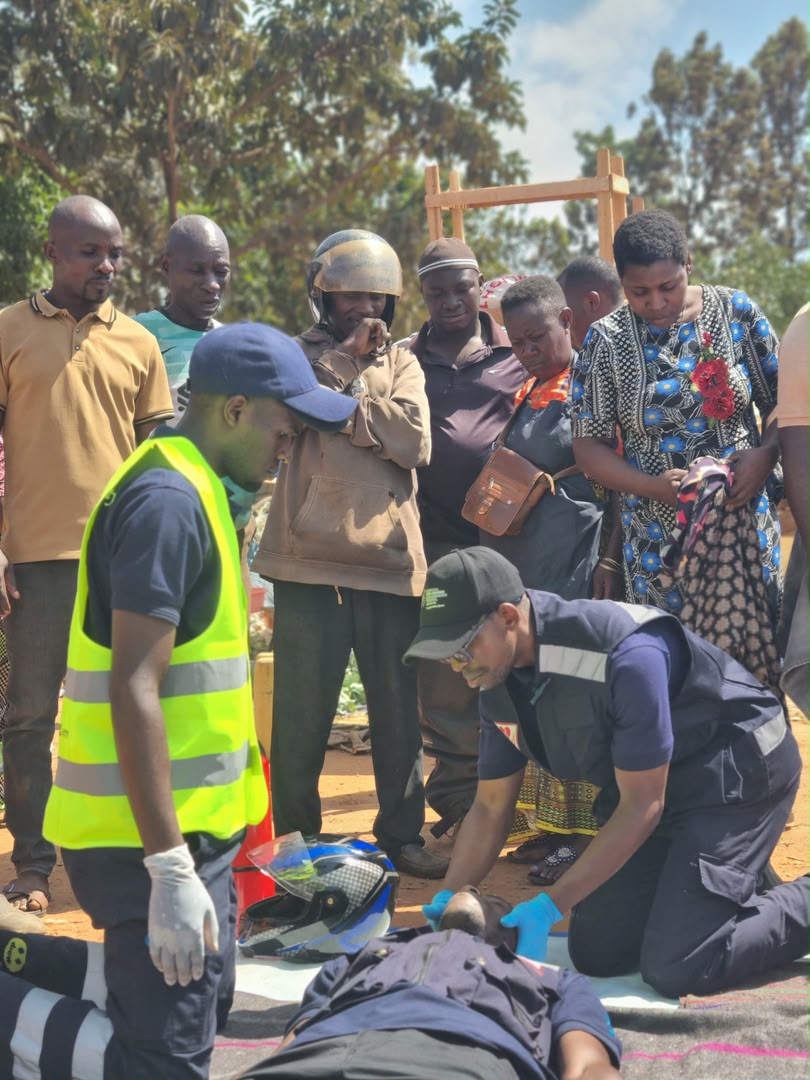
Health professionals are taking emergency first-aid training closer to communities along major highways in a new effort to improve survival after road crashes and other emergencies.
The initiative targets people who are often among the first to reach accident scenes, including market vendors, boda boda riders, teachers and other community members.
The move comes as Uganda continues to record a high number of road crashes. The Uganda Police Force Annual Crime Report 2025 shows that 5,383 people were killed in road crashes last year, while 26,044 crashes were recorded across the country. Of these, 4,602 were fatal, 13,563 were serious and 7,879 were minor.
Young people below the age of 35 accounted for 56.2 per cent of those killed, according to police statistics.
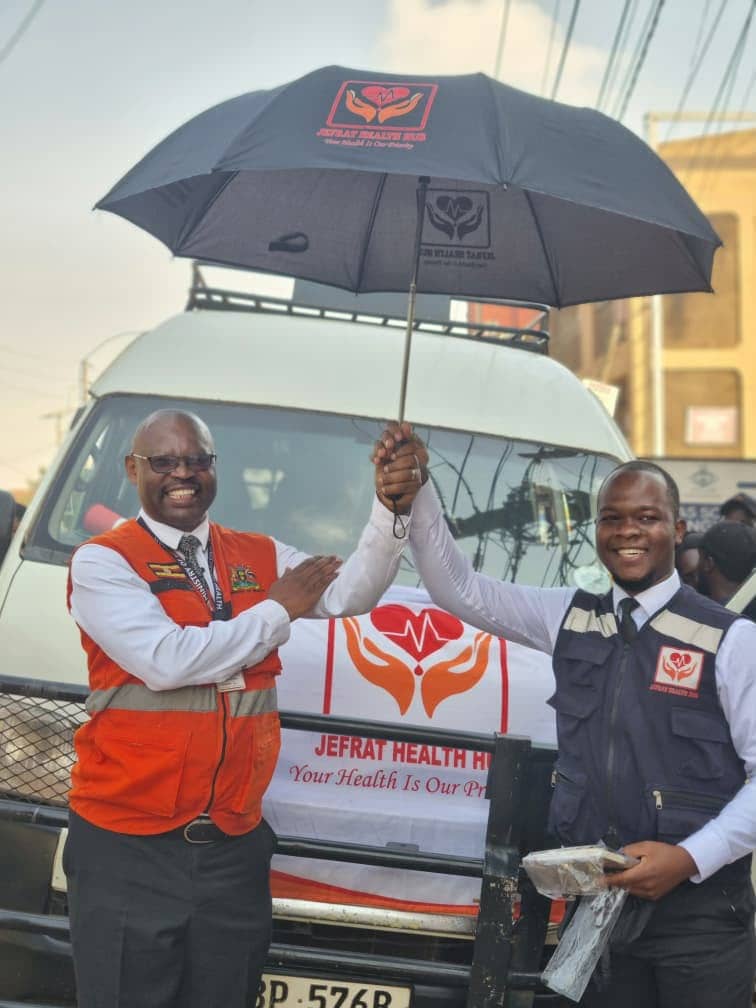
Jeremiah Kirungi, the Chief Executive Officer of JEFRAT Health Hub Limited, which is leading the initiative, said the campaign is intended to address what happens during the critical period between the occurrence of an emergency and the arrival of a victim at a health facility.
“We felt there is an urgent need for emergency medical services. We are trying to bridge the gap to make sure that we sensitise our communities,” Kirungi said.
He said people at crash scenes often lack the skills to provide immediate assistance, particularly when a victim is bleeding.
“At an accident point, in case of any incident or hazard, we need someone to intervene immediately and give the first aid,” he said.
Kirungi said the campaign would teach communities basic skills that can be used while waiting for professional emergency care.
The training will cover controlling bleeding, managing nosebleeds, responding to fainting and recognising whether an apparently unresponsive person is still showing signs of life.
Participants in selected locations will also be introduced to cardiopulmonary resuscitation (CPR).
Kirungi said some basic first-aid skills can be taught in as little as 15 to 30 minutes, while CPR training may take between 30 minutes and one hour, depending on the session.
“These are hands-on skills that we can deliver to someone as experienced first aiders in between 15 to 30 minutes,” he said.
The first phase of the campaign is travelling from Kampala towards Ntungamo, with stopovers at busy communities and trading centres along the Kampala-Masaka route and in western Uganda. The campaign was flagged off by Dr John Baptist Waniaye Nambohe, the Commissioner for Emergency Medical Services at the Ministry of Health.
Kirungi said the locations were selected because of the large number of people who use and work around the highways.
“We’ve pinpointed areas with a high number of people. For example, Masaka Road is a highway. We have so many accidents along this road,” he said.
At Lukaya, for example, the team plans to train market vendors in CPR and other emergency-response skills.
The organisers say the approach is based on the idea that people already living and working near accident-prone roads can become immediate responders before an injured person reaches a health facility.
Uganda’s Ministry of Health has previously acknowledged gaps in emergency response, including limited response between the scene of an emergency and accident and emergency units at health facilities, as well as challenges involving ambulances and coordination among emergency-care stakeholders.
The national Emergency Medical Services Strategic Plan also provides for emergency care covering trauma and other emergencies at different levels of the health system.
However, Kirungi said community training should be accompanied by investment in emergency infrastructure.
He called for first-aid stations to be established along major highways so that injured people can receive immediate attention before being referred to health facilities.
“We need first-aid stations across the country. Imagine a country whereby we have a first-aid station across the entire region, across every highway,” he said.
He argued that the responsibility for strengthening emergency medical services should not rest with the government alone.
“Let’s not overburden the government with this responsibility. Let’s come together, because this is our country. At the end of the day, it’s our lives that are going to be saved,” Kirungi said.
The team, comprising trainers, instructors and medics, plans to continue taking the training to other parts of the country.
Kirungi said the long-term goal is to reach people who may have little access to emergency-care information but are likely to be present when an accident or other emergency occurs.
“We are going to reach to all corners of the country, places that have been neglected, places where information doesn’t reach on ground,” he said.
For a country recording thousands of road-crash deaths each year, the initiative puts the focus not only on preventing crashes but also on what happens in the minutes after one occurs, when basic knowledge of first aid could determine whether an injured person survives long enough to reach professional care.