
 Mama FM
Mama FM
Mama FM
27 August 2026, 8:41 pm
By Byamukama Alozious
The Uganda Media Women’s Association (UMWA), in partnership with the National Union of Disabled Persons of Uganda (NUDIPU), has urged journalists and editors to improve reporting on persons with disabilities by understanding the laws that protect their rights.
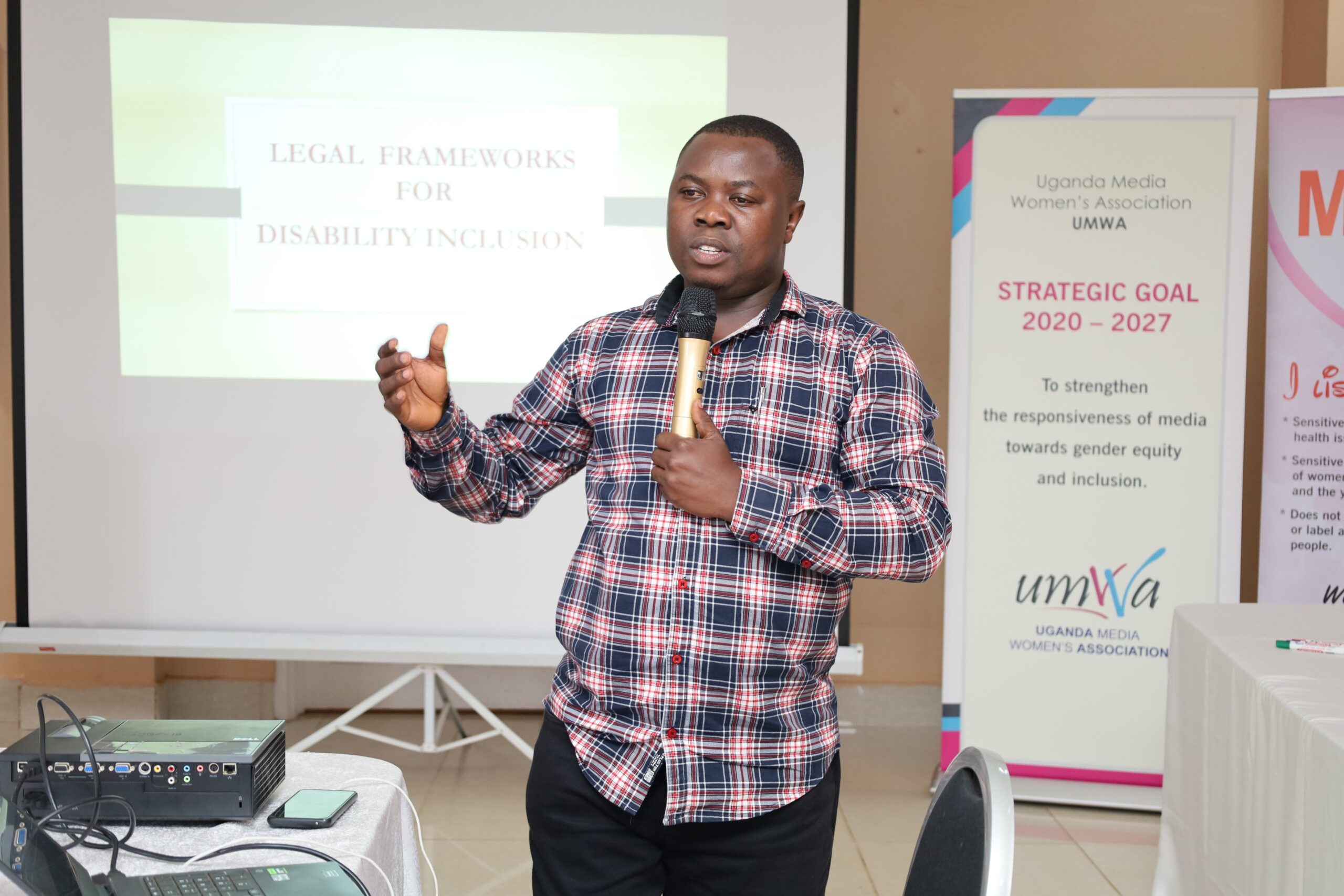
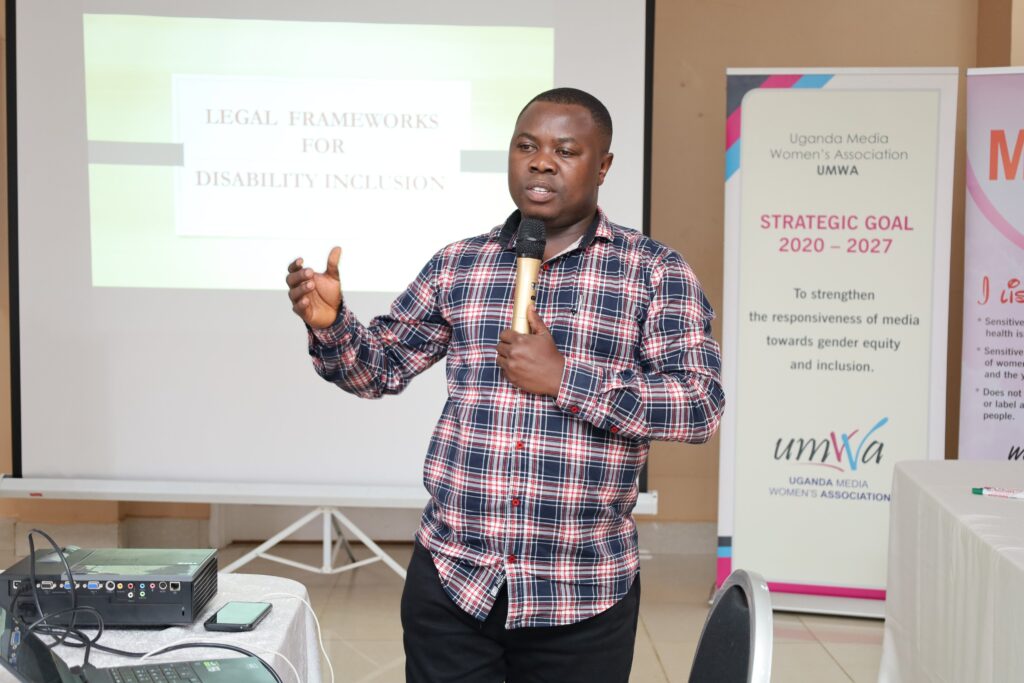
The call was made during a journalists’ training in Kampala, which brought together media practitioners to discuss disability, inclusive reporting, regulatory frameworks and gaps affecting the representation of persons with disabilities in the media.
The organisers said disability issues are not adequately covered in many journalism training institutions, despite persons with disabilities being members of every community and deserving fair and accurate representation in the media.
The training gave journalists an opportunity to understand the different forms of disability, the barriers faced by persons with disabilities, and the shift from viewing disability as a medical or charity issue to treating it as a human rights issue.
Doreen Sampa, the programmes officer at UMWA, said the media has a major responsibility in challenging stigma and stereotypes surrounding disability.
She said journalists should use their influence to promote the rights of persons with disabilities, hold duty bearers accountable and ensure that people with disabilities are not only portrayed as victims or recipients of assistance.
“We raise awareness about diversity of disability and the contribution of persons with disability to society. It is us, the media, who can counter the stigma by ensuring that we report accurately and by dismissing the stereotypes,” Sampa said.
She said responsible journalism requires media practitioners to understand the laws governing disability and apply them when reporting.
“We want you to come out of this session and report in a different way. When you get to know the laws that are in the country, the national ones, the regional ones and international ones, we expect you to change the way your stories will be coming out,” she said.
The training placed particular emphasis on Uganda’s Persons with Disabilities Act, 2020, which provides for the respect and promotion of the fundamental human rights and freedoms of persons with disabilities. The Act states that persons with disabilities are entitled to the rights guaranteed by the Constitution and the United Nations Convention on the Rights of Persons with Disabilities and requires the Government and all persons in Uganda to uphold those rights without discrimination. (ULII)
For journalists, one of the important provisions is Section 12, which deals with non-discrimination in the provision of services to the public. The law requires services provided to the public on a commercial basis to be available and accessible to persons with disabilities and prohibits denying services or deliberately making it difficult for a person with a disability to use them.
The same section has a direct connection to broadcasting. Section 12(4) requires television station owners or persons in charge of television stations to provide sign-language insets in all newscasts. The law further provides for regulations on standards for access to information by persons with disabilities.
Another important provision is Section 15 on access to justice, information and training. It requires the Government to promote the development, training and use of sign language and interpreters in public institutions and at government functions, the use of information assistive devices and technology, and the provision of public information in Braille. (ULII Media)
This means accessibility to information is not simply a matter of journalists being kind or inclusive; it is connected to the rights of persons with disabilities.
The Act also recognises different categories of disability, including physical, hearing, visual, deaf-blind, mental, little people, albinism and multiple disabilities.
The training further introduced journalists to the United Nations Convention on the Rights of Persons with Disabilities (CRPD), which provides an international human rights framework for disability.
The convention requires States to promote and protect the rights of persons with disabilities in areas including freedom of expression and access to information, education, health, rehabilitation, employment, social protection, political participation and cultural life.
Particular emphasis was placed on Article 21, which protects freedom of expression and opinion and access to information for persons with disabilities.
The trainers challenged journalists to move beyond stories that portray persons with disabilities only as objects of charity, victims of abuse or people seeking assistance.
Instead, journalists were encouraged to report on whether persons with disabilities are accessing education, healthcare, employment, political participation, social protection, information and other services on an equal basis.
NUDIPU communications representative Joan Mbabazi also challenged myths and stereotypes surrounding persons with disabilities, including harmful beliefs about people with albinism.
She said some communities believe that persons with albinism are associated with wealth or that their body parts can be used to obtain wealth.
Such beliefs, she said, expose people with albinism to discrimination and violence, while NUDIPU research indicates that many persons with albinism experience poverty and exclusion.
David Nangosi, a human rights lawyer and Senior Programme Officer for Human Rights at NUDIPU, explained that disability can be understood through different models, including the traditional, medical, social and human rights models.
He said the social model focuses on barriers in society and the environment that prevent persons with disabilities from participating fully, while the human rights model views disability through the lens of equality, dignity, rights and participation.
The training also called for stronger relationships between journalists and organisations representing persons with disabilities.
Participants recommended regular engagements between media practitioners and persons with disabilities to improve access to sources, strengthen understanding of disability issues and enable journalists to report from the experiences of people directly affected.
The organisers said newsrooms should also consider disability across different beats rather than treating it as a specialised subject.
Disability can be connected to health, education, climate change, politics, employment, business, gender, human rights and development, making it relevant to almost every area of journalism.
Uganda’s Constitution also provides a foundation for disability rights. Article 35 states that persons with disabilities have a right to respect and human dignity and that the State and society should take appropriate measures to enable them to realise their full mental and physical potential.
The journalists were therefore encouraged to use these legal provisions not only when writing disability-specific stories, but whenever their reporting involves issues affecting persons with disabilities.
The organisers said the ultimate goal is to see a change in the way disability stories are sourced, written and presented, with greater accuracy, fairness, dignity, accessibility and accountability.
They said persons with disabilities should be recognised not simply as people with needs, but as rights holders, citizens, professionals, parents, leaders and contributors to Uganda’s development.