
 Mama FM
Mama FM
Mama FM
6 October 2026, 2:26 pm
By Annet Nakato
East African countries have been urged to move beyond climate finance pledges and focus on securing investments that can strengthen resilience and support the implementation of their Nationally Determined Contributions (NDCs).
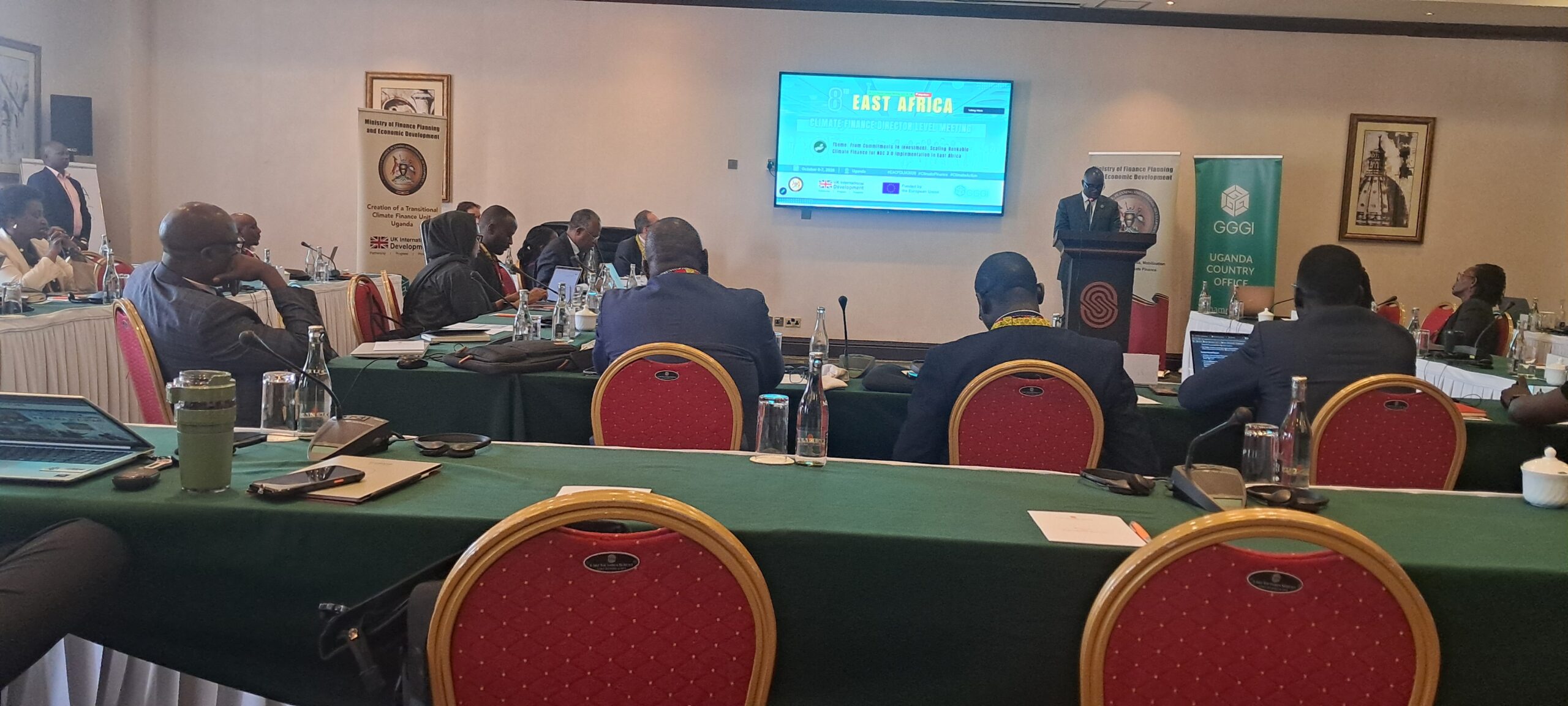
The call was made by the Minister of Finance, Hon. Henry Musasizi, while speaking at a climate finance director-level meeting held under the theme, “From Commitments to Investment: Calling Bankable Climate Finance for NDC 3.0 Implementation in East Africa”.
Musasizi said climate action should be treated as an economic investment, noting that stronger flood protection, disaster preparedness, public health resilience and local adaptation can help countries prevent economic losses and protect development gains.
He said some climate investments may not generate direct commercial returns but remain important to communities and therefore require grants and highly concessional financing.
“Where they are viable in streams, we should design financing that can responsibly bring in other capital,” the minister said, stressing that financing mechanisms should reflect the nature of each investment and the people it is intended to serve.
He also highlighted the role of the private sector in the transition, particularly in renewable energy, efficient production, resilient value chains and digital services.
However, he said private investors need a supportive environment, including clear policies, predictable regulations and mechanisms for sharing risks.
Governments and development partners, he said, can help create this environment through practical regulations, credible agreements, targeted guarantees and stronger financial institutions.
The minister further called for a shift in how countries measure the success of climate finance.
He said success should not be measured simply by the amount of money announced, but by the additional investment mobilised and the resilience achieved on the ground.
He urged countries to improve tracking of climate finance by clearly distinguishing between pledges, approvals, disbursements and actual results.
“This will help us see whether finance is reaching adaptation, local governments and communities, and whether projects are advancing our NDCs and economic priorities,” he said.
The minister also proposed a regional scorecard to enable East African countries to track climate finance, learn from one another and identify bottlenecks requiring corrective action.
As the region prepares for the next global climate discussions, he said East African countries should speak with a common voice and push for more accessible adaptation finance, stronger support for project preparation and financing that takes into account the fiscal realities facing countries.
He added that the region should also strengthen partnerships that can mobilise domestic resources and private capital.
A united regional position, he said, would carry greater weight if backed by clear investment priorities, strong policy commitments and evidence that climate finance is delivering measurable results.