
 Mama FM
Mama FM
Mama FM
21 September 2026, 10:40 pm
By Annet Nakato
Sports are being used to encourage children to eat better and live healthier lives, as stakeholders call for stronger school feeding programmes and school gardens to address malnutrition in Uganda.
The call was made during a three-day Sports-for-Health Programme organised by the Scaling Up Nutrition and Food Security for Youth, Adolescents and Children Civil Society Network (SUNFOYAC-CSN), in partnership with the Ministry of Health.
The programme, running from September 21 to 23 at Kitebi Primary School in Kampala, has brought together more than 1,500 learners, teachers, coaches, parents and community members.
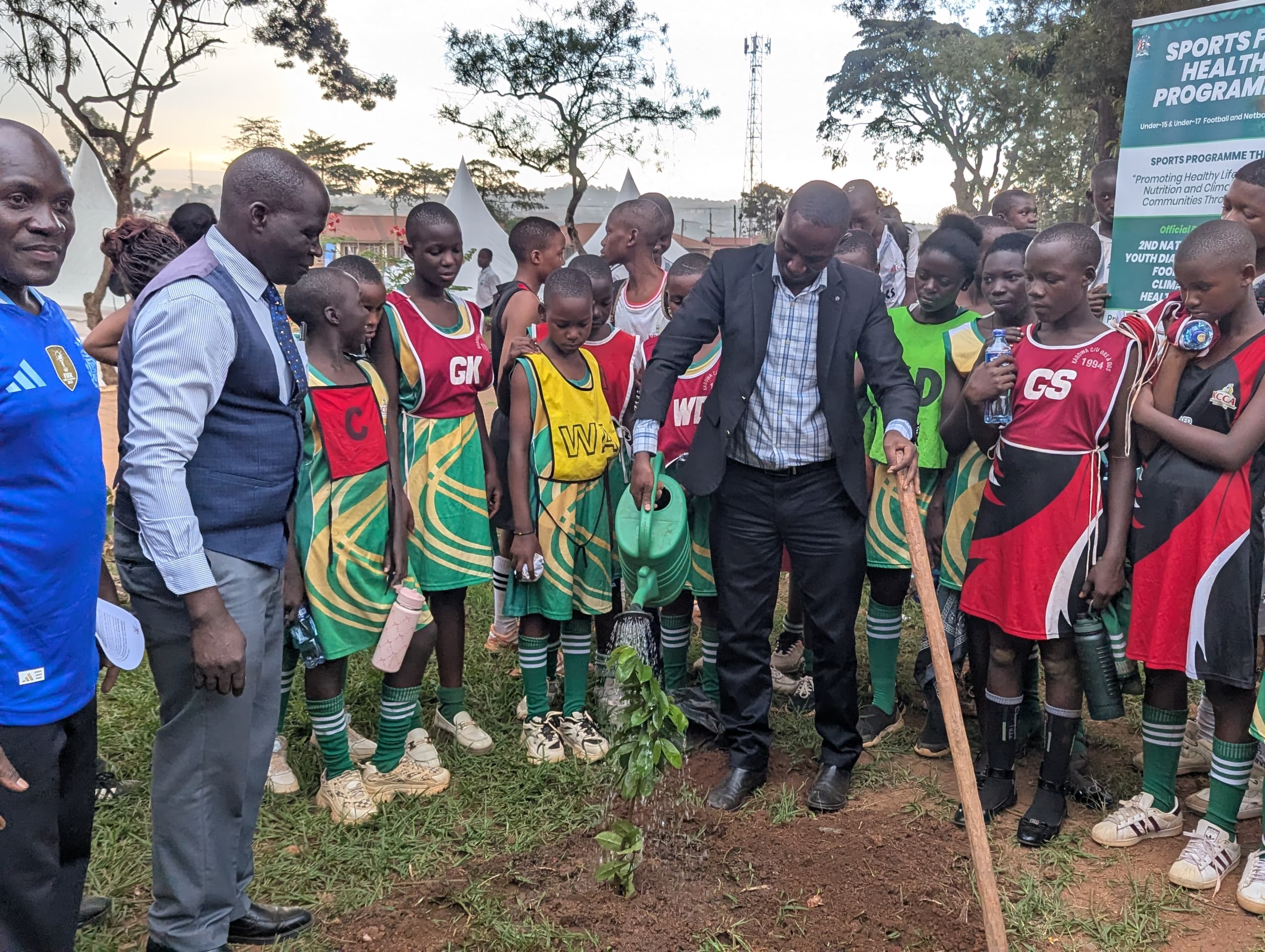
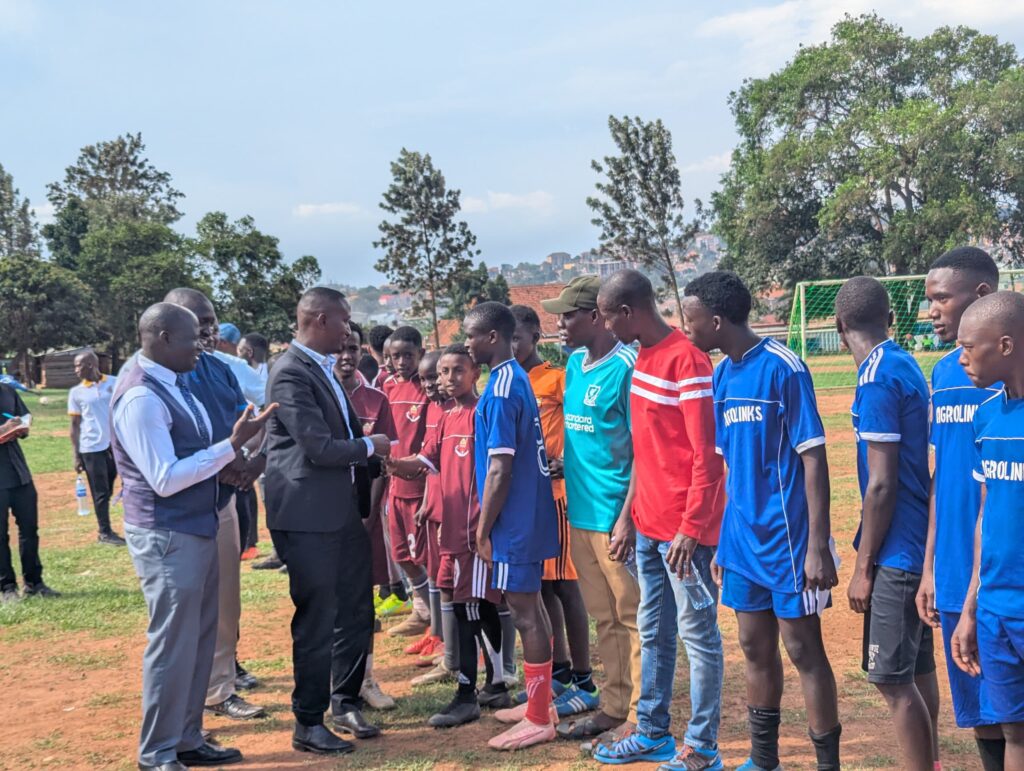
The activities include Under-15 and Under-17 football and netball competitions, health outreaches and nutrition education.
The programme is being implemented under the “Fix My Food” campaign, whose theme is “Promoting Healthy Lifestyles, Better Nutrition and Climate-Resilient Communities Through Sports.”
Bernard Sembatya, the Country Director of SUNFOYAC-CSN Uganda, said sports provide an opportunity to take nutrition messages to schools, homes and communities.
He said schools should be supported to establish gardens and agriculture programmes that can provide nutritious food while also giving learners practical skills.
«“The main gap is sustainability of our school feeding programme. If we embrace sustainable school feeding, government can support schools, while private schools can also be supported by their committees to have school-smart gardens and agriculture programmes,” Sembatya said.»
He said school gardens can also help children share knowledge about food production and nutrition with their families.
At Kitebi Primary School, teachers say poor nutrition is already affecting some learners.
Mugaya Joseph, a teacher at the school, said some children come to school without eating, which affects their concentration in class.
He said the school has also had cases of girls collapsing in class, prompting the administration to consult health workers and engage parents about better feeding practices.
«“Fruits are very important. Foods that are not fried should be encouraged for these children. But because of the financial circumstances of parents, it may not be easy,” Mugaya said.»
He said the school encourages parents to contribute towards feeding programmes, although limited household incomes remain a challenge.
Mugaya said the Sports-for-Health programme would also give the school an opportunity to engage parents on proper nutrition.
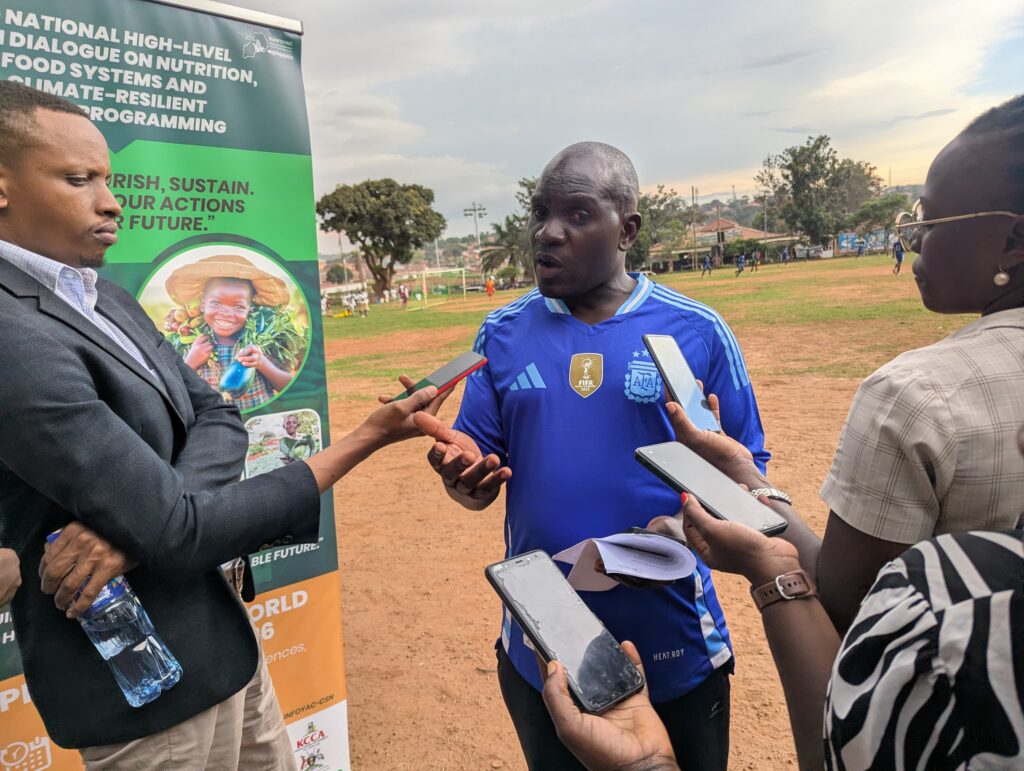
James Kasumba from the National Council of Sports said sports are important in the physical, mental and social development of children.
He said regular physical activity promotes healthy living and can help reduce risks associated with non-communicable diseases.
Kasumba also encouraged parents to reduce children’s consumption of fast foods and provide balanced meals containing fruits, vegetables and proteins.
He said sports also help children develop discipline, teamwork and the ability to handle both success and failure.
Meanwhile, Henry Kawesa, Director of Agrolinx Academy in Namasuba, called for increased involvement of government and private schools in programmes promoting healthy lifestyles.
Kawesa said schools need to work with parents and communities to improve children’s diets and physical wellbeing.
He also expressed concern about the increasing cases of conditions such as high blood pressure and diabetes among young people.
«“We get the trees when they are still young, so they can grow and become better citizens of Uganda,” Kawesa said.»
He said healthy living should start during childhood, with schools playing a key role in promoting good nutrition, physical activity and practical agriculture skills.
According to SUNFOYAC-CSN, about 26 percent of children under five in Uganda are stunted, meaning more than one in every four children is affected by chronic undernutrition.
Uganda is also facing other forms of malnutrition, including anaemia and micronutrient deficiencies, while overweight, obesity and diet-related diseases are also becoming a concern.
The organisers say the problem is not only about the availability of food but also its affordability, dietary diversity, household food security and the effects of climate change on food production.
Under the Fix My Food campaign, organisers plan to promote healthier school meals, school nutrition clubs, household and school gardens, healthy cooking and nutrition counselling.
The programme is also encouraging young people to link healthy eating with physical activity, mental wellbeing and healthy lifestyles.
The activities will also give young people information on HIV and tuberculosis, sexual and reproductive health, food security and climate change.
The Sports-for-Health Programme is part of activities leading to the Second National High-Level Youth Dialogue on Nutrition, Food Systems and Climate-Resilient Health Programming, scheduled for October 15 and 16 in Kampala.
The dialogue is expected to bring together young people, government, civil society, schools, communities, development partners, academia and the private sector to discuss ways of improving nutrition, strengthening food systems and promoting climate-resilient health systems.