
 Mama FM
30 October 2026, 11:43 am
By Byamukama Alozious
Health advocates have called on the government to make non-communicable disease treatment more affordable, strengthen community-based support and expand multi-month dispensing of medicines as Uganda integrates HIV services with care for other chronic illnesses.
They say integration of services will have limited impact if patients living with HIV, diabetes, hypertension, cancer and cardiovascular diseases must make frequent trips to health facilities, pay for expensive medicines and undergo tests that are unavailable at lower-level health centres.
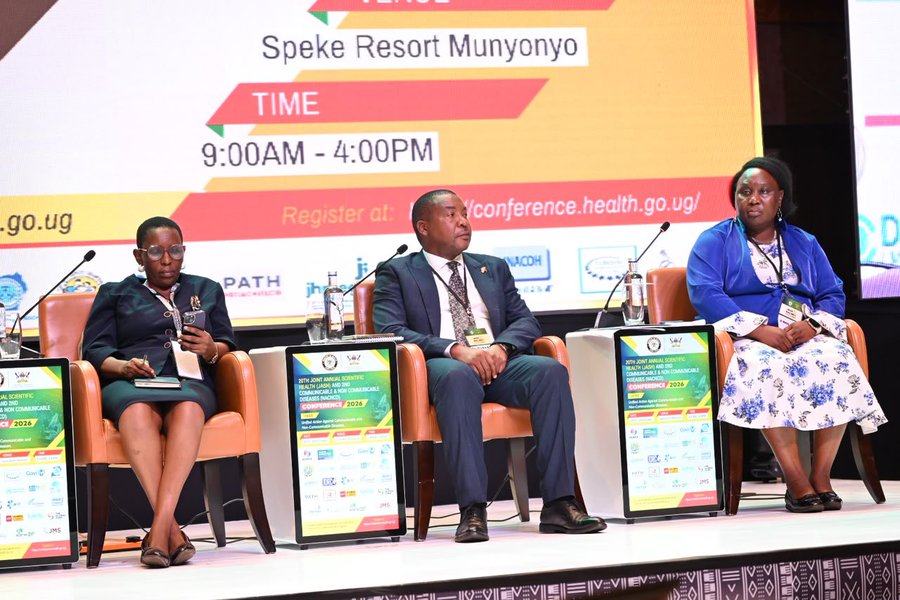
The concerns emerged during a session organised by AHF Uganda Cares under the theme Equity After Integration: Closing the Multi-Month Dispensing Gap for Care in Uganda, held as part of the Communicable and Non-Communicable Diseases and Joint Annual Scientific Health Conference in Kampala.
Flavia Kyomukama, Executive Director of the National Forum of People Living with HIV/AIDS Networks in Uganda (NAFOPHANU), said the cost of treatment remains a major barrier for communities already struggling with other economic pressures.
“Non-communicable diseases are an issue of money. It is an issue of cost,” Kyomukama said, noting that many patients cannot afford treatment while others lack sufficient information about managing their conditions.
She said people living with HIV are increasingly facing additional health challenges as they live longer on antiretroviral therapy, including hypertension, diabetes, vision complications and weakened bones.
Kyomukama also raised concerns about the lack of coordinated community awareness campaigns to explain what integrated healthcare means, arguing that misinformation and misconceptions can fuel stigma and discrimination.
She said patients need information that helps them understand how HIV services can be combined with care for other conditions without exposing them to further discrimination.
For people living with HIV, she added, the challenge extends beyond the availability of medicines to the quality and continuity of care.
Kyomukama said she had observed people dying amid concerns about depression and the loss of social support when clinics and community meetings were disrupted. She called for an assessment of how these changes have affected patients and the support systems that previously helped them cope.
She urged health authorities to extend multi-month dispensing beyond HIV medicines so that patients with other chronic conditions can also receive sufficient supplies for longer periods.
Under this approach, a patient collecting antiretroviral medicines for several months could also receive an appropriate supply of prescribed hypertension or diabetes medicines, where clinically suitable and supported by available stocks.
This would reduce repeated journeys to health facilities, transport expenses and time spent waiting for services, particularly for people with limited incomes or those travelling long distances.
However, multi-month dispensing alone will not resolve all the challenges. Patients also need regular clinical reviews, appropriate monitoring, counselling and clear instructions on how to manage multiple conditions safely.
Another concern raised during the session was the difficulty patients face accessing diagnostic services. Kyomukama said some people are screened at one facility but must travel elsewhere for further tests, including investigations for hepatitis and cancer.
She called for improved access to essential tests and medicines at lower-level health facilities, alongside increased staffing to reduce waiting times and improve continuity of care.
She also warned that older people living with HIV may face additional exclusion when they seek treatment for other conditions, particularly when healthcare workers focus on their HIV status rather than addressing their overall health needs.The discussion further highlighted the importance of integrating services without weakening the community structures that have supported people living with HIV for decades.
Dr Frank Mugabe, Principal Medical Officer responsible for non-communicable diseases at the Ministry of Health, said existing community structures should remain central to the integration process.
He also raised concern about the growing need for investment in the management of strokes and cancers, including breast, cervical and prostate cancer.
He noted that communities have established trusted structures over many years that can help connect patients to services, share information and support treatment adherence.
Participants also pointed to the need for stronger financial protection, including insurance arrangements that can help patients meet the recurring costs of managing chronic illnesses.
For many households, treatment for non-communicable diseases is not a one-off expense. Patients may require medicines, monitoring, laboratory investigations and follow-up care for years, placing sustained pressure on household incomes.
The Ministry of Health acknowledged wider challenges in health financing in a May 2025 statement, which cited high out-of-pocket spending, insurance coverage of less than five per cent and fragmented arrangements for pooling health resources.
The ministry said these gaps continued to undermine equitable access to healthcare and progress towards universal health coverage.
Dr Martha Grace, Commissioner for Pharmaceuticals and Natural Medicines at the Ministry of Health, also emphasised the importance of ensuring that medical commodities reach communities. She noted that non-communicable disease supplies are among the frequently used commodities, making community organisation and patient groups important potential partners in advocating for reliable services.
Dr Wilson Kazoora, Quality Improvement Manager at AHF Uganda Cares, and Dr Lubanga Augustine, National Medical Officer at AHF Uganda Cares, were also among the participants in the discussion.
The conference discussion comes amid a substantial burden of undiagnosed and untreated chronic conditions in Uganda. A United Nations country analysis published in 2025, drawing on
In a report published by Radio COMNETU on November 6, 2025, This site reported that one in every five Ugandans faced a risk of dying prematurely from one of the five major NCD groups: cardiovascular diseases, diabetes, chronic respiratory diseases, cancer and mental health disorders. The same report cited Permanent Secretary Dr Diana Atwine, who said 29.1 per cent of Ugandans were overweight or obese.
In September 2026, the Ministry of Health reported that approximately 26 per cent of adults had hypertension, an estimated 716,000 people were living with diabetes, and about 89 per cent of those with diabetes were unaware of their status. Uganda was also recording an estimated 36,000 new cancer cases annually, according to the ministry.
These figures underline the importance of improving early detection, access to treatment and long-term follow-up, particularly for people who may be living with more than one condition.
For Uganda, the challenge is to ensure that integration translates into practical improvements for patients: affordable medicines, accessible diagnostic services, adequate staffing, reliable supplies, psychosocial support and financial protection.