
 Mama FM
Mama FM
Mama FM
29 September 2026, 3:31 pm
Byamukama Alozious
Busoga and Bunyoro regions have been targetewd in a new national initiative aimed at eliminating the transmission of HIV, syphilis and hepatitis B from mothers to their babies.
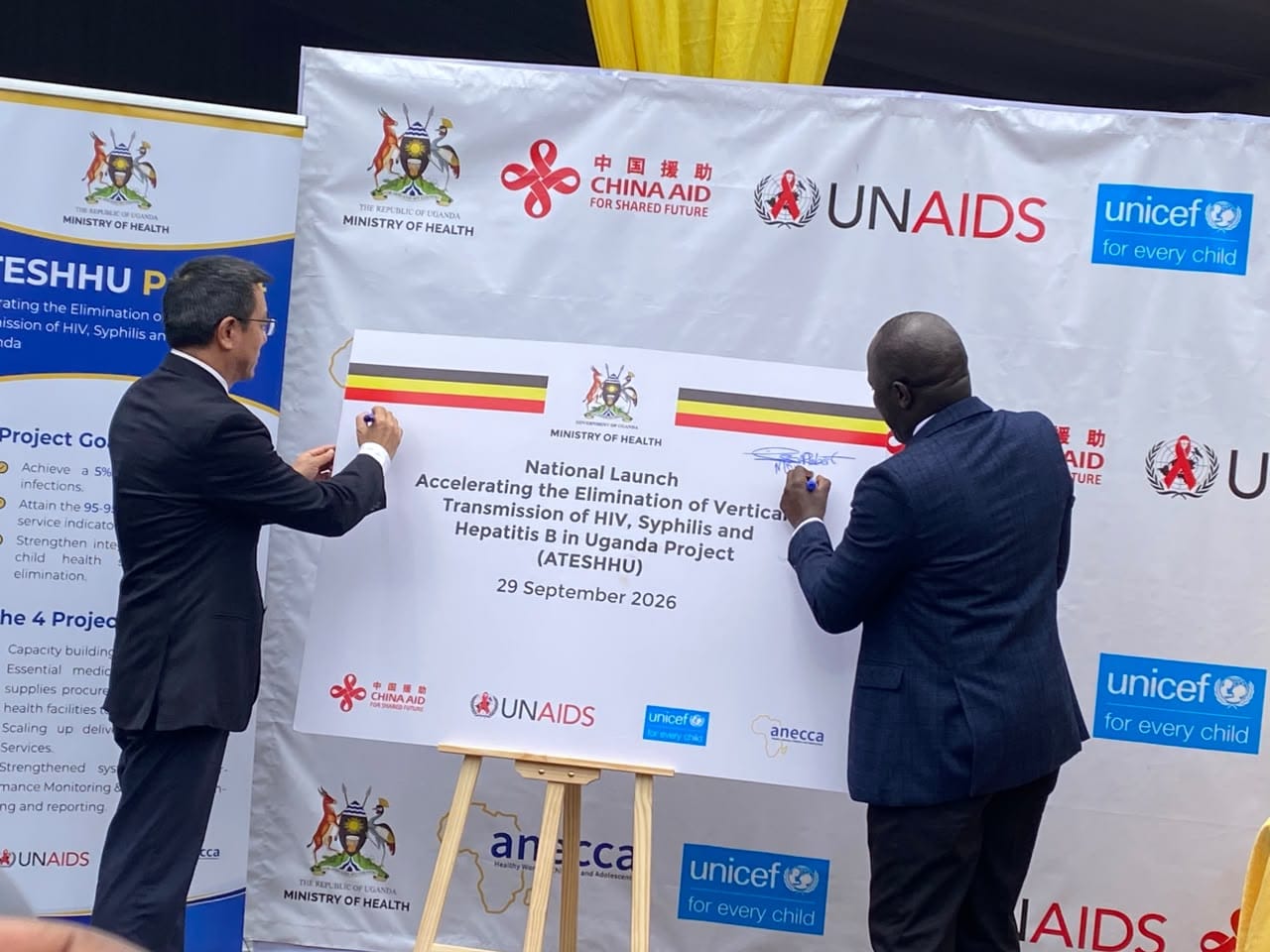
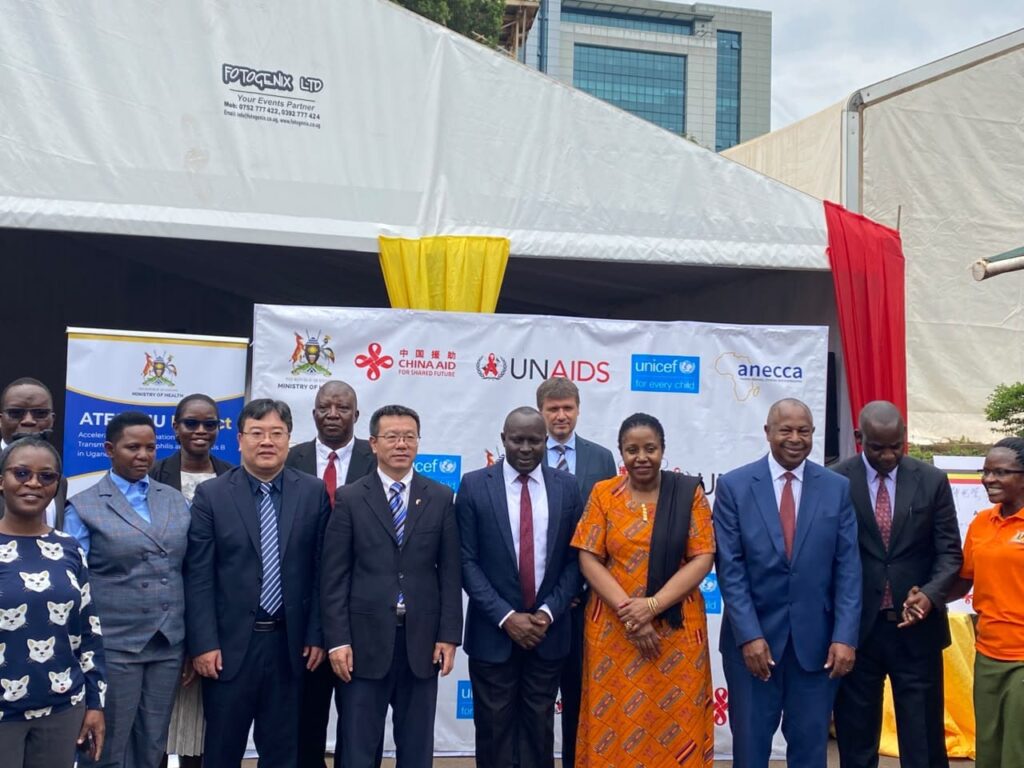
The Accelerating the Elimination of Vertical Transmission of HIV, Syphilis and Hepatitis B in Uganda (ATESHHU) project was officially launched at the Ministry of Health headquarters in Kampala on Tuesday, September 29, 2026, as Uganda strengthens efforts towards triple elimination.
The two-year project, running from May 2026 to April 2028, targets 22 districts and cities in Busoga and Bunyoro, with a total budget of about USD 3 million.
Project documents put the exact budget at USD 2,955,691.Linda Nabitaka Kisakye, Senior Programme Officer for Triple Elimination, said the programme will use the funding to strengthen services aimed at preventing HIV, syphilis and hepatitis B transmission from mothers to their children.
The project is supported through China-Aid for a Shared Future, with Chinese Ambassador to Uganda Wu Ghangrong saying China is committed to supporting Uganda’s health sector and contributing towards improved health outcomes.
Dr. Robert Mutumba, Head and Programme Manager of the Ministry of Health’s STD/AIDS Control Programme, welcomed the support, saying the initiative will contribute to strengthening HIV, sexually transmitted infection and maternal health services.
Nakate Teopista, a peer mother, described the project as a long-awaited intervention that could provide additional support to young mothers.
She said the programme would help young mothers access information and services needed to protect their health and that of their children, particularly through improved testing, treatment and follow-up.
Project figures indicate that Uganda records about 4,700 paediatric HIV infections every year through vertical transmission.
HIV prevalence is estimated at 3.0 percent in Busoga and 4.8 percent in Bunyoro, while teenage pregnancy stands at 28.4 percent in Busoga and 24.2 percent in Bunyoro.
The project will strengthen health-worker capacity, integrated antenatal care and triple-elimination services, diagnostics, treatment commodities, community engagement, male involvement, health information systems, supply chains and district health systems.
Under the programme, 44 health-worker trainers, 88 community health workers and 66 District Health Team members will be trained.
The project will also distribute 2,200 information, education and communication materials and 4,620 health-management information system tools.
The programme will provide 10,000 HIV/syphilis combination test kits capable of conducting 250,000 tests, 1,800 hepatitis B test kits for 180,000 tests, 9,700 boxes of benzathine penicillin containing 485,000 vials, 40,000 hepatitis B vaccine doses and other essential medicines and laboratory reagents.
It will also provide 2.5 million male condoms and 68,000 female condoms, while supporting 3,520 community outreaches and 220 community health workers.
The project targets the return to care of 90 percent of mothers who have been lost to follow-up and will strengthen quality assurance and integrated maternal and child health services.
Nyakato Sandra, a midwife at Hoima Regional Referral Hospital in Bunyoro, said the intervention could help address persistent gaps in hepatitis B testing, vaccination and follow-up.
She said health facilities have generally maintained high HIV testing coverage among pregnant women, but hepatitis B services have sometimes been affected by inconsistent availability of testing kits and vaccines.“We could find hepatitis kits are there, and also the vaccine is not there.
And at another time, you find when the vaccine is there and the kits, the testing kits are not there,” Nyakato said.She said there had also been gaps in following up mothers and babies after delivery, particularly those affected by hepatitis B.
“Before, we never used to follow up those mothers, especially with hepatitis,” she said.
Nyakato said training under the project has strengthened health workers’ knowledge of triple elimination and the importance of continuing care for mothers and exposed babies.
“With that knowledge which has been impacted to us, I think we are going to have a big impact from the project,” she said.
The programme will also have eight supervision visits, eight regional review meetings and an endline evaluation to strengthen data systems, accountability and evidence-based decision-making.
The expected outcomes include increased uptake of antenatal care and triple testing for HIV, syphilis and hepatitis B, improved retention and treatment adherence among mothers and exposed infants, and stronger health systems and data quality.
The initiative is being implemented through collaboration between the Ministry of Health, UNAIDS, UNICEF and ANECCA.
The Ministry of Health will provide leadership, coordination and policy oversight, while UNICEF will provide technical and supply-chain support, ANECCA will support community engagement and service delivery, and UNAIDS will provide project leadership, technical leadership and grant management.