
 Mama FM
Mama FM
Mama FM
17 October 2026, 9:49 am
Uganda will host the Organic and Nature Expo from November 4 to 7, 2026, as farmers continue to face climate-related crop losses, difficulties accessing markets and high borrowing costs.
The expo will take place at Hotel Africana in Kampala during the 5th National Organic Week, organised by the National Organic Agricultural Movement of Uganda (NOGAMU) in collaboration with the Ministry of Agriculture, Animal Industry and Fisheries (MAAIF), the African Organic Network (AfroNet) and other partners.
Uganda’s organic agriculture sector is expanding, with certified organic farmland reaching about 930,360 hectares in 2025. According to sector statistics reported, the country had 744,288 certified organic farmers that year, while organic exports increased from US$123.3 million in 2018 to an estimated US$225.7 million in 2025.
The growth highlights the sector’s economic potential, but questions remain about how farmers can translate expanding production and export opportunities into better incomes while adapting to the effects of the climate crisis.
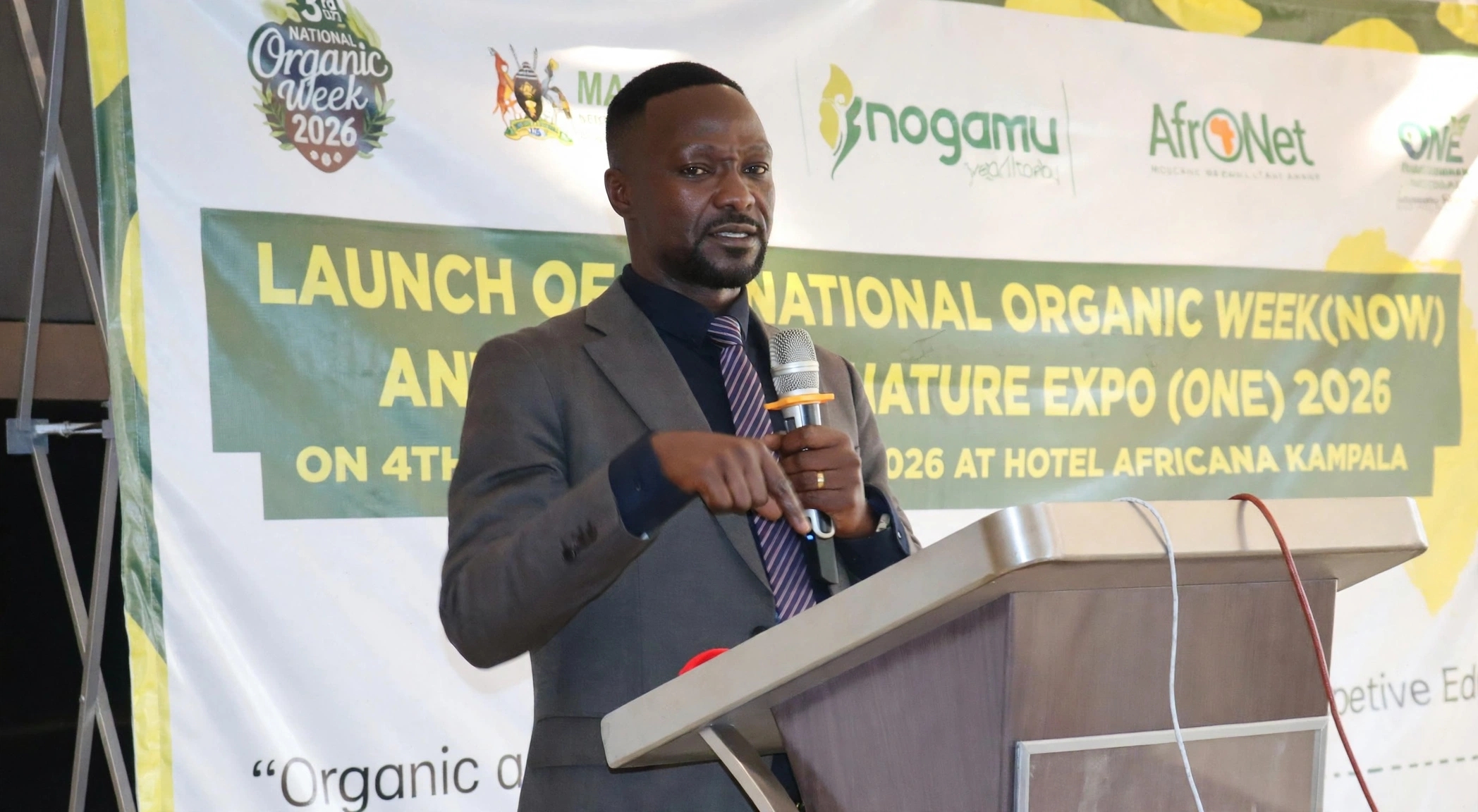
Speaking ahead of the event, NOGAMU Executive Director Chariton Namuwoza said unpredictable rainfall was affecting agricultural production, leaving farmers struggling to protect crops such as bananas and coffee.
“Farmers expect rains that do not come, leaving bananas and coffee dried up,” Namuwoza said.
She said the expo would showcase farmers using organic and regenerative farming practices, including those involved in coffee and banana production, dairy farming and the integration of renewable energy into agriculture.
Namuwoza also raised concerns about the cost of agricultural financing, questioning how farmers could access loans to invest in production when interest rates remained high.
For farmers seeking to adopt sustainable practices, financing can be important for improving soil management, accessing suitable inputs, adding value to produce and meeting certification requirements. However, these costs can be a barrier, particularly for small-scale producers.
Market access is another challenge as Uganda seeks to increase sales of organic products locally and internationally. Despite the reported growth in exports, farmers need reliable buyers and the capacity to meet market standards to benefit from expanding opportunities.
Namuwoza said the expo would bring together African producers and buyers from outside the continent to explore trade opportunities. Women and young people are also expected to feature in discussions on participation in organic agriculture, business and trade.
The programme will include practical training in making liquid fertilisers, agroecology and agroforestry, among other approaches to sustainable production.
Mark Tusiime, Head of Knowledge Management at the National Renewable Energy Platform, said renewable energy could create employment opportunities for young people while helping farmers strengthen their resilience to drought and other climate-related challenges.
The four-day event will run under the theme “Organic and Regenerative Innovations: Africa’s Competitive Edge.”
The programme will begin on November 4 with the official opening and launch of ONE Africa and NOW 2026, focusing on intra-African trade, the Kilimohai Green and Blue Marks, and the role of women and young people in organic agriculture.
On November 5, the Organic and Regenerative Agriculture Conference will feature presentations, case studies, practical clinics and business-to-business meetings.
November 6 will focus on regenerative coffee production, including coffee tasting, buyer meetings and discussions on financing the transition, quality standards and certification. The final day, November 7, will involve visits to farms, value-addition centres and processing and cooperative enterprises.