
 Mama FM
Mama FM
Mama FM
25 May 2026, 12:09 am

By Byamukama Alozious
People with hearing impairment have raised concerns over delayed access to Ebola information, warning that communication barriers are leaving many deaf Ugandans vulnerable as the country responds to the ongoing Ebola outbreak.
The concerns were raised during an Ebola awareness session held at the Deaf Church in Ntinda, where officials from the Ministry of Health met members of the deaf community following the confirmation of five Ebola cases in the country.
Clare Nimusiima, Programmes Officer for Special Needs at the Ministry of Health, urged persons with disabilities to remain vigilant and share accurate information with fellow community members to help prevent further spread of the disease.
Nimusiima explained that Ebola is a highly infectious disease and warned that without caution, survival can be difficult once infection occurs. She guided the congregation through standard operating procedures, emphasising regular handwashing, avoiding unnecessary contact and early reporting of suspected symptoms.
She explained that the disease spreads through contact with infected body fluids and can enter the body through the eyes, ears, nose, mouth and hands, calling on communities to remain vigilant at all times.
Uganda is currently responding to the Bundibugyo strain of Ebola, which health officials say spread from the Democratic Republic of Congo into Uganda. Surveillance and community sensitisation campaigns are ongoing across the country as health teams work to contain the outbreak.
According to the 2024 Uganda Bureau of Statistics report, about six million Ugandans live with disabilities, highlighting the need for accessible communication during public health emergencies.
Rev. Emmanuel Ntaborwa, the priest in charge of the deaf congregation, said many deaf people often receive important health information late due to communication barriers and limited access to online platforms.
“Most of them have received this information today for the first time because many are not online,” he said.
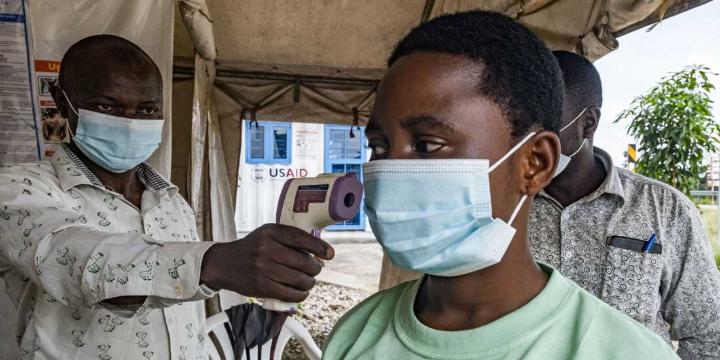
He added that some members had seen people wearing face masks and assumed it was related to COVID-19 because they had not yet heard about Ebola.
“One person saw someone wearing a mask and asked whether COVID had returned because they did not know there is Ebola,” he said.
Ntaborwa also raised concern about the way sign language interpretation is handled on television during important health announcements, noting that interpreters are often placed in small corners of the screen, making it difficult for deaf people to clearly see the hand movements used in interpretation.
“The interpreter is put on the side and very small, yet the hands are important in passing the message. Sometimes the hands are cut off on screen and the deaf cannot fully understand the communication,” he said.
The Ministry of Health says more targeted awareness campaigns will continue to ensure persons with disabilities are not left behind in the fight against Ebola.