

 Mama FM
Mama FM
Mama FM
9 February 2026, 2:00 pm
By Kamara Daniel
Haemorrhoids, commonly known as piles, are swollen veins in the lower rectum and anus that can cause pain, itching, discomfort, and bleeding during bowel movements. Many people suffer in silence, yet understanding how haemorrhoids develop—and how nutrition and lifestyle influence them—can greatly reduce both discomfort and risk.
Haemorrhoids develop when excessive pressure is placed on the veins around the rectum and anus, causing them to swell and become inflamed. Some haemorrhoids form inside the rectum and are often painless, while others develop under the skin around the anus and can be very painful. Lifestyle choices, diet, and certain health conditions all contribute to the build-up of this pressure.
One of the most common causes is constipation. Straining during bowel movements increases pressure on the rectal veins. Pregnancy also raises the risk, as the growing uterus presses on pelvic veins, while hormonal changes weaken vein walls. Obesity, lack of physical activity, prolonged sitting—especially on the toilet—heavy lifting, and ageing also contribute to the development of haemorrhoids.
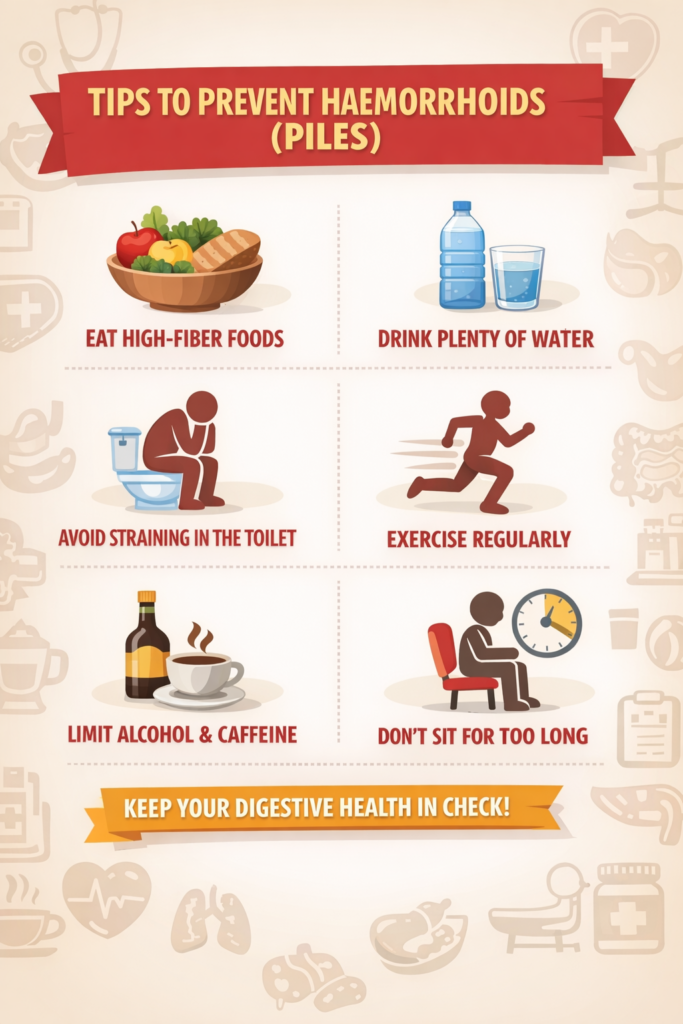
Nutrition plays a critical role in both preventing and managing haemorrhoids. A diet low in fibre often leads to hard stools and constipation, increasing straining. Fibre helps soften stools and supports regular bowel movements, reducing pressure on rectal veins. Both soluble fibre, found in foods such as fruits, vegetables, beans, and oats, and insoluble fibre, found in whole grains, nuts, seeds, and fruit skins, are important for digestive health.
Eating fibre-rich foods such as apples, pears, berries, leafy greens, carrots, beans, lentils, whole grains, nuts, and seeds can significantly reduce the risk of haemorrhoids. Adequate water intake is equally important, as fluids help keep stools soft and easy to pass. Conversely, processed foods low in fibre, excessive alcohol, high caffeine consumption, and very spicy foods can worsen symptoms or contribute to constipation.
Lifestyle habits also play a significant role. Regular physical activity supports digestion and helps prevent constipation and weight gain. Avoiding long periods of sitting, practising healthy bathroom habits, and not straining during bowel movements can further lower the risk.
While haemorrhoids are common, they are not inevitable. With the right nutrition, adequate hydration, and healthy daily habits, many people can prevent them or manage symptoms effectively. Simple changes in diet and lifestyle can make a meaningful difference in protecting digestive health and improving quality of life.