
 Mama FM
Mama FM
Mama FM
9 February 2026, 5:11 pm
By Byamukama Alozious
Hope Fortunate Achilo knows the pain of sickle cell disease all too well. She lost both her daughters, aged 14 and 16, to the genetic blood disorder, despite doing everything she could to save them. Living with children suffering from sickle cell, she says, was emotionally and financially draining, marked by constant clinic visits and severe pain crises.
“It is very expensive, and it takes everything from you,” she said. Her 16-year-old died while still in Primary 5, her education limited by the illness. “Watching my children suffer was unbearable. I could not stop the pain, and sometimes I felt they were blaming me. Seeing them die was unimaginable.”
In desperate hope, Achilo spent large sums of money and even travelled outside Uganda to India seeking better treatment. “I spent 1 billion, and the President fundraised 500 million for me, with the rest coming from the public,” she said. Now, she urges couples to screen for sickle cell before marriage to prevent long-term suffering. A pharmacist by profession, she adds that even with medical knowledge, the loss still haunts her. “Even when you are informed, the pain is the same. That is why prevention and early diagnosis matter,” she said.
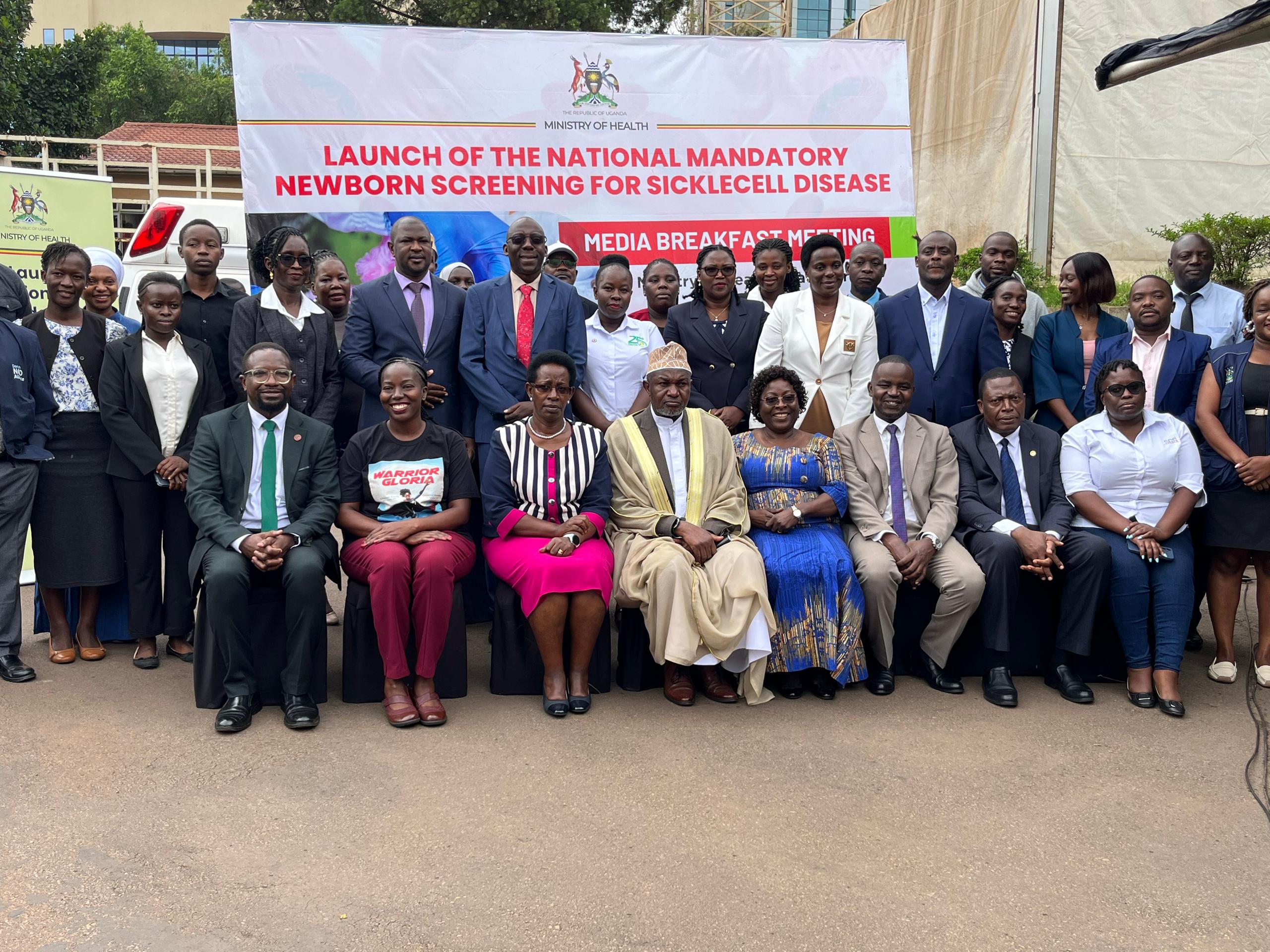
Today, the Ministry of Health has introduced mandatory sickle cell screening for all newborns, a move aimed at reducing preventable deaths and improving life for affected children. The initiative marks a major shift from late diagnosis to early detection and immediate care, addressing one of the heaviest sickle cell burdens in the world.
Announcing the rollout, the Director General of Health Services, Dr Charles Olaro, said Uganda ranks third in Africa after Nigeria and the Democratic Republic of Congo, and fifth globally in sickle cell burden. Many affected children die before their fifth birthday. “This is a genetic disease with a very high burden in Uganda,” Dr Olaro said, emphasising that early diagnosis is critical to survival. With newborn screening in place, children diagnosed at birth will be linked to care, supported to avoid frequent illness, and followed up through the health system.
The government says the programme must be supported by communities to succeed. Permanent Secretary at the Ministry of Health, Dr Diana Atwine, called on all partners—including local leaders and cultural and religious institutions—to rally behind the initiative. She warned that if sickle cell disease is not intercepted early, its burden could overwhelm the nation within 20 years. Dr Atwine added that the ministry is fully prepared, with screening kits in place, and that long-term pain management drugs, including hydromorphone—a strong pain relief medication—are now on the national essential medicines list and will be supplied urgently and as a priority for patients experiencing severe pain.
Health experts say the initiative addresses a long-standing gap. Prof Sarah Kiguli, a member of the National Sickle Cell Task Force, explained that many Ugandans unknowingly carry the sickle cell trait, often discovering it only after having an affected child. “This screening provides fast, first-line evidence that allows immediate care,” she said, noting that the programme goes beyond paediatrics and highlights the need for lifelong support for patients into adolescence and adulthood.
At Mulago National Referral Hospital, senior paediatrician Dr Deogratias Munube described the burden as alarming. Uganda registers an estimated 20,000 new sickle cell cases annually, with 70–80% of affected children dying early, especially before the age of five. Malaria accounts for about 25% of deaths among children with sickle cell disease.
Dr Munube welcomed the mandatory screening, explaining that many babies appear healthy at birth and even breastfeed normally, with symptoms typically emerging between three and six months. “By the time signs appear, the damage may have already started,” he said. Laboratories and screening kits are now available at health centres and regional referral hospitals nationwide.