
 Mama FM
Mama FM
Mama FM
9 March 2026, 5:56 pm
Byamukama Alozious
Health activists and civil society leaders in Uganda have urged the European Commission and other high-income countries to stop blocking equity provisions in negotiations to finalize the pathogen-sharing system under the World Health Organization Pandemic Agreement.
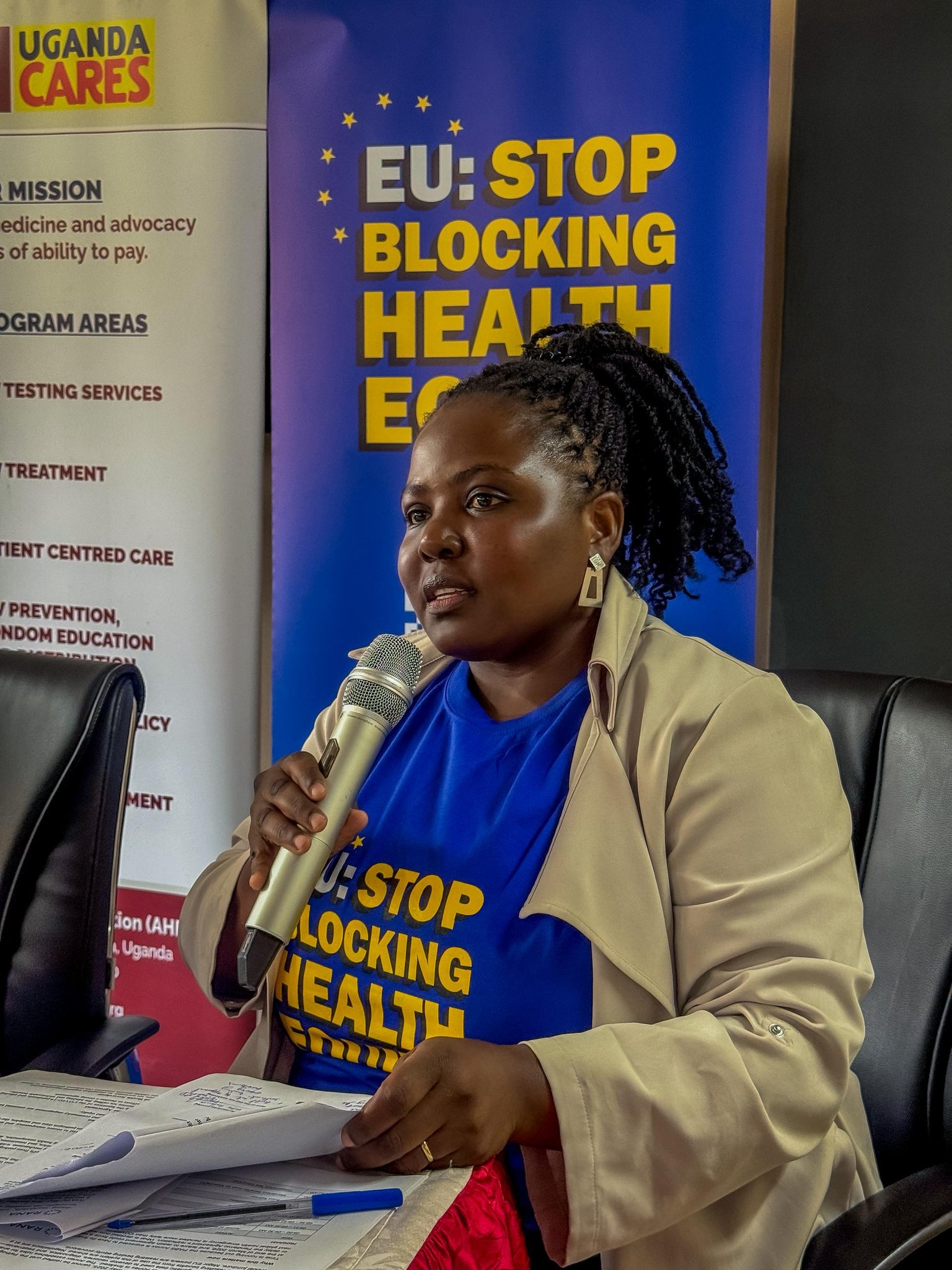
Speaking during a press conference in Kampala, Dr. Augustine Lubanga, Medical Director at AHF Uganda Cares, warned that the global treaty cannot move forward unless countries agree on a legally binding Pathogen Access and Benefit-Sharing (PABS) Annex.
The World Health Organization Pandemic Agreement, adopted in May 2025, aims to strengthen global prevention, preparedness and response to future pandemics. However, the agreement cannot advance until negotiations on the PABS Annex are finalized. The annex will determine how pathogen samples and genetic data are shared globally to develop vaccines, diagnostics and treatments and how the benefits from those innovations are distributed.
Lubanga said the lessons from the COVID-19 pandemic show why strong equity protections are necessary.
“The COVID-19 pandemic exposed deep inequalities in access to vaccines and other lifesaving technologies,” Lubanga said. “Without binding provisions on fair benefit-sharing, we risk repeating the same injustice in the next global health emergency.”
Civil society groups argue that resistance from the European Commission and several high-income countries has slowed progress on the agreement and weakened proposals meant to guarantee equitable access to health technologies.
Advocates say the issue is particularly critical for Africa, where dependence on imported medical products remains high. In the East African Community, more than 70 percent of pharmaceutical products are imported, and the region relies on external sources for nearly all vaccines and key pharmaceutical ingredients.
Africa’s dependence on external supply chains also remains a major concern. Despite representing about 25 percent of global vaccine demand, the continent accounts for only around $1.3 billion of the $33 billion global vaccine market. Millions of people across Africa remain under-immunized, and an estimated 9.4 million children each year miss their recommended third dose of the diphtheria, tetanus and pertussis (DTP) vaccine.
Ann Lumbasi, Senior Advisor at Rana Global Health, said global health negotiations must ensure Africa is fully included in decision-making and benefit-sharing mechanisms.
“There is a need for genuine health inclusion for Africa,” Lumbasi said, adding that countries contributing pathogen samples should also benefit from the medical technologies developed from them.Health advocates also raised concerns about technological monopolies that limit access to life-saving innovations in developing countries.
Dian Tibesigwa, AHF regional policy and advocasy manager East and west Africa called on developed countries to share technology and expertise rather than maintaining exclusive control over medical innovations.
“We want developed countries to share the knowledge and technology so that monopolies can be reduced,” Tibesigwa said. “Uganda has already shown that it can produce some of its own medicines, such as antiretroviral drugs, and the same should happen for vaccines and other pandemic technologies.”
She also urged African and other governments in developing countries to take a stronger role in global health negotiations rather than leaving advocacy entirely to civil society organizations.
“Governments must come through because they have stronger influence in these negotiations,” she said. “Politics should not stand in the way of protecting human health.”
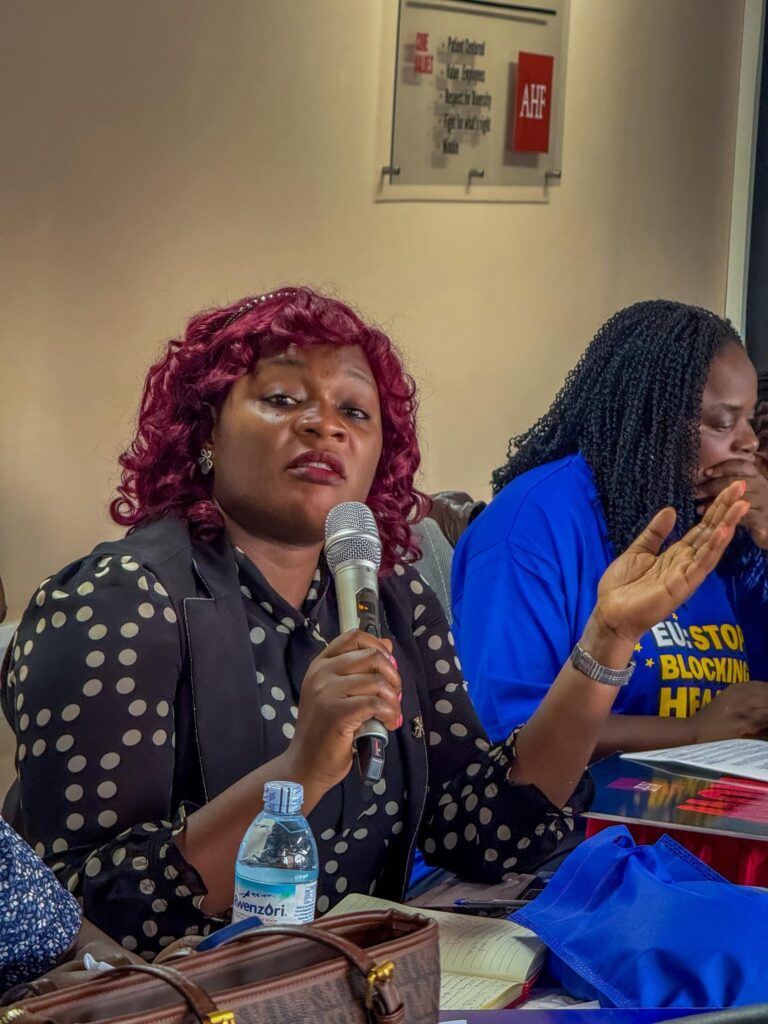
Flavia Kyomukama, Executive Director of the National Forum of People Living with HIV/AIDS Networks in Uganda (NAFOPHANU), warned that the current proposals risk undermining trust between researchers and communities in developing countries.
“We are always part of the research process, including providing samples and participating in studies,” Kyomukama said. “If this agreement does not guarantee fair benefits, it will break the trust of communities that contribute to global research.”
She added that many developing countries fear the agreement could continue patterns where scientific discoveries derived from their contributions mainly benefit wealthier nations.
With the deadline to finalize the PABS Annex expected in May 2026, civil society groups are urging negotiators to prioritize fairness and transparency before the World Health Organization Pandemic Agreement can be ratified.