
 Mama FM
Mama FM
Mama FM
30 March 2026, 11:57 am
Byamukama Alozious
When Ugandans think about climate change, they often picture floods in Kasese, drought in Karamoja, or landslides in Bududa. But beyond these visible disasters, another crisis is unfolding more quietly the food people eat every day may be becoming less safe.
Across Uganda, climate change is disrupting food systems from the farm to the plate, increasing the risk of contamination, disease, and poor nutrition. A recent study published in BMC Public Health shows that climate-related stressors are interfering with food production, storage, distribution, and preparation, exposing communities to greater health risks.
Uganda’s agriculture sector, which employs about 70% of the population, is heavily dependent on rainfall. But that rainfall is no longer reliable. Seasons now come late, end early, or arrive with destructive intensity, according to Uganda Bureau of Statistics and reports by Daily Monitor (2024), which highlight increasing unpredictability in seasonal patterns and its impact on farming communities.
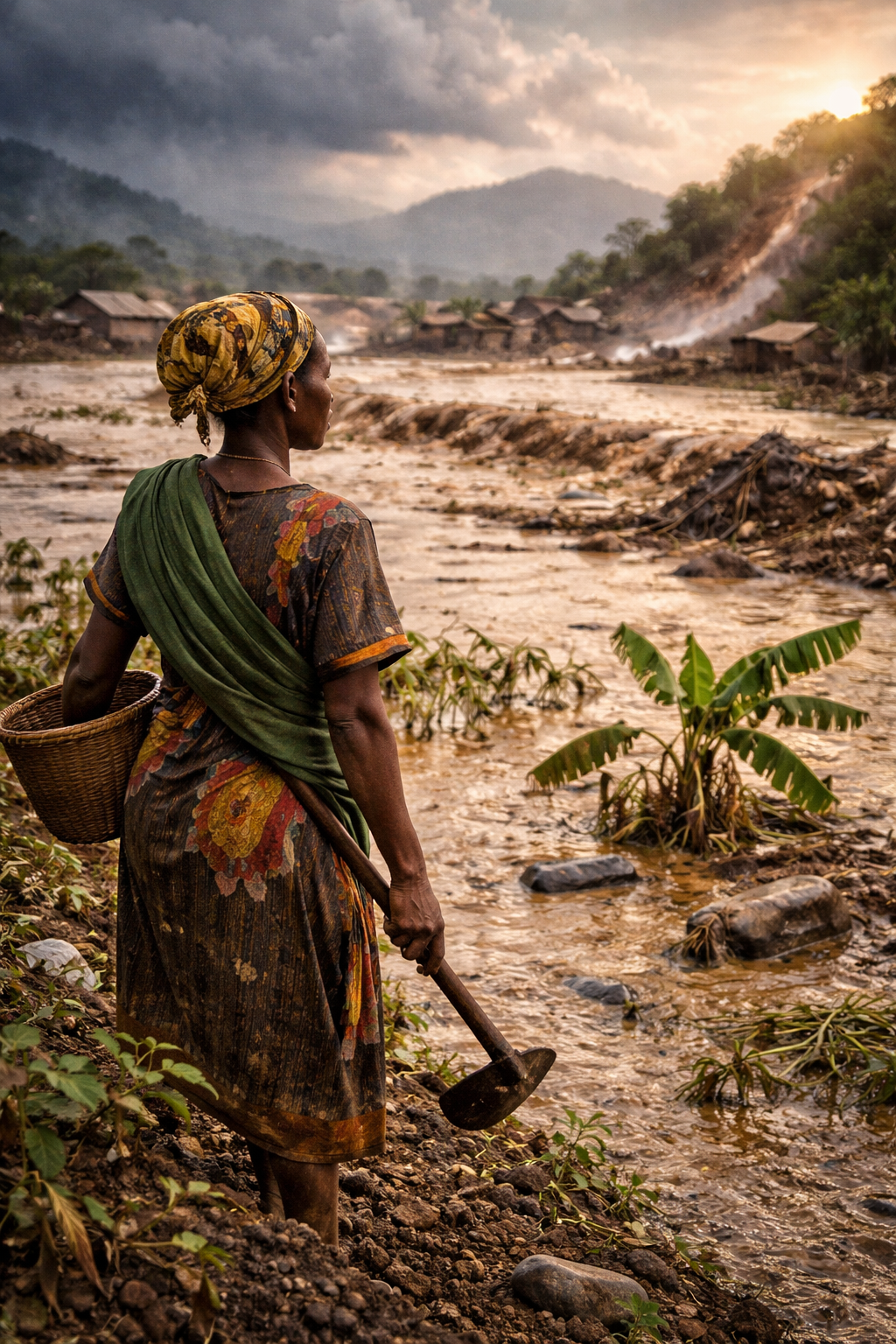
This reality is already visible in Uganda. According to reports by Daily Monitor (2024), floods in Kasese District have repeatedly destroyed crops and contaminated farmland after River Nyamwamba burst its banks, washing debris and waste into gardens. These floods do not only reduce food availability they also increase the risk of contamination, as dirty water mixes with crops that later enter markets and homes.
In eastern Uganda, similar patterns have been observed. According to New Vision (2023), heavy rains in parts of Teso sub-region destroyed harvests and left communities relying on food exposed to unsafe conditions. When floodwaters spread across farmland, they carry human and animal waste, increasing the chances that harmful pathogens end up on food.
Experts warn that such contamination is often invisible. Vegetables, grains, and even cooking water may carry disease-causing organisms long before they reach the plate.
Rising temperatures are making the situation worse. Heat accelerates food spoilage and creates conditions for harmful fungi to grow. According to Daily Monitor (September 2025), scientists have raised concern over aflatoxins poisonous substances commonly found in poorly stored maize and groundnuts. These toxins, which thrive in warm and humid conditions, have been detected in food across several regions of Uganda.
Climate change is amplifying this risk. Unpredictable rains make it harder for farmers to properly dry crops, while higher temperatures increase moisture levels that encourage mold growth. As a result, food contamination is becoming more common, even in households that follow traditional storage practices.
Farmers are also adapting to climate pressures in ways that may introduce new risks. In western Uganda, for example, increased pest outbreaks linked to rising temperatures have pushed farmers to use more pesticides. According to agricultural reports cited by Daily Monitor (2024), improper use of these chemicals can leave residues on food and contaminate water sources, posing long-term health dangers.
At the same time, climate change is degrading soil quality. Research conducted in southwestern Uganda shows that heavy rains and erosion are washing away essential nutrients, reducing both crop yields and food quality. This means that even when food is available, it may be less nutritious.
Urban areas are not spared. In Kampala and other cities, many residents rely on informal markets for daily food. These markets often lack proper sanitation and are increasingly affected by climate-related disruptions. Flooding can damage roads and delay food transport, forcing vendors to sell produce in poor conditions. Food may be exposed to contaminated water, dust, or heat, increasing the risk of disease transmission.
Plastic pollution is adding another layer of concern. According to Associated Press reporting from Mbale (2024), plastics are increasingly mixing with agricultural soils, raising fears about long-term contamination of food systems.
For many Ugandan households, however, food safety is not always a priority not by choice, but by necessity. When droughts or floods reduce harvests, families often eat whatever is available. In such situations, survival comes before safety.
Limited access to clean water further complicates the situation, making it difficult to wash food or maintain hygiene during preparation. This increases exposure to foodborne diseases, especially in vulnerable communities.
What makes this crisis particularly dangerous is how interconnected it is. Climate change is affecting every stage of the food system from production to storage, transport, and consumption. Even small disruptions can have ripple effects, increasing the risk of contamination and disease across entire communities.
Yet, systems designed to monitor food safety in Uganda remain weak and are rarely linked to climate data. This means early warning signs are often missed, and interventions come too late.
Uganda is already experiencing more frequent extreme weather events, rising temperatures, and shifting rainfall patterns. These changes are not only environmental challenges they are public health threats.