
 Mama FM
Mama FM
Mama FM
9 April 2026, 11:52 am
By Byamukama Alozious
Over the past decade, Uganda has witnessed a steady rise in social media use, with platforms like Facebook, X, and Instagram shaping communication, business, and public discourse. But it is TikTok that has most profoundly altered not just how Ugandans consume content but how they behave at work.
What began as entertainment has evolved into something far more immersive. For many young professionals, the smartphone is no longer just a tool; it is a constant companion. Notifications, short videos, and algorithm-driven feeds now compete directly with workplace responsibilities, often winning.
Uganda’s digital landscape provides important context. By 2025, the country had between 11.4 million and 14.2 million internet users roughly 22% to 28% of the population alongside more than 38 million mobile connections. At the same time, Uganda remains one of the youngest countries in the world, with about 73% of its population under 30. This youthful, highly connected demographic forms the backbone of the modern workforce and the core audience of TikTok.
Estimates suggest that TikTok alone now commands between 9 and 12 million users in Uganda, accounting for a significant share of daily internet traffic, particularly video consumption. Its dominance is not accidental. The platform’s design short, fast, endlessly scrollable content makes disengagement difficult. What starts as a quick break easily stretches into prolonged distraction.
Globally, the scale of this content ecosystem is staggering. On TikTok, millions of videos are uploaded every single day, feeding an endless pipeline of content engineered to capture attention. Even on platforms like X, an estimated 2 million videos are uploaded daily, most lasting between 15 and 60 seconds. This constant stream ensures that there is always something new to watch making it increasingly difficult for users anywhere in the world, including Uganda, to disconnect.
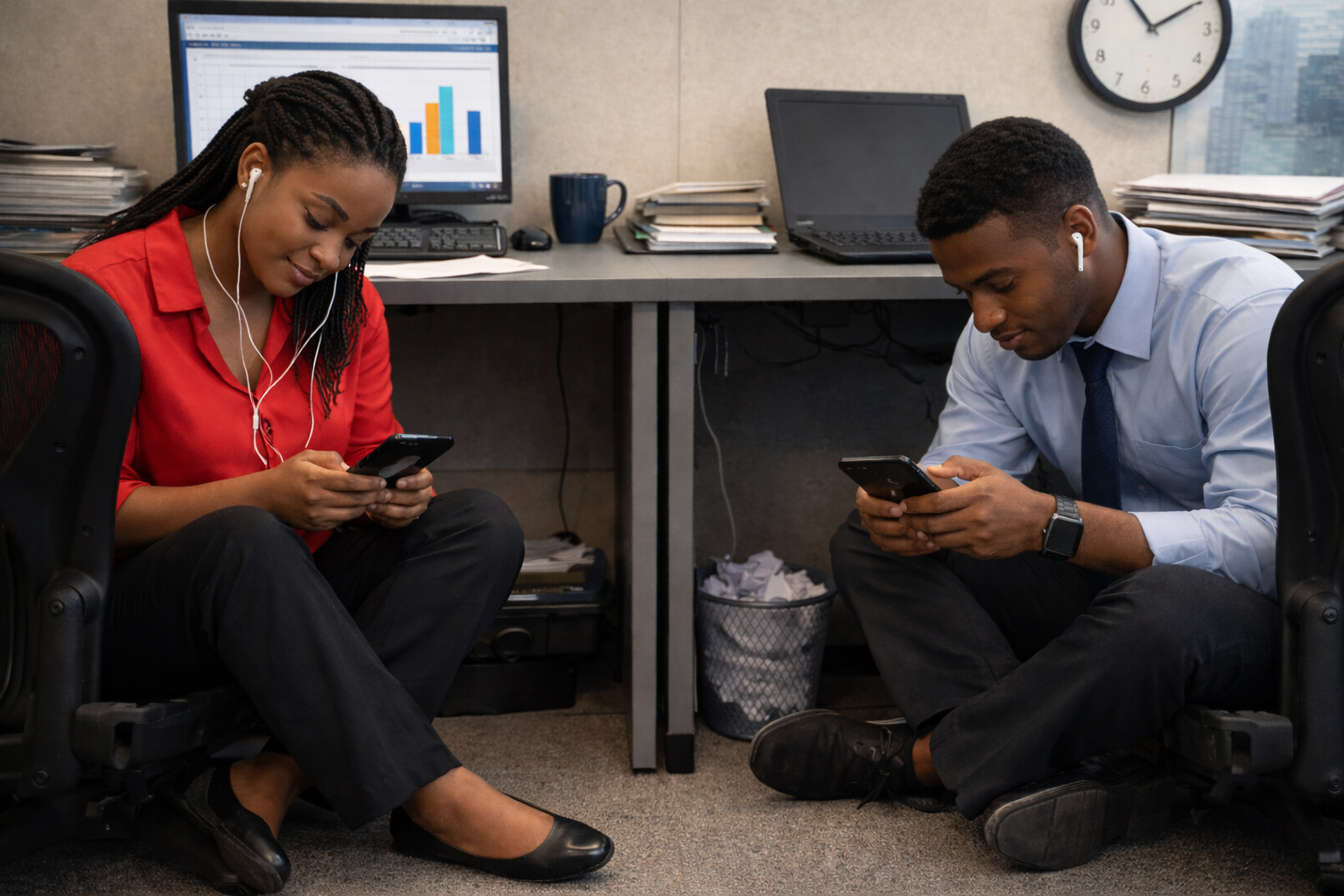
Inside workplaces, this shift is subtle but visible. Employees scroll quietly behind screens, reduce phone brightness, plug in earpieces, and toggle between tasks and timelines. The disruption is rarely loud, but it is constant. Minutes lost to “just one more video” accumulate into hours of reduced output. Deadlines stretch, attention fragments, and deep work becomes increasingly rare.
Yet the issue goes beyond entertainment. TikTok has also emerged as a fast-moving source of information, where breaking news, social updates, and commentary circulate rapidly through short videos posted by citizen journalists and mainstream media alike. In many cases, information reaches users faster than through traditional channels, creating a constant pressure to stay updated and a fear of missing out.
The result is a workforce that is not only distracted, but mentally divided. Workers are physically present but digitally elsewhere caught between professional responsibilities and a constant stream of updates. This continuous switching comes at a cognitive cost, weakening concentration, slowing task completion, and increasing mental fatigue.
More troubling is the rise of digital dependency. Many users report feelings of restlessness, anxiety, or disconnection when offline even for short periods. In environments where mobile data is limited or restricted, some feel isolated despite being surrounded by colleagues. Real-world interaction is gradually уступed to digital engagement.
At the same time, the quality of information consumed raises concern. While TikTok enables rapid sharing, it also amplifies misinformation. Rumours, edited clips, and unverified claims often circulate alongside credible content, packaged in the same engaging format. Without time to verify, users absorb and sometimes spread misleading information, further deepening distraction and confusion.
The implications are significant. In a country already grappling with youth unemployment and economic pressure, productivity losses linked to digital distraction are not minor. They represent a growing structural challenge that could affect business performance, workplace efficiency, and national growth.
This is not an argument against technology. Platforms like TikTok have opened doors for entrepreneurship, creativity, and information access. The issue is not access but control. Workplaces must begin to respond with practical approaches that encourage focus while recognizing digital realities, and individuals must become more intentional about how they use their time.