
 QFM
QFM
QFM
QFM
8 September 2026, 3:42 pm
By Frank Oyugi
Kole District — For 58-year-old Agnes Akello, a smallholder farmer in Otkwac Village, Alito Sub-county, late August and early September used to be a season of greenery and anticipation. By this time of year, her crops would be blooming — a reliable sign of a bumper harvest to feed her family of four and generate a surplus for sale.
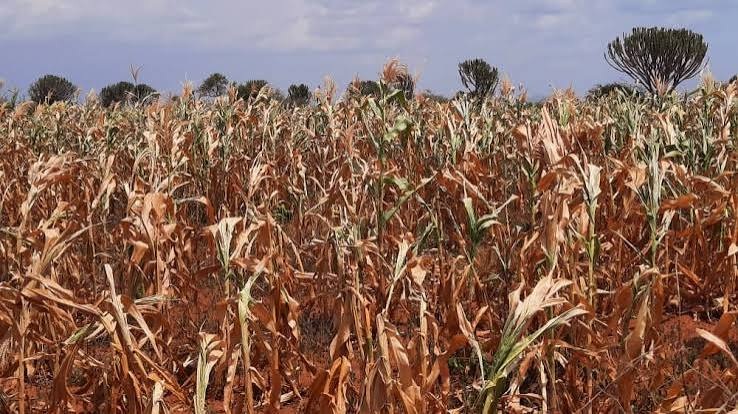
However, since June 2026, the skies over Kole District have remained stubbornly dry. Akello’s fields, like those of her neighbours, have yet to receive meaningful rainfall.
“I am worried and not sure whether the rain will return in time to allow me to plant maize, beans and other commercial crops,” Akello told Radio QFM, her voice weighed down by anxiety. “I am scared of a looming food crisis.”
Akello’s plight reflects a growing crisis across the Lango Sub-region, where unpredictable weather patterns linked to global climate change are disrupting traditional planting cycles and threatening community livelihoods.
Further south in Ikwera, Aduku Sub-county, Kwania District, livestock farmer Dick Olum faces a similar challenge. Struggling to feed and water his 12 cows, Olum has watched local water sources dry up and pasturelands wither.
“Accessing water and pasture for my animals is becoming an everyday struggle,” Olum said.
During a recent community baraza organised by a local non-governmental organisation, Olum and his peers were sensitised to the root causes of the erratic weather.
“We were told that this is a result of global warming and climate change, which has altered our traditional rainfall patterns,” Olum noted. “They urged us to stop cutting down trees, cease bush burning and end environmental degradation.”
The struggles of farmers across Kole and Kwania are supported by national climate data. Official seasonal forecasts from the Uganda National Meteorological Authority (UNMA) indicate that Northern Uganda has experienced prolonged dry spells due to suppressed June–July–August rainfall, driven by global climate dynamics, including warming sea surface temperatures in the equatorial Pacific.
Permanent Secretary at the Ministry of Water and Environment, Alfred Okot Okidi, warned that suppressed rainfall patterns and warmer-than-average temperatures pose direct risks to crop yields, water availability and livestock productivity across the region.
Furthermore, scientific assessments by climate research groups indicate that more than 67 per cent of agricultural risk in Uganda is directly linked to climate shocks. Smallholder farmers who rely on rain-fed maize and beans — the main staple crops in the Lango Sub-region — face projected yield declines as temperatures rise, potentially worsening local food insecurity.
Yet, as dry spells continue to cripple conventional seasonal crops across Northern Uganda, one farmer in Lira District is demonstrating how targeted agricultural adaptation can help communities cope with changing weather patterns.
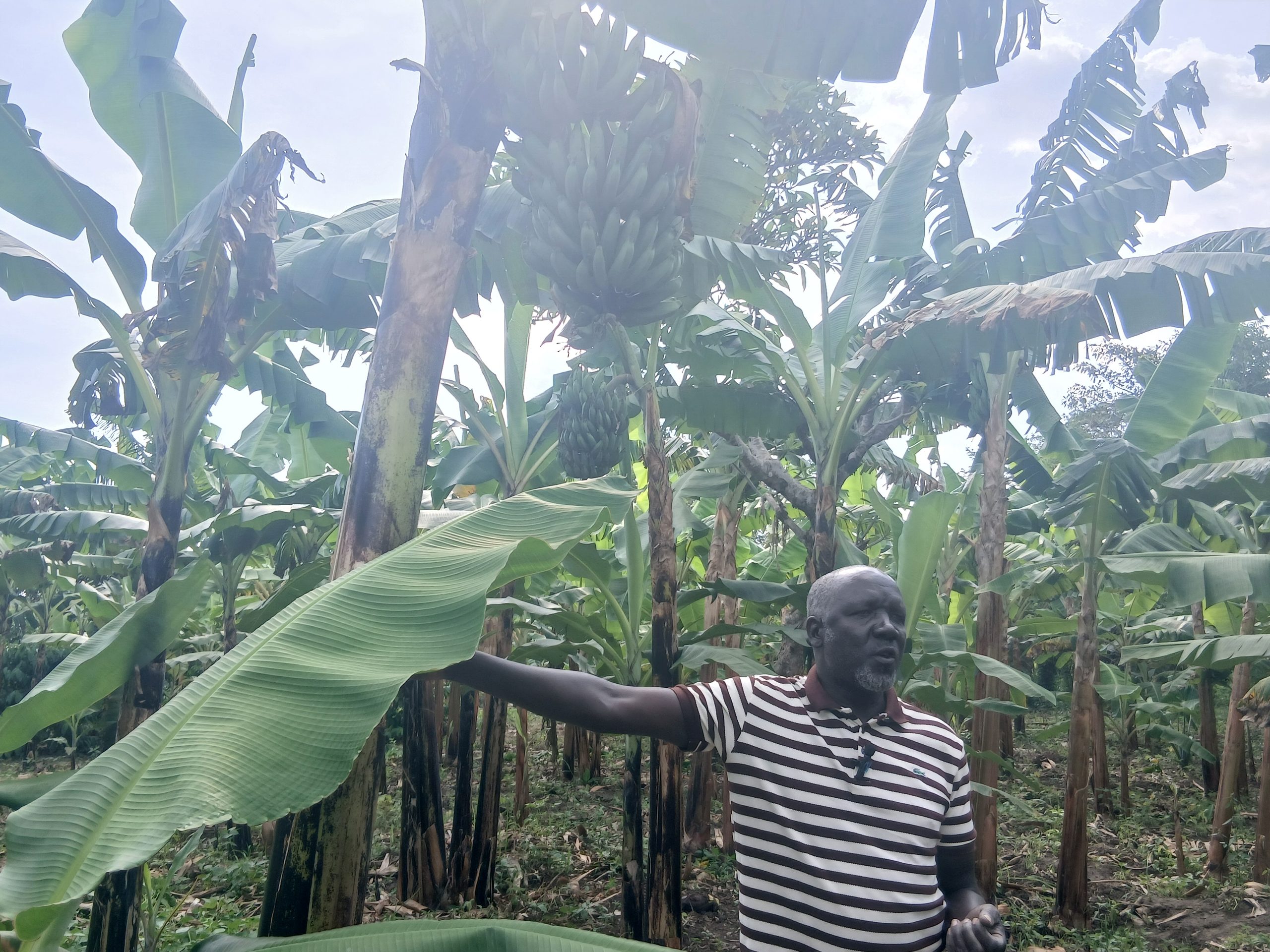
In Amac Town Council, Lira District, local leader and politician-turned-farmer Patrick Olobo has found an effective buffer against drought: commercial banana cultivation (matooke).
While neighbouring farms face potential crop failure, Olobo’s six-acre banana plantation stands out as a lush and productive green canopy.
“Banana farming is inherently climate-resilient,” Olobo explained, noting that the crop’s deep root system and moisture-retaining trunk allow it to withstand prolonged dry spells better than seasonal grains.
To maximise resilience and conserve soil moisture, Olobo uses an intercropping strategy, planting wandering jew (Commelina) beneath the banana canopy to act as a living mulch and suppress weeds.
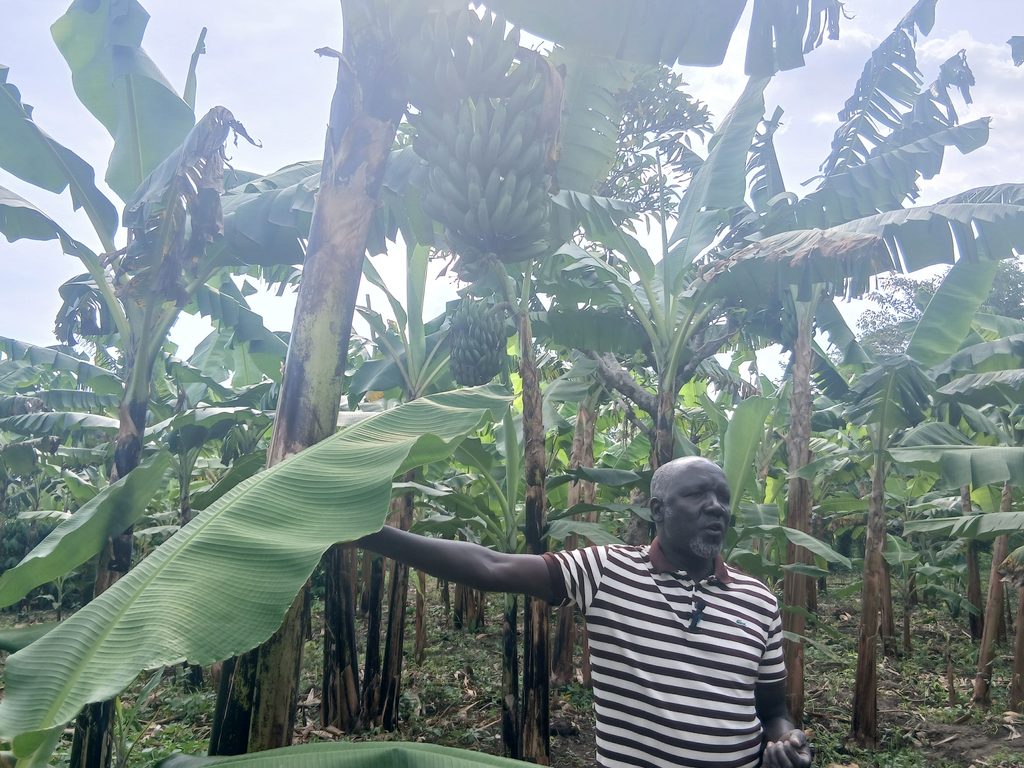
Beyond crop selection, Olobo attributes his farm’s climate resilience to a disciplined agronomic approach known as the “Mother, Daughter and Grandchild” succession model. By carefully managing three generations of banana suckers per mat, he ensures continuous canopy cover, efficient nutrient use and a predictable monthly harvest, regardless of changing rainfall patterns.
To maintain soil health and farm hygiene without depleting groundwater, Olobo regularly prunes dead leaves and other biomass, recycling the organic matter back into the soil as mulch or using it as a livestock feed supplement for his farm animals.
This structured approach has paid off financially. While local maize and bean farmers brace for severe shortfalls, Olobo’s farm maintains steady, year-round production, supplying regional buyers directly from the farm gate.
His success earned him recognition as a top winner in the National Best Farmers Competition, leading to a study tour of the Netherlands, where he explored modern value-addition and export practices.
As global warming accelerates environmental degradation across the region, agricultural experts and community organisers are urging smallholder farmers to combine sustainable environmental management practices, such as reforestation and bans on bush burning, with climate-smart crop diversification.
For farmers such as Agnes Akello and Dick Olum, the experience of farms such as Olobo’s Ayach Smart Farm offers a clear path forward. Adapting to climate change requires a shift away from rainfall-dependent seasonal crops towards resilient, deep-rooted perennial crops that can protect both soil health and household incomes.