
 QFM
QFM
QFM
QFM
4 August 2026, 5:37 am
By Frank Oyugi
On 3 August 1947, a modest pastoral family in south-western Uganda made a quiet journey to St Luke Kinoni Church of Uganda in Rwampara. Amos Kaguta and Esteri Kokundeka, traditional cattle keepers, were taking a significant step during an era when local communities predominantly relied on ancestral beliefs.
Esteri had chosen to embrace the Christian faith and brought her young son to be formally received into the church. Inside the small sanctuary, a pioneering cleric, Rev. Eric Sabiiti—who would later become the first indigenous African Archbishop of the Anglican Church in the region—administered the sacrament, christening the child Yoweri alongside his birth name, Museveni. The name was an honourable reference to the Abaseveni, Ugandan servicemen who returned from the Second World War after serving in the 7th Battalion of the King’s African Rifles.
That simple morning ritual laid the foundation for a journey that would later intersect with the wider course of East African political history. As young Museveni grew, his intellectual curiosity and early political consciousness expanded beyond the quiet hills of Ankole.
While studying Economics and Political Science at the University of Dar es Salaam in Tanzania during the late 1960s, he chaired the University Students African Revolutionary Front. He immersed himself in Pan-Africanist philosophy, anti-colonial liberation movements, and guerrilla warfare theory, while also visiting liberated zones in Mozambique. These formative experiences shaped his ideological outlook on national mobilisation and armed resistance.
When General Idi Amin seized power in Kampala through a military coup in 1971, Museveni launched his first active campaign against authoritarian rule. While living in exile, he established the Front for National Salvation (FRONASA) to challenge Amin’s military dictatorship. FRONASA later joined forces with Tanzanian troops and other anti-Amin resistance groups, culminating in the overthrow of Amin’s regime in April 1979.
However, Uganda’s attempt at a democratic transition that followed proved turbulent. After the disputed December 1980 general elections, which were widely criticised as having been manipulated in favour of Milton Obote’s Uganda People’s Congress, Museveni argued that armed resistance was necessary to challenge electoral malpractice and state violence.
In February 1981, Museveni led a small group of combatants in launching a rural guerrilla insurgency against the Obote government, establishing the National Resistance Army (NRA). Operating mainly in the Luwero Triangle, the NRA mobilised local communities, created grassroots structures, and developed a disciplined insurgent movement.
Over five years of armed struggle, the NRA weakened the government’s military capacity, eventually outlasting both Obote’s administration and the short-lived military junta led by Tito Okello, which took power in 1985.
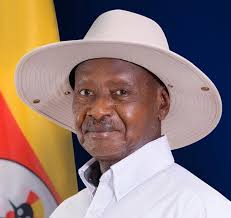
The campaign reached its climax on 26 January 1986, when NRA forces captured Kampala. Three days later, on 29 January 1986, Yoweri Kaguta Museveni was officially sworn in as President of the Republic of Uganda.
Standing on the steps of Parliament, he famously declared that his victory represented not merely a change of leadership but a fundamental transformation in the governance and direction of the country.
What began as a modest christening ceremony on 3 August 1947 at Kinoni Church ultimately became the starting point of one of the most significant and enduring political journeys in modern African history.