
 QFM
QFM
23 October 2026, 9:04 am

By Regina Lalam Olal
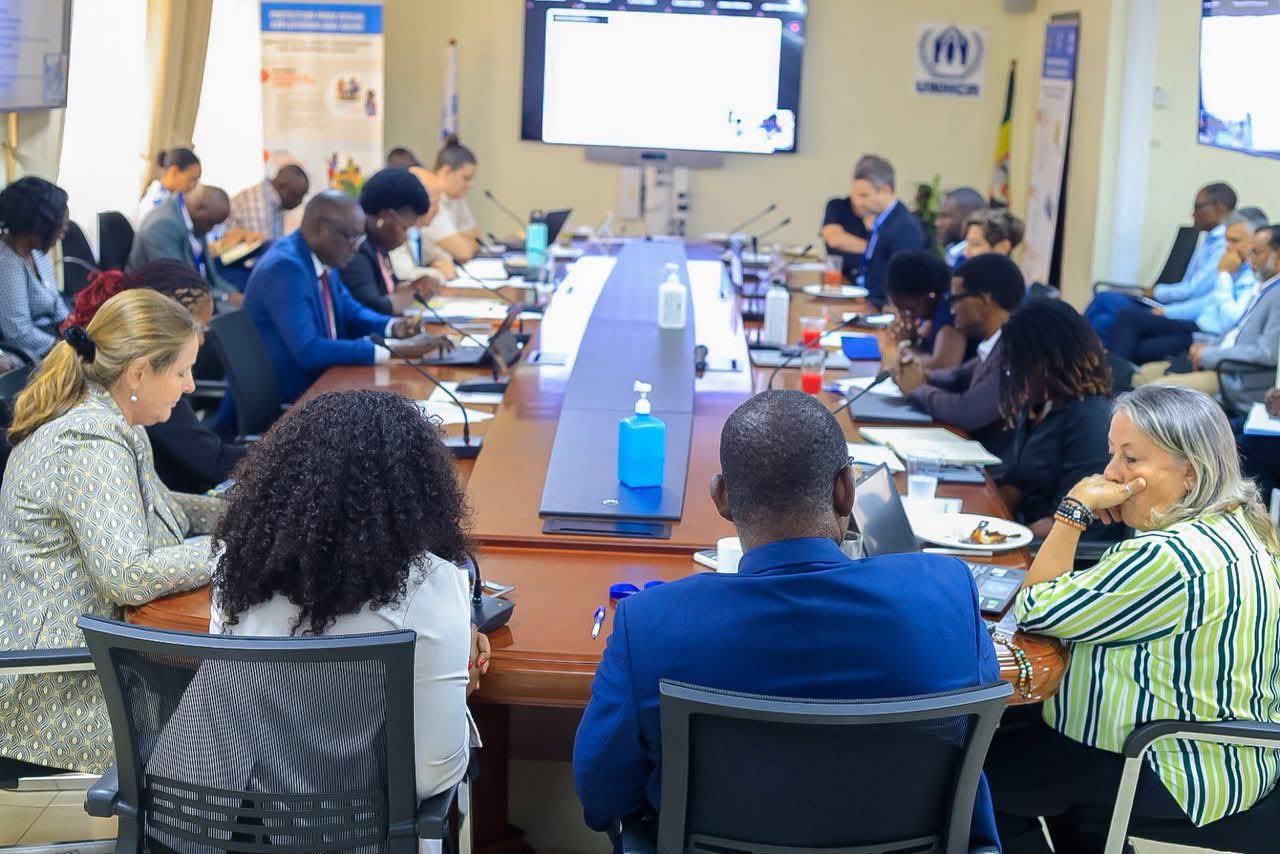
Kampala, Uganda — The Minister of State for Relief, Disaster Preparedness and Refugees, Lillian Aber, has chaired an ad hoc inter-agency meeting at the United Nations High Commissioner for Refugees (UNHCR) offices in Kampala to review findings from a recent field assessment at Okidi Refugee Settlement in Kitgum District.
The meeting brought together government representatives, UNHCR officials and humanitarian partners to examine the assessment findings, share perspectives and assess access to essential services for refugees and surrounding host communities.
Speaking during the meeting, Aber emphasised the government’s continued commitment to refugee protection, peaceful coexistence and a coordinated, sustainable refugee response across Uganda.
She noted that collaboration among government institutions, humanitarian agencies and other stakeholders remains essential to identifying service gaps, addressing emerging challenges and improving support for displaced people and their host communities.
Okidi Refugee Settlement, located in Labongo Amida West Sub-county, Kitgum District, is a newly established settlement under Uganda’s open-door refugee policy.
According to government plans, the settlement is expected to accommodate up to 100,000 refugees in approximately 21,000 households, primarily to ease congestion at neighbouring Palabek Refugee Settlement in Lamwo District. Palabek has exceeded its capacity of 40,000 and now hosts more than 96,000 refugees.
Initially, communities offered more than 5,000 acres of land. However, the latest parliamentary documents indicate that 490 acres have been formally gazetted for the settlement, with landowners committing the land for 20 years.
District leaders expect the first major arrivals from October 2026, subject to the completion of essential services.
Despite these plans, the settlement faces significant readiness challenges, which formed part of the inter-agency review.
Water and sanitation
The settlement lacks a reliable water supply and latrines. The government has stated that it will not transfer refugees until a secure water supply is in place.
Preparations include drilling five deep boreholes fitted with motorised systems. Three sites have already been identified, and contracts worth approximately UGX 134.4 million have been handed over.
There is no dedicated health facility within the settlement. Kitgum General Hospital, which is expected to provide referral services, is already overstretched, with a capacity of 100 beds while serving nearly 400 patients daily from Kitgum and neighbouring districts, including Lamwo, Pader, Agago and Karenga.
Kitgum already hosts more than 10,000 urban refugees living outside a formal settlement arrangement, placing additional pressure on education, health services, the environment and livelihoods.
Local leaders have called for investment in peaceful coexistence and the protection of shared resources, particularly land and water.