
 QFM
QFM
QFM
QFM
31 July 2026, 11:03 pm
By Frank Oyugi
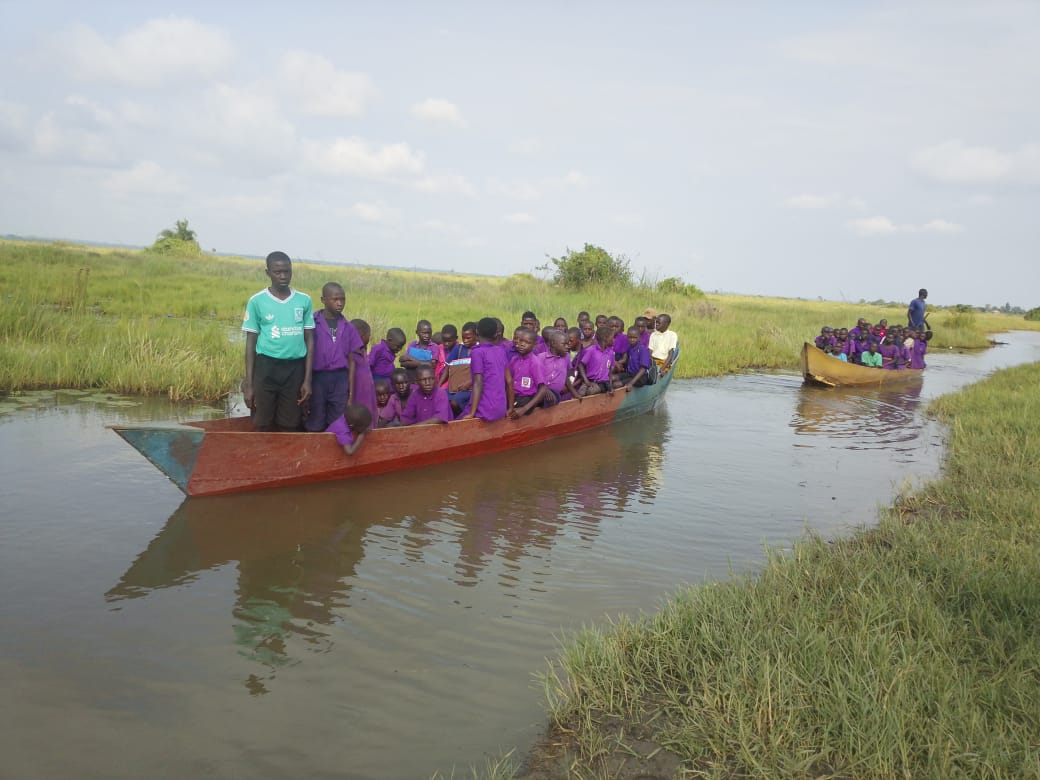
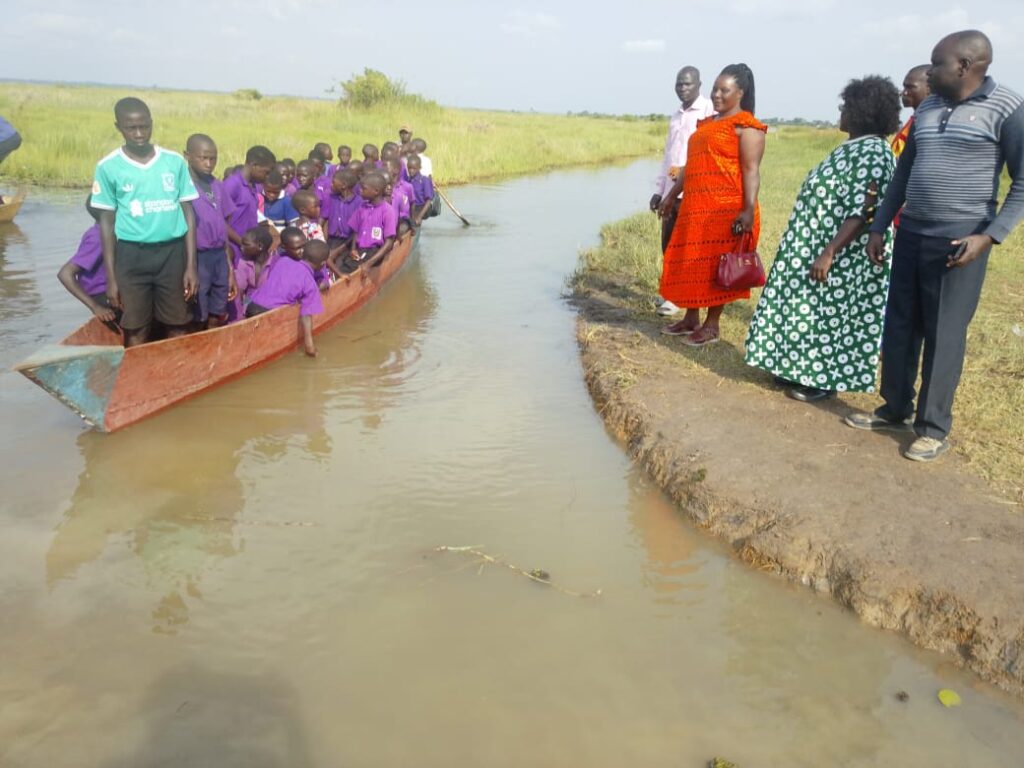
Every morning in Bata Ibwol Village—popularly known as “Bata Highland” on the shores of Lake Kwania—begins with a difficult choice that no child should have to make risk wading through dangerous and unpredictable floodwaters or abandon the pursuit of education.
As dawn breaks over Dokolo District, dozens of barefoot children gather at the water’s edge, with exercise books carefully balanced on their heads. They wait anxiously for a government motorised canoe to ferry them across to Abalang Modern Primary School, but its engine broke down long ago. Left with no alternative, the children enter the murky, chest-deep waters, struggling against hidden currents and underwater hazards.
Fourteen-year-old Tobias Opio, a Primary Four pupil, is familiar with the dangers of this daily journey.
“I want to study; I want to become a teacher,” Opio says quietly. “But every day I fear the water because the level is unpredictable—it keeps changing every day.”
His experience reflects a wider reality in Dokolo, where more than 4,798 households have been directly affected by rising water levels, resulting in the displacement of more than 2,500 families. The rising waters of Lake Kwania are not the result of a single storm but a prolonged ecological shift linked to climate change, which has submerged fertile farmland and transformed productive villages into flooded areas since 2021.
Local leaders say the crisis has moved from a temporary disaster to a long-term transformation of the region’s ecosystem.
Dokolo District Natural Resources Officer Isaac Okola said that since 2024, water levels around Lake Kwania have failed to recede, extending up to four kilometres inland in flatter areas.
“We now have people who have become permanent climate refugees,” Okola said. “They are staying in trading centres and schools, while others are looking for small pieces of land for settlement.”
He noted that while environmental degradation has contributed to the problem, extreme climate events, including El Niño, have also intensified rising water levels.
The disruption of social services, particularly education and healthcare, has had severe consequences.
Peter Omara, Headteacher of Abalang Demonstration Primary School, said flooding has affected learning outcomes in the affected subcounties.
“The flooding is affecting their performance; some arrive after lessons have started, while others miss school altogether whenever the water rises,” Omara said.
The disruption has also increased vulnerability among children, particularly girls.
Harriet Hope Apio, the female councillor representing Adeknino Subcounty, said there has been an increase in teenage pregnancies, early marriages, and school dropout rates among girls aged between 14 and 16 due to prolonged disruption to their education.
“There has been a rise in teenage pregnancies, early marriages, and school dropout rates among girls aged 14 to 16, largely because many of them have been unable to continue with their education,” Apio said.
The growing humanitarian impact has prompted calls for urgent government action.
Dokolo Resident District Commissioner Barbara Akech said the disaster has contributed to increased hunger and poverty in Kwera, Okwongodul, Adeknino, and Agwata Town Council.
“The government should immediately look for a better solution for the affected communities because there are increasing cases of teenage pregnancy, child marriage, and intense poverty,” Akech said.
She called for urgent attention to schools, roads, and health facilities affected by the floods.
As communities adapt to the changing environment, some farmers have started growing water-tolerant crops such as yams and sugarcane in flooded areas.
Meanwhile, civil society organisations and national leaders are supporting relief and adaptation initiatives.
Dr Rosemary Alwoch of the Hon Atim Ogwal Foundation has launched an environmental conservation and disaster risk reduction programme aimed at planting 50,000 food trees in 250 schools across Dokolo District.
“Our children go hungry to school, and this is why the programme was started—to bring food and income to schools while fighting climate change,” Dr Alwoch said.
Minister for Disaster Preparedness and Refugees Sam Engola said the government is coordinating both emergency relief and long-term interventions.
“Some of the interventions the government is implementing include providing food relief to the affected communities,” Engola said. “We are also working towards lasting solutions such as irrigation schemes and the relocation of some of the affected communities.”
Without swift and sustained action, communities around Lake Kwania risk losing their livelihoods, education opportunities, and future prospects to rising water levels.