
 QFM
QFM
QFM
QFM
21 August 2026, 2:54 pm

By Frank Oyugi
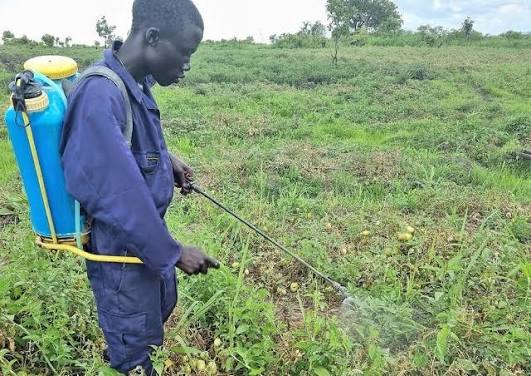
Lira — In the agricultural heartland of the Lango Sub-region, a quiet crisis is unfolding beneath the surface. Driven by climate instability, unpredictable rainfall patterns and aggressive pest invasions such as fall armyworms and desert locusts, smallholder farmers across Lira, Oyam, Kwania and Amolatar are increasingly turning to synthetic agrochemicals to protect their crops and safeguard yields.
However, regional experts and environmental activists warn that the indiscriminate use of synthetic fertilisers, non-selective herbicides and chemical pesticides is contributing to ecological degradation by destroying soil biodiversity, altering soil pH and weakening local resilience to climate change.
Lango’s unique climate, characterised by a unimodal rainfall pattern and distinct dry periods, presents a delicate ecosystem where farmers grow key staples such as maize, rice, sunflower, sesame and legumes. Recognised as a crucial grain basket for Uganda, agriculture remains a major source of livelihoods in the country, with national household survey data showing that 65 per cent of the working population is engaged in agriculture, forestry and fishing.
Meanwhile, research conducted by the Oyam District Agricultural Department indicates that modern pest control strategies have leaned heavily towards synthetic agrochemicals, which account for 43 per cent of farmers’ practices, compared with agronomic practices at 16 per cent, botanical methods at 11 per cent and cultural practices at 10 per cent.
On the other hand, national studies by the Pesticide Use, Health and Environment Project and UNACOH reveal that only 23 per cent of farmers in Uganda have received formal training in proper chemical application, dosage and safety protocols.
As mixed-crop farmer Joshua Oloma from Kwania District observes, applying agrochemicals without following recommended guidelines directly affects soil fertility and pH, resulting in declining yields over the long term.
The biological cost of this chemical dependency is devastating for topsoil ecosystems. Overuse of synthetic agrochemicals can severely damage the delicate microbial networks beneath the surface. When non-organic pesticides and herbicides are applied continuously, chemical runoff can destroy beneficial soil organisms, including insects such as termites, and disrupt essential microbial communities.
Because these organisms play a critical role in soil aeration, organic decomposition and nutrient cycling, their loss can leave the soil biologically depleted and less able to regenerate naturally.
Beyond biological losses, repeated synthetic applications can alter soil structure and chemical balance. Over time, chemical residues can contribute to soil hardening and compaction while affecting soil pH and acidity levels. Degraded and compacted soil loses structural porosity, reducing its ability to absorb and retain water during heavy rainfall, which can accelerate topsoil erosion and runoff.
As chemical compounds persist and accumulate in the soil, they can contribute to ecological imbalances that disrupt fundamental carbon and nutrient cycles. Instead of storing carbon and cycling organic matter naturally, chemically degraded soil can lose much of its organic vitality.
Research technician Lawrence Ogwal from NARO-Ngetta ZARDI in Lira says agrochemicals can alter soil pH and damage soil properties, leaving crops increasingly reliant on costly synthetic inputs to remain productive. This, he notes, can compound both environmental degradation and the financial pressure on farming households.
Despite this widespread degradation, a growing shift towards organic inputs and agroecological farming demonstrates that environmental restoration and strong agricultural productivity can go hand in hand.
Farmers such as Bazilo Okello from Amolatar District, who spent 15 years relying on agrochemicals before experiencing declining yields, report significant improvements after switching to organic matter such as leaves and grass mulch.
Similarly, environmental activist Molly Bellah Akello, Executive Director of Fountain of Life Uganda, says continuous use of agrochemicals negatively affects both human and soil health. She is urging farmers to adopt traditional, nature-based pest control methods, such as mulching with crop residues and using red pepper solutions or diluted cow dung mixtures as alternatives.
By replacing toxic chemical dependency with environmentally friendly inputs, Lango’s farmers can safeguard their land, protect local biodiversity and build lasting climate resilience for generations to come.